
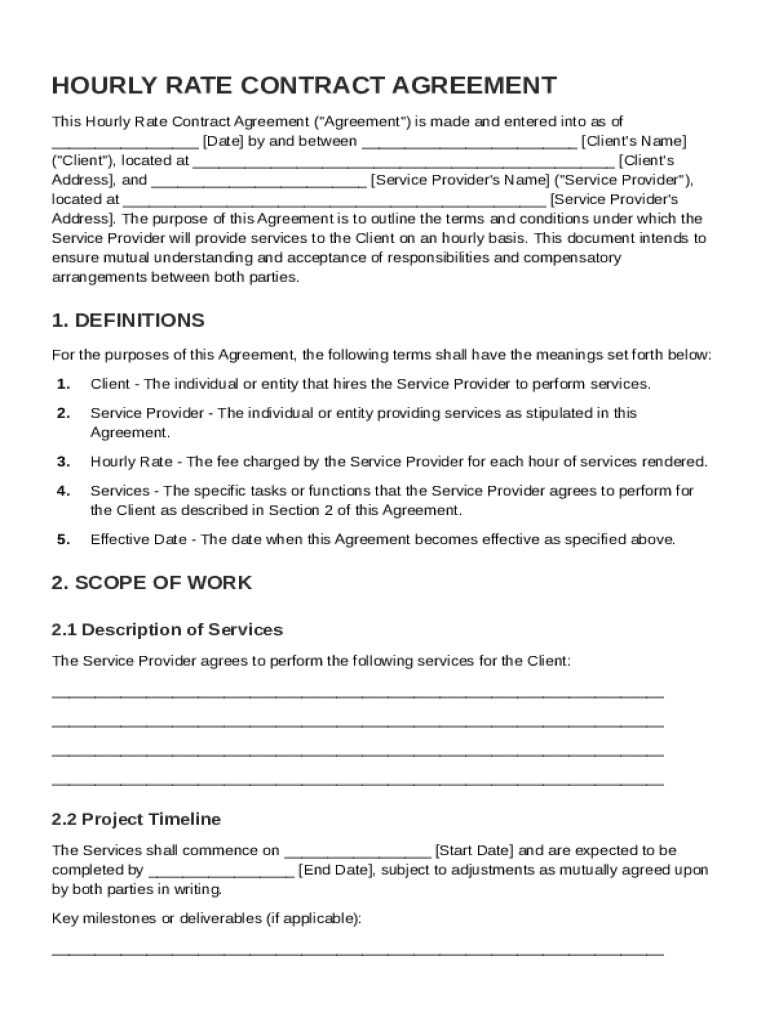







Definition of an Hourly Rate Contract Template
An Hourly Rate Contract Template is a pre-structured legal document used by Clients and Service Providers to outline terms for work compensated on an hourly basis. This template typically includes sections for compensation structure, scope of work, responsibilities, confidentiality, and governing law. By utilizing an hourly rate agreement, both parties aim to ensure a clear understanding of the expectations and payment terms. The template minimizes disputes by defining key terms and providing a foundational layout for customizing to specific business needs.
Key Elements of the Template
An effective Hourly Rate Contract Template should include the following components:
- Parties Involved: Clearly identify the Client and Service Provider, including legal names and contact details.
- Scope of Work: Detail the services to be performed, including specific tasks and any deliverables.
- Compensation: Specify the hourly rate, billing frequency, and accepted payment methods. This section should also cover how overtime or bonus rates are calculated.
- Responsibilities: Outline the duties and obligations of each party involved in the agreement, ensuring mutual understanding.
- Confidentiality and Data Protection: Set terms for handling confidential information and protection of sensitive data.
- Termination Conditions: Define the grounds under which the contract may be terminated by either party.
- Governing Law and Jurisdiction: Identify which state laws will apply to the contract and disputes.
Legal Use of the Hourly Rate Contract Template
Compliance with Legal Standards
The Hourly Rate Contract Template must adhere to U.S. employment laws and regulations. It is crucial for the template to comply with the Fair Labor Standards Act (FLSA), which governs minimum wage, overtime pay, and recordkeeping. Additionally, the agreement should be drafted in alignment with state-specific laws pertinent to contracts and employment. This ensures enforceability and legitimacy in a legal context, protecting both parties’ rights.
Confidentiality Clauses
Including confidentiality clauses in the contract is essential for protecting proprietary information. Such clauses should define what constitutes confidential information and outline the obligations of both parties to maintain secrecy. This is especially important in industries where intellectual property and competitive data are involved.
How to Use the Hourly Rate Contract Template
Step-by-Step Process
- Download the Template: Obtain the Hourly Rate Contract Template from a trusted source, like DocHub, which provides structured and secure documents.
- Customize the Template: Input specific details for your engagement, including party names, agreed hourly rate, and detailed scope of work.
- Review Legal Provisions: Consult with legal experts to ensure all terms align with relevant laws and protect your interests adequately.
- Negotiate Terms: Both parties should agree on the terms and conditions, making amendments where necessary to reflect negotiations.
- Finalize and Sign: Once both parties consent to the terms, execute the agreement with legally binding electronic signatures using platforms like DocHub, ensuring the document is stored securely.
Who Typically Uses the Hourly Rate Contract Template

Common Users
- Freelancers and Contractors: They frequently utilize this template to formalize business arrangements without the complexity of full-time employment contracts.
- Small Businesses and Startups: These entities often hire specialized services on an hourly basis, such as graphic design, consulting, or IT services.
- Agencies and Consultancies: Companies within these sectors rely on hourly contracts to engage with clients transparently regarding billing and project scope.

Examples of Using the Hourly Rate Contract Template
Practical Scenarios
- Design and Creative Services: A graphic design firm employs the template to detail work hours, project deliverables, and payment schedules for freelance designers.
- Legal Consulting: A law consultant uses the contract to define advisory services and secure agreements with multiple clients, specifying hourly rates for different types of legal advice.
Important Terms Related to the Hourly Rate Contract Template
Essential Terminology
- Billable Hours: Hours that are chargeable to a client, including time spent directly on project tasks.
- Retainer Agreement: A different form of contract, where a client pays in advance for a specific amount of work hours.
- Non-Disclosure Agreement (NDA): A separate document sometimes included to enforce confidentiality in sensitive projects.
Software Compatibility and Integration
Managing Contracts Digitally
Platforms like DocHub offer seamless integration with other software tools used in document management. Users can import contract templates from cloud services like Google Drive or DropBox, and manage them within the same digital ecosystem, reducing time spent on manual file handling. The software compatibility allows users to open, edit, and sign documents directly within their workflow tools.
Automation Features
DocHub provides automation tools such as template form fields, allowing clients to fill in repetitive information more easily. It also offers secure options for sharing contracts with collaborators, ensuring everyone remains on the same page through real-time updates. This digital-first approach supports enhanced efficiency in document management.
State-Specific Rules for the Hourly Rate Contract Template
Variations by Jurisdiction
While the template offers a standardized starting point, users must tailor it according to state laws. For example, California has specific labor law provisions regarding meal breaks and overtime that differ from those in Texas. Parties engaging in interstate contracts should be aware of these variations to ensure compliance and avoid legal pitfalls.
Adaptive Clauses
It is advisable to include adaptive clauses that allow for state-specific adjustments without necessitating complete re-drafting of the template. This might involve incorporating checklists or additional provisions that can be activated or deactivated depending on applicable state rules.




