Definition & Meaning
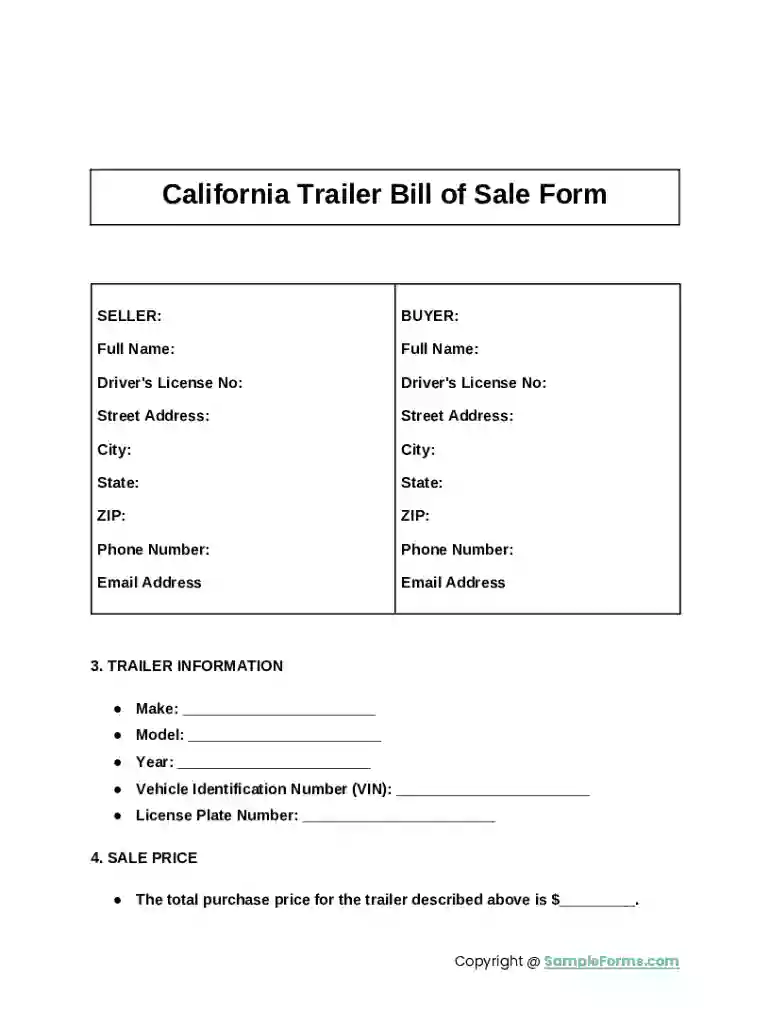
The California Trailer Bill of Sale Form is a legal document that documents the sale and transfer of ownership of a trailer from a seller to a buyer within the state of California. This form serves as a written record of the transaction, detailing the involved parties, the terms of the sale, the description of the trailer, and the agreed-upon price. It is recognized by legal authorities as proof of the change of possession and is essential for registration and titling purposes.
Purpose and Function
- Proof of Ownership Transfer: This form serves as evidence that the ownership of a trailer has been legally transferred from the seller to the buyer.
- Legal Compliance: It ensures that the transaction adheres to California state laws regarding the sale of vehicles and trailers.
- Documentation for Registration: The form is necessary for the buyer to register the trailer with the California Department of Motor Vehicles (DMV).
Common Uses
- Individual Sales: Transactions between private parties selling and buying a trailer for personal use.
- Dealership Transfers: Used by vehicle dealers to transfer ownership of trailers to customers.
How to Use the California Trailer Bill of Sale Form
Using the California Trailer Bill of Sale Form involves a few steps to ensure the transaction complies with legal requirements and records all necessary details accurately.
Steps for Completing the Form
Gather Information:
- Seller and buyer contact details, including full names, addresses, and driver's license numbers.
- Detailed trailer information such as make, model, year, VIN (Vehicle Identification Number), and any distinguishing features.
- Agreed-upon sale price.
Fill Out the Form:
- Enter the gathered information into the respective fields on the form.
- Ensure accuracy to avoid any disputes or legal issues later.
Sign the Form:
- Both the buyer and the seller need to sign the document to validate the transaction.
- It's advisable to do this in the presence of a notary to add an extra layer of authenticity.
Provide Copies:
- Both parties should retain a copy of the completed form for their records.
- Submit necessary copies to the California DMV for registration purposes.
Importance of Accurate Completion
- Legal Protection: Ensuring all information is correct helps protect both parties from future disputes over ownership or condition of the trailer.
- Efficiency: Accurate documentation assists in a smooth registration process with the DMV.
Key Elements of the California Trailer Bill of Sale Form
A comprehensive understanding of the key elements within the California Trailer Bill of Sale Form can aid in proper form execution.
Buyer and Seller Information
- Full Names: Complete and correctly spelled names to confirm identity.
- Contact Details: Current addresses and phone numbers for follow-up communication if needed.
- Identification Numbers: Driver's license numbers are often included for both security and identification purposes.
Trailer Details
- Description Fields:
- Make and Model: Manufacturer and model designation.
- Year and VIN: Essential for legal identification and record-keeping.
- Condition and Features: Mention any notable issues or special features that might impact value.
Financial Terms
- Sale Price: Clearly state the total amount agreed upon for the sale.
- Payment Method: Document whether the payment was made in cash, check, or another form, adding a layer of transparency.
Legal Use of the California Trailer Bill of Sale Form
Legal compliance in using the California Trailer Bill of Sale Form is crucial for ensuring the validity of the transaction and protection under state laws.
Ensuring Legality
- Complying with State Laws: The form must reflect California's legal criteria for vehicle sales, including accurate completion and timely processing at the DMV.
- Certifying Condition: Both parties should agree on the trailer's condition and include this information in the form to prevent future disputes.
Common Legal Concerns
- Fraud Prevention: Completing the form prevents fraudulent claims of ownership or sale under false pretenses.
- Dispute Resolution: In case of any disagreements post-sale, the form acts as a critical legal document.
State-Specific Rules for the California Trailer Bill of Sale Form
California has specific rules and regulations that apply to the sale and purchase of trailers, which are crucial when using the form.
DMV Requirements
- Registration Protocols: Documentation must be submitted to the DMV to update title and registration records following a sale.
- Emissions and Safety Standards: Compliance with California's emissions and road safety standards may be necessary for registration.
Filing Procedures
- Timelines: Submitting the form and necessary documents within the required timeframes is essential for avoiding penalties.
Steps to Complete the California Trailer Bill of Sale Form
Detailed steps to accurately complete the form ensure a valid and smooth transaction process.
Detailed Completion Steps
Enter Seller and Buyer Information:
- Input full details accurately to prevent misidentification or errors.
Fill in Trailer Details:
- Complete all fields regarding the trailer's description, double-checking VIN and model information.
Specify the Sale Price and Conditions:
- Document the agreed price and terms clearly, noting any special payment arrangements.
Sign and Date the Form:
- Signatures from both parties confirm mutual agreement and authenticity.
Validate with Notary (if desired):
- Although not always required, a notarized form provides additional proof of legitimacy.
Practical Examples
- Family Transfers: Selling a trailer within a family where clarity on ownership transfer is crucial.
- Independent Buyer Transactions: Ensuring a straightforward and documented sale for record-keeping and legal purposes.