




01. Edit your form online
Type text, add images, blackout confidential details, add comments, highlights and more.

Type text, add images, blackout confidential details, add comments, highlights and more.

Draw your signature, type it, upload its image, or use your mobile device as a signature pad.

Send it via email, link, or fax. You can also download it, export it or print it out.
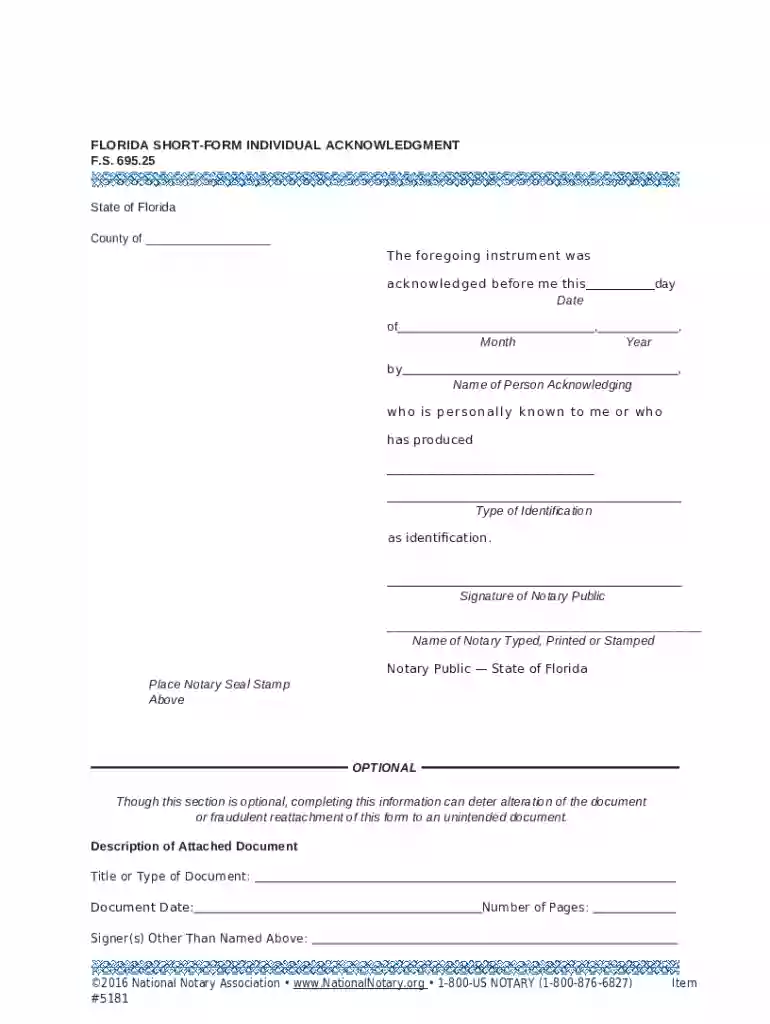
The Florida Short-Form Individual Acknowledgment is a specific legal instrument used within the state of Florida to formally recognize the signing of a document by an individual. In essence, this acknowledgment serves as a verification that the person signing a particular document is indeed who they claim to be and has willingly signed the document in the presence of a notary public. This form is crucial in authenticating documents such as deeds, affidavits, and legal agreements to ensure they hold up under legal scrutiny. For instance, if someone signs a property deed, the acknowledgment confirms that the signing party willingly agreed to the transaction and prevents future disputes over the signer's identity or intent.
To properly use the Florida Short-Form Individual Acknowledgment, several key steps need to be followed. First, ensure the document requiring acknowledgment is ready and all intended signatories are present. The signer must appear in person before a notary public when signing the document. The notary will then verify the identity of the individual using government-issued identification and confirm the voluntary nature of the signing. Once the notary is satisfied with the authenticity and intent, they will complete the acknowledgment by signing and affixing their notarial seal. This process is essential in transactions like real estate, where verifying the identity and intent of parties is crucial to the deal's legality and enforceability.
Prepare the Document: Before meeting with a notary, ensure the document is fully prepared and includes spaces for signatures and notarial acknowledgment.
Schedule Notary Meeting: Arrange a meeting with a notary public to complete the acknowledgment. This meeting must be in person to confirm the signer's identity and intent.
Verify Identity: Present acceptable identification to the notary public. IDs typically include driver's licenses or passports, which help verify the signer's identity.
Signing in Notary's Presence: The individual must sign the document in front of the notary. This step is critical to ensure the signing is voluntary and made without duress.
Notary's Completion: The notary fills out the acknowledgment portion, signs it, and adds their official seal, finalizing the legal acknowledgment.
Maintain Records: Safekeep a copy of the acknowledged document, as it may be required for legal purposes or future reference.
The Florida Short-Form Individual Acknowledgment is predominantly used by individuals involved in legal, real estate, and financial transactions. Common users include:


The Florida Short-Form Individual Acknowledgment carries significant legal weight, primarily ensuring that signed documents are recognized by courts and other entities as valid. This form serves as a protective measure against claims of coercion or forged signatures, often impacting the enforceability of agreements. For instance, in a lawsuit involving a disputed property transaction, the presence of an acknowledgment can support the claim that the transaction was legally executed, thus protecting the interests of the parties involved.
Florida has particular statutes governing the use and requirements of the Short-Form Individual Acknowledgment:
By understanding and properly utilizing the Florida Short-Form Individual Acknowledgment, individuals and entities ensure their transactions are legally sound and protected against potential legal challenges.
At DocHub, your data security is our priority. We follow HIPAA, SOC2, GDPR, and other standards, so you can work on your documents with confidence.


