Definition and Meaning
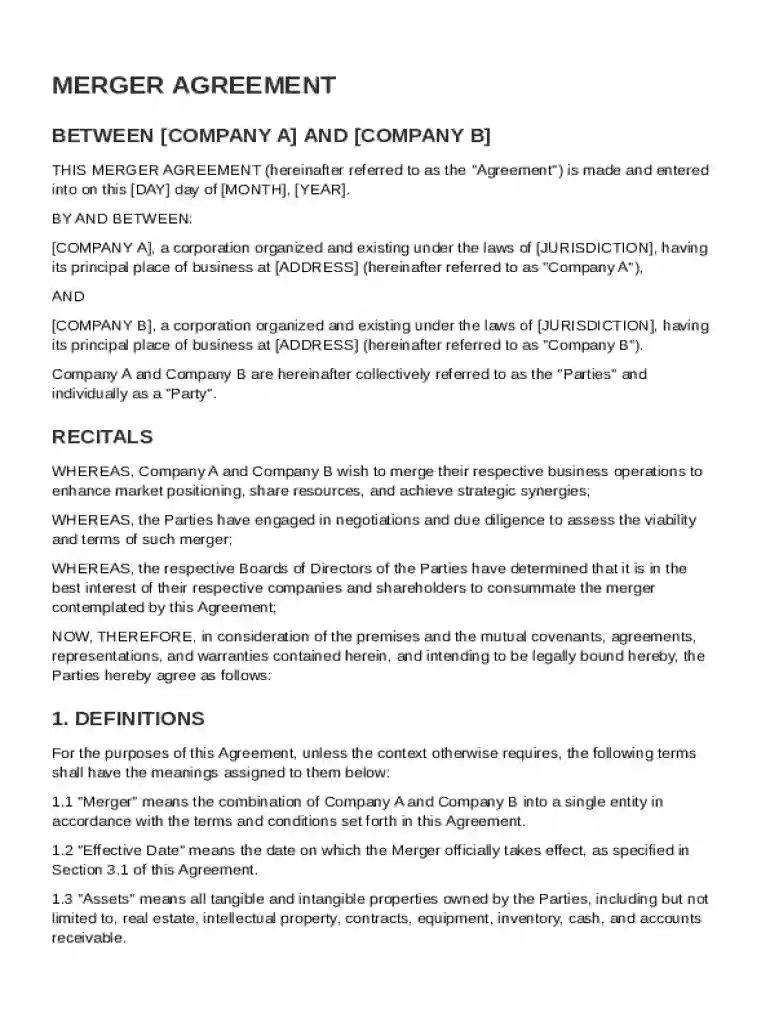
A merger contract template serves as a formal agreement between two companies intending to merge into a single entity. This document outlines the terms and conditions governing the merger, including the objectives, obligations, and responsibilities of each party involved. Its primary purpose is to provide a clear framework to ensure both parties fulfill their agreed-upon commitments, facilitating a smooth transition and integration process. By using this template, companies can streamline their documentation process, maintain consistency, and ensure legal compliance.
Key Elements of the Merger Contract Template
A well-structured merger contract template encompasses several essential elements that clarify the transaction's scope and expectations for all parties involved:
- Purpose and Scope: Specifies the merger's intent and strategic goals, such as market expansion, increased efficiency, or enhanced competitiveness.
- Definitions and Interpretations: Offers clear definitions of key terms used throughout the contract, ensuring all parties have a mutual understanding.
- Structure and Consideration: Details the merger's structure, whether it's a stock-for-stock transaction, cash merger, or another model, and outlines how consideration will be distributed.
- Share Exchange Ratio: Explains the method used to determine the exchange ratio for shares between the merging companies.
- Obligations and Covenants: Lists specific actions each party must undertake or refrain from during the merger process.
- Confidentiality and Non-Disclosure: Protects sensitive information shared between the companies during negotiations and execution.
How to Use the Merger Contract Template
Organizations intending to merge should follow a systematic approach when utilizing a merger contract template to ensure thoroughness and legal compliance:
- Review the Template: Examine the standard provisions in the template to understand the aspects covered and customize it as necessary.
- Customize Specific Clauses: Adjust key clauses to reflect the unique conditions and terms agreed upon by the merging companies.
- Obtain Legal Review: Have legal professionals review the modified contract to ensure compliance with local, state, and federal regulations.
- Negotiate Terms: Engage in discussions to finalize the terms, ensuring that both parties are in agreement with the updated clauses.
- Finalize and Execute: Once all negotiations are complete, finalize the contract by obtaining signatures from authorized company representatives to make it legally binding.
Steps to Complete the Merger Contract Template
Completing a merger contract template involves several critical steps to ensure both legality and mutual satisfaction:
- Gather Necessary Information: Collect comprehensive details about each company's operational and financial status to form the basis of the contract terms.
- Draft Initial Agreement: Use the template to create an initial draft, integrating specific information pertaining to the merger at hand.
- Engage Stakeholders: Involve legal, financial, and management teams from both companies to review and provide input on the draft.
- Conduct Due Diligence: Perform thorough due diligence to identify any potential obstacles or issues that might affect the merger.
- Revise and Update: Based on feedback, revise the contract as necessary to address concerns and include any new agreements reached.
- Execute the Agreement: Ensure all parties sign the final version of the document, which then serves as a formal record of the merger agreement.
Legal Use of the Merger Contract Template
The merger contract must meet specific legal standards to ensure its enforceability and protection of both parties' rights:
- Compliance with Laws: The contract should comply with the applicable jurisdiction's corporate merger laws, such as antitrust regulations and securities laws.
- Disclosure Requirements: It should outline all necessary disclosures required by regulatory authorities to prevent future disputes or penalties.
- Binding Nature: Once executed, the contract becomes binding on both parties, obligating them to adhere to its terms or face potential legal consequences.
Important Terms Related to Merger Contract Template
Understanding terminologies related to merger contracts is critical for negotiating and drafting effective agreements:
- Acquirer and Target: Refers to the company initiating the merger (acquirer) and the company that is being merged (target).
- Due Diligence: A comprehensive appraisal of a business, particularly its assets and liabilities, to establish its worth or uncover any potential issues.
- Synergies: Benefits derived from the merger, primarily in terms of cost reduction, increased revenue, or strategic advantages.
- Representations and Warranties: Statements of fact made by one party to the other, forming the basis of the merger agreement.
- Indemnification: Legal protection from potential losses or liabilities arising from the merger.
Business Types That Benefit Most from Merger Contract Template
Various business entities find merger contract templates advantageous in navigating through mergers effectively:
- Technology Companies: Leverage mergers to acquire innovative technologies or enter new markets.
- Healthcare Organizations: Engage in mergers to expand service offerings and enhance research capabilities.
- Retailers: Merge to increase scale efficiencies, diversify product lines, or gain more market share.
- Financial Institutions: Pursue mergers to enhance capital reserves or broaden their customer base.