






Definition & Meaning
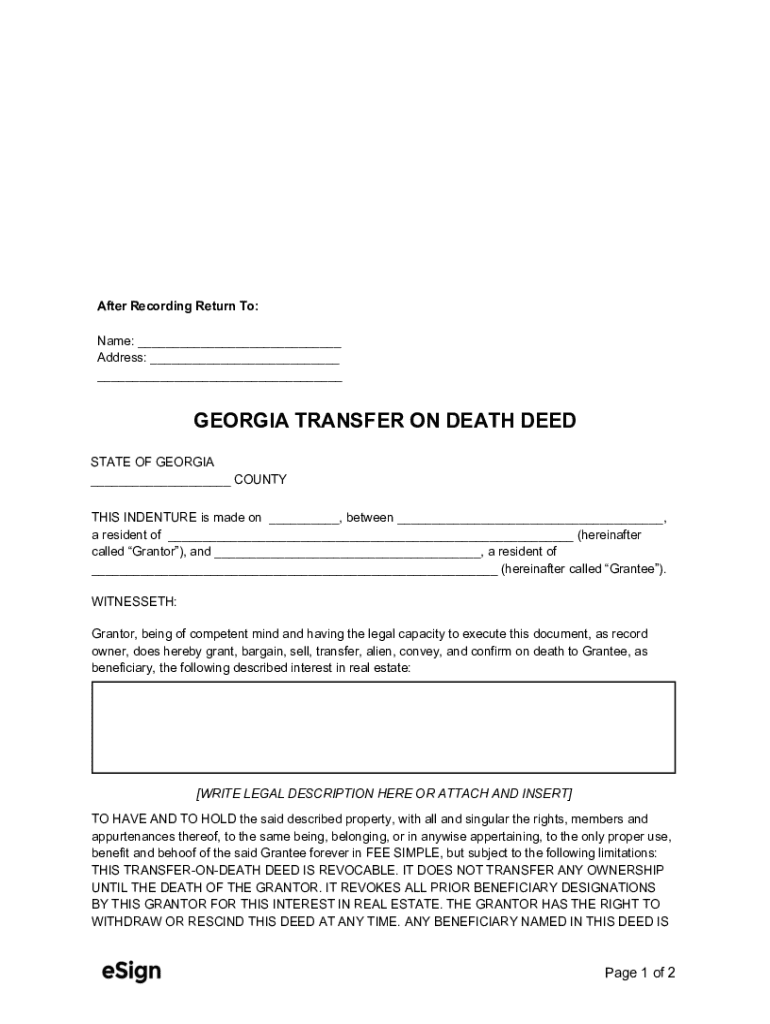
A Georgia Transfer on Death Deed (Georgia TOD Deed) is a legal instrument allowing property owners in Georgia to designate a beneficiary to inherit real estate upon their death. This type of deed is a non-probate transfer, meaning it bypasses the costly and time-consuming probate process, directly transferring the property to the named beneficiary. This designation remains revocable during the lifetime of the property owner, allowing them the flexibility to change the beneficiary or cancel the transfer entirely if their circumstances or wishes change.
Benefits of a Transfer on Death Deed
- Avoids Probate: By bypassing the probate process, the TOD Deed allows for a more immediate transfer of property ownership after the death of the grantor.
- Retains Ownership Rights: The property owner maintains all ownership rights during their lifetime, including the right to sell or mortgage the property.
- Reversible Decision: The grantor can change the beneficiary or revoke the deed at any point before their death.
- Privacy: Reduces public record visibility as the property transfer occurs directly to the beneficiary, unlike a public probate proceeding.
How to Use the Georgia Transfer on Death Deed
Utilizing a Georgia TOD Deed involves a clear understanding of the necessary steps and legal requirements. The process is relatively straightforward but requires attentiveness to detail to ensure the transfer is effective.
Steps to Use
- Identify Property and Beneficiary: Clearly define which property is to be transferred and who the beneficiary will be. Ensure the legal description of the property is accurate.
- Preparation of the Deed: Draft the TOD Deed, specifying the grantor’s name, the beneficiary's details, and a clear legal description of the property. Legal assistance is often recommended to ensure compliance with Georgia state laws.
- Sign the Deed: The deed must be signed by the grantor in front of a notary public and, in some cases, two witnesses to affirm its validity.
- Recording the Deed: File the completed and notarized TOD Deed with the county recorder’s office in the county where the property is located to ensure it is legally binding.
Important Terms Related to Georgia Transfer on Death Deed
Understanding the vocabulary associated with a Georgia TOD Deed is crucial for effective navigation.
- Grantor: The current owner of the property who is executing the TOD Deed.
- Grantee: The beneficiary designated to receive the property upon the grantor's death.
- Revocable: The grantor retains the right to change or cancel the deed at any time before their death.
- Legal Description: A formal description of the property being transferred.
Steps to Complete the Georgia Transfer on Death Deed
Completing a Georgia TOD Deed involves the meticulous execution of each required step to ensure the document's legality and effectiveness.
Detailed Steps
- Draft the Deed Properly: Use precise language to identify all parties and the property involved.
- Seek Legal Advice: Consult with a legal professional to ensure adherence to Georgia's specific legal requirements.
- Finalize Signatures: Have the deed signed by the grantor with a notary present and, if necessary, witnessed by additional parties.
- Record the Deed: Submit the deed to the appropriate county office for official recording to validate the transfer upon the grantor’s death.
Who Typically Uses the Georgia Transfer on Death Deed
The Georgia TOD Deed is an advantageous tool for specific individuals and populations.


Common Users
- Homeowners: Individuals wanting to secure the transfer of residential property without probate.
- Estate Planners: Advisors and attorneys preparing clients’ estates to minimize future legal entanglements.
- Elderly Individuals: Older adults preferring a straightforward method to transfer property to heirs.

Legal Use of the Georgia Transfer on Death Deed
The Georgia TOD Deed serves a specific role within the framework of state real estate law.
Compliance Requirements
- The deed must meet all state-specific legal criteria, including proper filing and notarization.
- All parties must be of legal age and sound mind to execute or benefit from the deed.
Exceptions and Limitations
- Should not conflict with existing liens or mortgages unless appropriately addressed.
- Changes to the deed must be formally documented and filed, akin to the original deed.
State-Specific Rules for the Georgia Transfer on Death Deed
Understanding Georgia’s unique regulations regarding TOD Deeds is crucial.
Key Points for Georgia
- Georgia’s version of the TOD Deed is distinctly applicable only to real estate.
- Maintenance of the deed's legality involves adhering to state recording requirements.
- Changes in the law can affect the ongoing use of TOD Deeds, necessitating periodic review of regulations.
Examples of Using the Georgia Transfer on Death Deed
Real-life application scenarios provide clarity on the functionality of a Georgia TOD Deed.
Practical Scenarios
- Single Homeowner with a Heir: A widowed parent ensures their home transfers to their sole child without probate delays.
- Multiple Properties Owner: An investor uses TOD Deeds for each property to allow direct transfer to named beneficiaries for estate planning.
In conclusion, understanding the Georgia Transfer on Death Deed requires knowing the steps, benefits, and nuances associated with its use and execution. This allows individuals to make informed decisions to secure smooth property transitions according to their wishes.