




01. Edit your form online
Type text, add images, blackout confidential details, add comments, highlights and more.

Type text, add images, blackout confidential details, add comments, highlights and more.

Draw your signature, type it, upload its image, or use your mobile device as a signature pad.

Send it via email, link, or fax. You can also download it, export it or print it out.
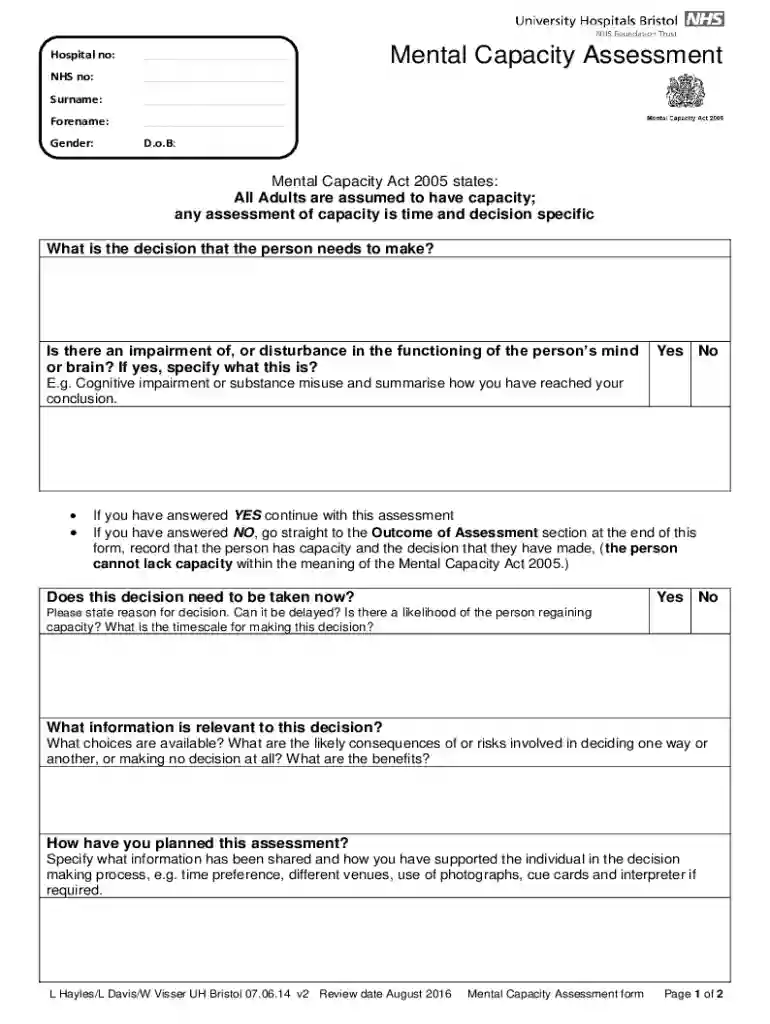
A Mental Capacity Assessment Form is a tool used to evaluate an individual's ability to make decisions regarding their personal, financial, or health-related matters. It assesses various factors that contribute to a person's decision-making capacity, such as understanding information, weighing options, and communicating a decision. This form is crucial for healthcare professionals, legal advisors, and caregivers when determining if an individual can consent to treatment, manage funds, or make choices about their living arrangements. The Mental Capacity Act 2005 in the United States outlines the criteria for assessing capacity, emphasizing that all adults are presumed to have capacity unless proven otherwise.
Utilizing the Mental Capacity Assessment Form effectively involves several steps to ensure accurate assessment outcomes. The process begins with the evaluator presenting all relevant information to the individual in a clear and accessible format. This includes describing the decision at hand and any potential consequences. The form guides the evaluator to observe whether the individual can comprehend such information, retain it long enough to make a decision, and communicate their preferences. Additionally, it assesses the individual's ability to appreciate the potential outcomes of their decision, requiring an evaluator to document examples and explanations from the subject on the form.
Completing a Mental Capacity Assessment Form requires diligence and attention to every section to ensure comprehensive documentation. Begin by filling out the individual’s personal information, such as name, date of birth, and any identification numbers relevant to the assessment context. Each section of the form should be addressed methodically, with special attention given to behavioral indicators and responses to specific questions related to the decision at hand.
The Mental Capacity Assessment Form is legally significant, particularly in situations where decisions about an individual's welfare, finances, or medical treatment are made. It serves as documentation to support decisions made regarding an individual's competency and capacity. Legal use includes the form's role in court cases, such as disputes over guardianship or consenting to particular healthcare interventions. The form must comply with state-specific legislation to ensure its findings are accepted in legal proceedings.
The form includes various key sections that collectively provide a thorough examination of an individual's decision-making capacity. Critical elements encompass areas like background information, decision-specific scenarios, and detailed observations of the individual's responses and abilities.
Practical usage of the Mental Capacity Assessment Form can be seen in various real-world scenarios:
Completing a Mental Capacity Assessment Form thoroughly necessitates accompanying documents that offer additional context and support the findings recorded on the form. These may include:
For handling and managing Mental Capacity Assessment Forms digitally, compatibility with document management software is vital. Platforms like DocHub offer integration with systems like Google Workspace, enabling seamless digital editing, signing, and sharing of assessment forms.
At DocHub, your data security is our priority. We follow HIPAA, SOC2, GDPR, and other standards, so you can work on your documents with confidence.






Please indicate the extent, if any, that this persons current mental condition would interfere with his/her ability to work or participate in.Read more
Record observations that support your score in each domain, including exact responses of the patient. Indicate your score for each domain with a check mark. 1.Read more


