Statement-of-Claim-Against-an-Estate - St Lucie County Clerk 2026

Get Form
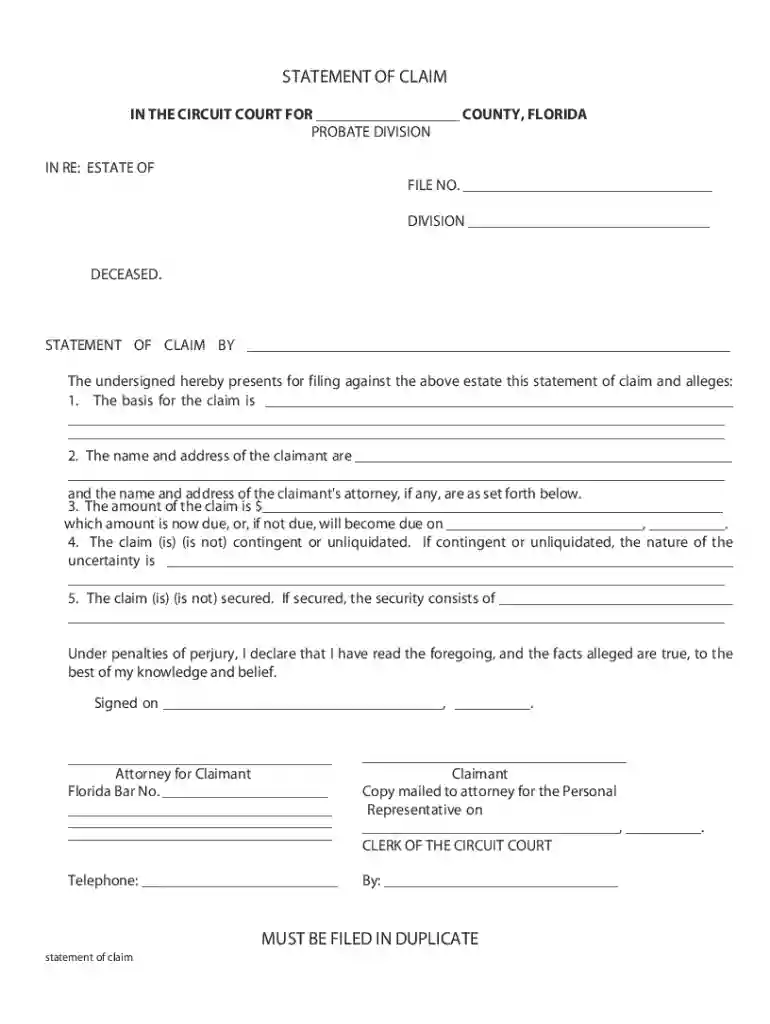
Statement-of-Claim-Against-an-Estate - St Lucie County Clerk Preview on Page 1

Here's how it works

01. Edit your form online
Type text, add images, blackout confidential details, add comments, highlights and more.

02. Sign it in a few clicks
Draw your signature, type it, upload its image, or use your mobile device as a signature pad.

03. Share your form with others
Send it via email, link, or fax. You can also download it, export it or print it out.

Definition and Meaning

A "Statement of Claim Against an Estate" is a legal document utilized within the probate process in St. Lucie County, Florida. It allows a claimant to assert a financial claim or debt owed by the decedent’s estate. This claim must outline the basis for the demand, including the creditor's information, the total amount due, and whether the claim is contingent or secured. This document is crucial for ensuring the claimant's rights are preserved in the estate's settlement.

How to Use the Statement of Claim Against an Estate in St. Lucie County

To use the Statement of Claim, a claimant must complete the form with accurate details regarding the claim. This involves listing the creditor’s name and address, a description of the claim, the claimed amount, and any terms related to security or contingency. Once completed, the claimant must file the document with the St. Lucie County Clerk, typically as part of the probate proceedings, to officially register the claim against the decedent’s estate.

Steps for Filing

  1. Complete the Form: Fill out each section accurately, ensuring that all necessary information is provided.
  2. Submit to the Clerk: File the form with the St. Lucie County Clerk's office, ensuring it is within the statutory deadline.
  3. Serve Interested Parties: Notify the personal representative of the estate and any other relevant parties of the filed claim.

Important Terms Related to the Statement of Claim

Several key terms are associated with filing a Statement of Claim Against an Estate:

  • Creditor: The individual or entity asserting a claim against the estate.
  • Decedent: The deceased individual whose estate is being managed.
  • Contingent Claim: A claim dependent on a particular event or condition.
  • Secured Claim: A claim backed by collateral or security interest.

Understanding these terms is crucial for accurately completing and filing the Statement of Claim.

Legal Use of the Statement of Claim Against an Estate

The legal significance of the Statement of Claim lies in its role within the probate process. Filing this document formally notifies the court and other interested parties of the claim, thus allowing the estate's personal representative to address it during the distribution of estate assets. Failure to file within the specified timeframe may result in the claim being barred, thereby affecting the claimant’s ability to collect the debt.

Filing Deadlines / Important Dates

  • Deadline for Filing: Generally, creditors must file the Statement of Claim within three months from the date the notice of administration is published.
  • Exceptions: If the claim is contingent or the creditor was unaware of the decedent’s death, different deadlines might apply.

Steps to Complete the Statement of Claim Against an Estate

When completing the Statement of Claim, follow these steps to ensure accuracy and compliance:

  1. Gather Necessary Information: Obtain all relevant details about the claim, including documentation that supports the claim amount.
  2. Complete the Form: Accurately fill out the form, paying careful attention to each section.
  3. Review: Ensure all required fields are completed and check for errors.
  4. Signatures: Obtain signatures from both the claimant and, if applicable, their attorney.

Key Elements of the Statement of Claim

The Statement of Claim is composed of several critical elements, each serving a specific purpose:

  • Claimant Information: Includes the claimant’s name, address, and contact details.
  • Description of Claim: Clearly outlines the nature and amount of the claim.
  • Affidavit: A sworn statement affirming the truthfulness of the claim details.
  • Signature Lines: Areas designated for the claimant and their attorney to endorse the document.

State-Specific Rules for the Statement of Claim in Florida

In Florida, specific rules govern the presentation and filing of claims against an estate. These rules include:

  • Venue: Filing must occur in the county where the probate case is administered.
  • Form Requirements: The form must conform to local probate rules and statutory requirements for it to be deemed valid.
  • Notification: The estate’s personal representative must be served with a copy of the claim.

Understanding these state-specific guidelines ensures compliance and enhances the likelihood of recognition by the probate court.

Who Typically Uses the Statement of Claim Against an Estate

Several parties may need to use this form, including:

  • Creditors: Individuals or businesses owed money by the decedent.
  • Heirs and Beneficiaries: In certain situations, these parties may submit claims related to specific assets or rights.
  • Attorneys: Legal representatives managing estate settlements on behalf of claimants.

Knowing who commonly files these claims helps potential claimants determine their standing in probate proceedings.


decoration image ratings of Dochub

Examples of Using the Statement of Claim

Real-world examples illustrate the application of the Statement of Claim:

  • Credit Card Debt: A credit card issuer files a claim for the outstanding balance due by the decedent.
  • Medical Bills: A hospital submits a claim for unpaid medical services rendered prior to the decedent’s passing.
  • Personal Loan: An individual files a claim to recover the remaining amount on a personal loan given to the decedent.

These examples highlight the diversity of claims that may be filed against an estate, demonstrating the form’s versatility within probate cases.

be ready to get more

Complete this form in 5 minutes or less

Get form

Got questions?

We have answers to the most popular questions from our customers. If you can't find an answer to your question, please contact us.
Contact us
A creditor claim in Florida probate is a claim filed by a person or entity (a creditor) that the decedent owed money to at the time decedent died. A creditor must file a timely statement of claim in the probate estate in order to pursue satisfaction of their creditor claim.
A creditor may not file a claim against any decedent more than two years after the debtor died. The personal representative of the estate may shorten that two-year window by publishing a Notice to Creditors in the paper. Following publication, creditors have 90 days to file their claim.
(1) Notwithstanding any other provision of the code, 2 years after the death of a person, neither the decedents estate, the personal representative, if any, nor the beneficiaries shall be liable for any claim or cause of action against the decedent, whether or not letters of administration have been issued, except as
A: In Florida, the executor of an estate does not have a specific deadline to pay the beneficiaries. However, the personal representative has to wait three months after publishing a notice to creditors, and they should pay the beneficiaries within a year to avoid accruing interest.
How Do I File a Claim Against a Deceased Persons Estate? Locate the Proper Probate Court. The probate court addresses cases surrounding a deceased persons assets and future lawsuits over unpaid debts, issues with heirs, etc. Confirm the Debt. Fill out the Claim Form.

Security and compliance

At DocHub, your data security is our priority. We follow HIPAA, SOC2, GDPR, and other standards, so you can work on your documents with confidence.

Learn more
ccpa2
pci-dss
gdpr-compliance
hipaa
soc-compliance

People also ask

Florida probate law imposes a set of deadlines on creditor claims against an estate. The basic rule is that a creditor must present a claim to the personal representative of the estate within the later of 30 days after being served a notice of the estates probate or 3 months after said notice is published.
The claim process Claims must be brought within 12 months of the date of the grant of probate or letters of administration with very few exceptions. From the claimants point of view it is preferable to make a claim within 6 months to avoid an early distribution of assets.
When the personal representative approves a creditors claim, the amount owed is paid using the assets from the probate estate. They may even have to liquidate property to raise cash to pay creditor claims.

Related links