







Definition and Meaning
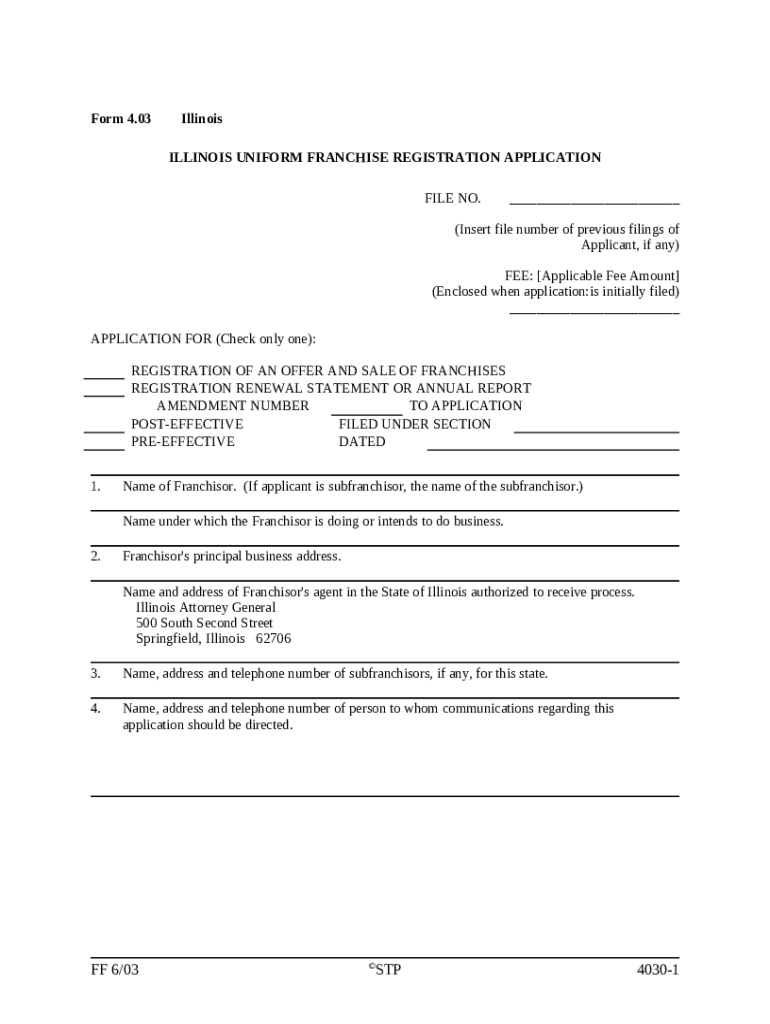
The Illinois Franchise Registration Application is a document utilized for registering the offer and sale of franchises within the state of Illinois. This application is required to ensure compliance with Illinois franchise laws, which are designed to protect potential franchisees by ensuring they receive pertinent information before making an investment. By submitting this application, a franchisor provides a certification statement, confirming that all disclosures are accurate and true, fostering a transparent franchisor-franchisee relationship.
Steps to Complete the Illinois Franchise Registration Application
-
Gather Required Information: The first step in completing this application involves collecting all necessary data about the franchise. This includes company background information, details about the franchise offer, and financial statements.
-
Complete Disclosure Document: Prepare a Franchise Disclosure Document (FDD), which must accompany the registration application. The FDD should include current and complete information about the franchise, ensuring the franchisor meets federal and state regulations.
-
Certification and Signatures: Ensure all parts of the form are signed by authorized individuals certifying the accuracy of the information provided. This may include company executives or legal representatives.
-
Submission and Fees: Submit the completed application along with the required fee to the Illinois Securities Department. Verify the preferred method of payment and ensure all documents are addressed to the correct department.
-
Wait for Approval: After submission, it’s important to monitor the status of the application. The department will review the application for completeness and compliance with Illinois laws, which may involve several weeks of processing time.
Required Documents
Filing an Illinois Franchise Registration Application necessitates the inclusion of several key documents. Foremost among these is the Franchise Disclosure Document (FDD), which must adhere to both federal and state mandates. Accompanying the FDD are financial statements of the franchisor, evidence of compliance with IRS requirements, and any agreements related to the franchise offer. Ensuring all documents are comprehensive and meticulously prepared is crucial for a seamless registration process.
Eligibility Criteria
To be eligible for submitting an Illinois Franchise Registration Application, the business must qualify as a franchisor under Illinois law. The company should be prepared to offer franchises within the state and comply with the Illinois Franchise Disclosure Act. Key criteria include adhering to financial and operational guidelines prescribed by the law and possessing a validated and law-compliant Franchise Disclosure Document.


Who Typically Uses the Illinois Franchise Registration Application
The primary users of this application are franchisors seeking to operate within Illinois. These include businesses ranging from established national brands to emerging enterprises launching new franchise opportunities. Legal representatives or franchise consultants often assist in preparing and submitting the application to ensure compliance with regulatory requirements, thus maximizing the franchisor's ability to legally engage and attract prospective franchisees.

State-Specific Rules for the Illinois Franchise Registration Application
Illinois has unique requirements governing franchise registration applications. Franchisors need to conform to the Illinois Franchise Disclosure Act, which mandates specific disclosure obligations that are more stringent compared to federal stipulations. Notably, regulated contacts, such as disclosure delivery methods and timing, and the franchisor’s obligation to update the application annually, are unique to the state.
Penalties for Non-Compliance
Failure to correctly file the Illinois Franchise Registration Application can lead to serious legal and financial repercussions. Non-compliance may result in penalties, including fines or revocation of the franchise’s legal standing to operate within the state. Moreover, franchisors risk legal action from franchisees for omission or misrepresentation of critical information, which not only incurs financial burdens but can damage the franchisor's reputation.
Form Submission Methods
Illinois allows for submission of the Franchise Registration Application through various channels. Franchisors can opt for online submission via state portal systems, which often provide status tracking features. Alternatively, applications may be submitted via mail or in-person at designated state offices. Ensuring the method chosen is both timely and efficient is crucial for meeting state deadlines and maintaining compliance.
Business Types that Benefit Most from the Illinois Franchise Registration Application
Franchising is highly beneficial for businesses looking to expand their reach and brand presence in Illinois. Common business types that thrive with this application include fast-food chains, real estate services, fitness centers, and educational services. These sectors typically leverage the franchise model to capitalize on established brand recognition and a scalable business structure.
Important Terms Related to Illinois Franchise Registration Application
A precise understanding of key terms associated with the Illinois Franchise Registration Application is crucial. Essential terms include the Franchise Disclosure Document (FDD), franchisor obligations, registration fees, and franchisee rights. Being familiar with these concepts ensures that applicants are well-prepared and better equipped to navigate the complexities involved in the registration process.




