






Definition & Purpose
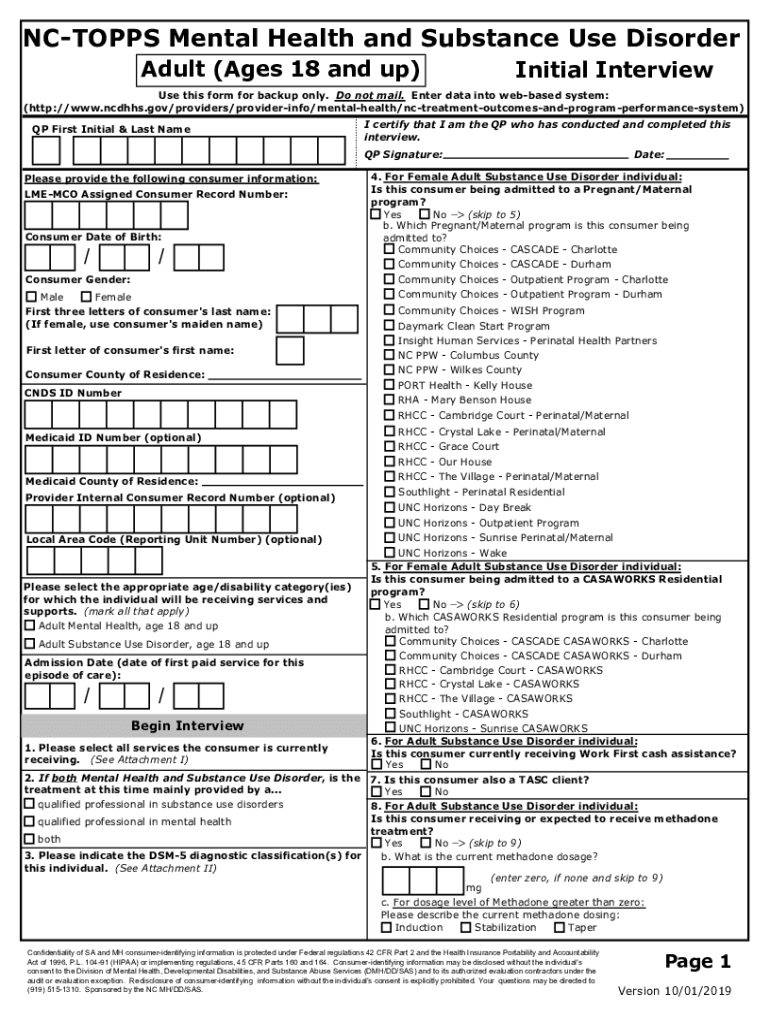
The 2019 NC NC-TOPPS Mental Health and Substance Abuse Initial Interview (Ages 18 and up) serves as a comprehensive tool for evaluating the mental health and substance use needs of adults in North Carolina. This form is specifically designed for individuals aged 18 and older who are undergoing an initial assessment for mental health or substance use disorders. The form collects vital personal and demographic information, treatment history, and current service engagement to facilitate appropriate care planning and ensure tailored treatment interventions.
How to Use the Initial Interview Form
-
Preparation: Before starting the form, gather all necessary personal information, including your treatment history and current service details.
-
Completion: Carefully fill out each section, ensuring data accuracy and completeness. The form should capture a detailed snapshot of the individual's mental health and substance use concerns.
-
Submission: Enter the data into a web-based system as instructed. This approach enhances confidentiality and streamlines the process by eliminating the need for physical mailing.
-
Follow-Up: After submission, consult with a healthcare provider to review the form and discuss next steps in the treatment plan.
Steps to Complete the Form
-
Personal Information: Start by providing basic personal details, such as name, age, and contact information.
-
Treatment History: Document any previous mental health or substance use treatments, including dates and outcomes.
-
Current Service Utilization: List current mental health services or programs being accessed, highlighting any ongoing treatments.
-
Assessments: Answer questions assessing current mental health status and substance use patterns, using the DSM-5 diagnostic criteria as a guide.
-
Review: Double-check all entries for accuracy before submitting the data to the designated web platform.
Key Elements of the Interview Form
-
Demographic Information: Captures vital statistics such as age, gender, and ethnicity to understand the diverse needs of the population served.
-
Confidentiality Measures: The form emphasizes the privacy of the information provided, instructing users to submit data via a secure online system.
-
Diagnostic Classifications: Utilizes DSM-5 criteria to categorize mental health and substance use disorders, ensuring standardized assessment across cases.
Legal Use and Compliance
This form is legally required for assessing and determining the mental health and substance use treatment needs of individuals within North Carolina. Compliance with guidelines ensures that the provider can effectively tailor treatment interventions and that the care remains within the scope of the state's health regulations. Non-compliance could result in inadequate treatment planning or regulatory challenges for healthcare providers.
State-Specific Guidelines
The form follows North Carolina's specific guidelines for recording and assessing mental health and substance use disorders, reflecting the state's public health priorities. Any variations in procedure or additional requirements should be verified with state-specific legislation or healthcare policies.
Digital vs. Paper Format
The NC-TOPPS form is designed primarily for digital submission to safeguard confidentiality and facilitate efficient processing. While a paper version might be available for initial data collection, transferring data to the electronic system is crucial for compliance with privacy standards and ease of access for subsequent care providers.
Examples of Utilization
Consider an adult seeking mental health services in a community clinic. The clinician will use the NC-TOPPS form to gather baseline data, which will then guide the formulation of a customized treatment plan addressing specific needs like anxiety management or substance use recovery.
In another scenario, a patient referred by a primary care physician can have their initial interview data submitted using the NC-TOPPS form, allowing mental health specialists to promptly evaluate and develop a targeted care strategy.