







Definition and Meaning
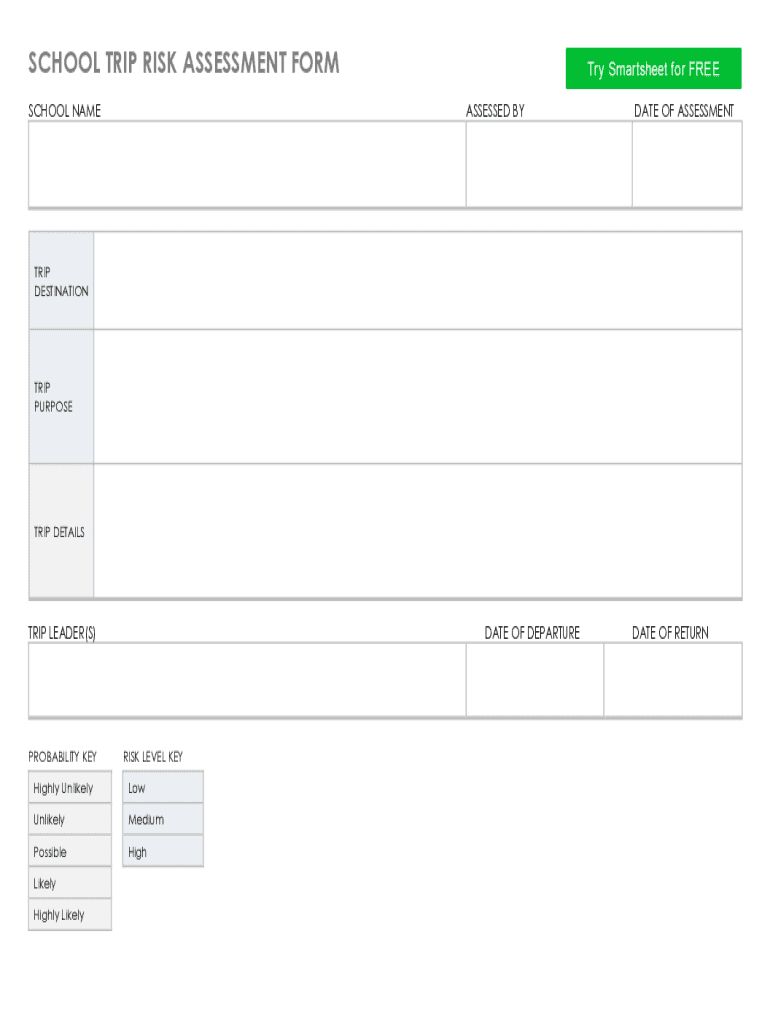
The School Trip Risk Assessment Form is a comprehensive document used to identify, evaluate, and mitigate potential risks associated with school-organized trips. This form is an essential tool used by educational institutions to ensure the safety and well-being of students, staff, and other participants during off-campus trips. The form outlines various risk factors, assigns responsibility to leaders, and provides a structured approach to managing unforeseen events. By evaluating probability and impact, schools can decide on precautionary measures to prevent incidents.
Key Elements of the School Trip Risk Assessment Form
Understanding the key elements within the form is crucial. Common elements include:
- Trip Details: Information about the trip's destination, purpose, duration, and schedule.
- Participant Information: A list of participants, including students, staff, and volunteers, along with emergency contact details.
- Risk Identification: An outline of potential hazards such as travel risks, health concerns, environmental factors, and activity-specific dangers.
- Risk Evaluation: A method of assessing the likelihood and severity of identified risks.
- Control Measures: Strategies and actions planned to mitigate or eliminate risks, including safety protocols and emergency procedures.
Thoroughly completing these elements helps ensure a well-prepared trip.
Steps to Complete the School Trip Risk Assessment Form
Filling out the form involves several detailed steps to ensure all relevant risks are addressed:
- Gather Basic Trip Information: Include the destination, dates, supervision plan, and objectives.
- Identify Participants: List all attendees and their roles.
- Assess Risks: Consider various scenarios like weather, transportation issues, medical emergencies, and activity-related risks.
- Plan Controls: Develop and document strategies to manage identified risks effectively.
- Review and Approval: Submit the form to school authorities for review and obtain necessary approvals before the trip.
Following these steps ensures comprehensive risk management.
How to Use the School Trip Risk Assessment Form
The form can be effectively utilized by educational staff through the following processes:
- Pre-Trip Planning: Use the form during initial planning stages to identify and address potential issues.
- Team Collaboration: Encourage team members to contribute insights and recommendations for a collective understanding of risks.
- Continuous Monitoring: During the trip, remain vigilant and adjust plans as necessary based on evolving circumstances.
- Post-Trip Review: Analyze the effectiveness of the risk assessment and control measures, documenting lessons learned for future excursions.
Using this form supports proactive risk management throughout the trip lifecycle.
Who Typically Uses the School Trip Risk Assessment Form
The form is primarily used by school administrators, trip leaders, and teachers responsible for organizing school trips. It serves as a comprehensive guide for those involved in the planning, coordination, and execution of the excursion. The form ensures that all stakeholders, including parents and guardians, are aware of the safety protocols and measures in place.


Legal Use of the School Trip Risk Assessment Form
The legal usage of this form ensures compliance with school policies and local regulations governing student safety during off-campus activities. It serves as a documented process that can be referenced in the event of any incidents or disputes. Ensuring proper use of the form helps safeguard the institution against potential legal ramifications by demonstrating due diligence in risk management.
Form Submission Methods
The school trip risk assessment form can be submitted through various methods depending on institutional preferences:
- Online Submission: Digital platforms allow for an efficient review process and easy accessibility for revisions or updates.
- Mail: Physical submission for schools with traditional administrative practices.
- In-Person: Direct submission to the administration office for immediate review and feedback.
Choosing the appropriate submission method ensures timely processing and approval of the form.
Required Documents
Several supporting documents are often required alongside the form to provide a comprehensive overview:
- Parental Consent Forms: Authorization from guardians for student participation.
- Medical Information Forms: Health details and special requirements for participants.
- Itinerary and Maps: Detailed trip schedule and geographical information.
- Emergency Contact Lists: Critical contact information for rapid communication in emergencies.
Providing these documents ensures all necessary aspects of the trip are covered comprehensively.




