






Definition & Meaning
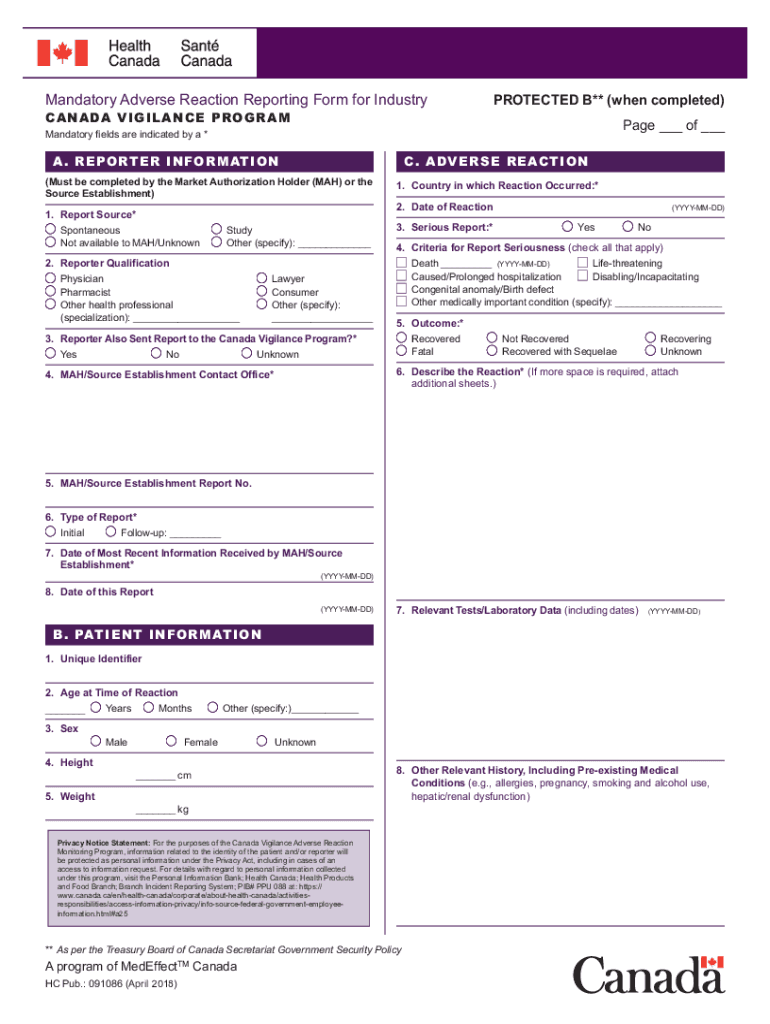
The "Mandatory Adverse Reaction Reporting Form for - Canada ca" is a document used by industries to report adverse reactions to health products that are already on the market in Canada. This form is essential for maintaining consumer safety by tracking any negative effects associated with the use of health products. It includes details such as information about the reporter, the patient, and the specific adverse reaction linked to the health product in question. This form is not an indication of the health product's overall safety, but rather a tool for gathering data to monitor and evaluate potential health risks associated with its use.
How to Obtain the Mandatory Adverse Reaction Reporting Form for - Canada ca
To obtain the Mandatory Adverse Reaction Reporting Form for Canada, industry representatives can access it through official government portals or obtain a copy from the health product regulation authority. It is crucial to ensure that the form is the most current version, reflecting any recent updates to reporting protocols. Contacting the Canadian regulatory body directly may also provide instructions or links for downloading the form. Additionally, industry members can request this form via email or telephone contact with the relevant authorities.
Steps to Complete the Mandatory Adverse Reaction Reporting Form
-
Identify Reporter Details: Start by filling in the reporter's information, including name, affiliation, and contact details. This section ensures that any follow-up can be directed appropriately.
-
Patient Information: Record patient details, ensuring confidentiality and compliance with privacy regulations. Include only necessary demographic information.
-
Describe Adverse Reaction: Provide a comprehensive description of the suspected adverse reaction, outlining the symptoms, severity, and duration. If possible, include when the reaction began after product exposure.
-
Health Product Information: Identify the health product involved, detailing the brand name, active ingredients, dosage form, and manufacturer.
-
Previous Adverse Reactions: If known, detail any previous similar reactions experienced by the patient with this or related products.
-
Submit the Form: Follow the submission protocols, which may involve sending the form electronically via a secure portal or mailing it to the designated regulatory body.
Who Typically Uses the Mandatory Adverse Reaction Reporting Form
This form is primarily used by healthcare professionals and industry representatives who are involved in the production, distribution, or monitoring of health products. These individuals and organizations are responsible for ensuring that any adverse reactions that arise from their products are promptly and accurately reported. Researchers and clinical trials personnel may also use this form when monitoring new products' performance in a real-world setting.


Key Elements of the Mandatory Adverse Reaction Reporting Form
- Reporter Information: Includes the name, position, and contact details of the person submitting the report.
- Patient Demographics: Collects minimal yet necessary information to contextualize the adverse reaction.
- Details of the Adverse Reaction: Description of symptoms, onset time relative to product use, and outcome.
- Product Identification: Complete details about the product, including name, manufacturer, and batch number.
- History of Reactions: Information on any similar past reactions in the same patient, if available.
Legal Use of the Mandatory Adverse Reaction Reporting Form
Submitting an adverse reaction report through this form does not imply legal liability for the reporter or the health product manufacturer. Rather, it is a mandatory regulatory process intended to enhance consumer safety and ensure compliance with Canadian health laws. Accurate reporting facilitates regulatory oversight and helps identify patterns or clusters of adverse events that may necessitate product warnings, adjustments in recommended usage, or, in extreme cases, product recalls.
Form Submission Methods (Online / Mail / In-Person)
The reporting form can be submitted in several ways to accommodate different preferences and accessibilities:
- Online: The quickest and most efficient method involves submitting the form electronically through the designated government portal, which ensures secure transmission and immediate receipt.
- Mail: For those preferring traditional methods, the completed form can be printed and mailed to the specified address found on the official regulatory website.
- In-Person: While less common, in-person submissions may be possible by visiting a regional office of the health regulatory authority, providing a chance for face-to-face clarification of any details.
Penalties for Non-Compliance
Non-compliance with the requirement to report adverse reactions can result in significant penalties, which may include fines or other regulatory actions against the responsible parties. Industries failing to adhere to reporting obligations may face investigations and potential sanctions, impacting their ability to market their products in Canada. These measures ensure that health products remain safe for consumers and that any risks are promptly mitigated through appropriate action.
Important Terms Related to the Reporting Form
Understanding some of the key terms associated with the form enhances accurate reporting and compliance:
- Adverse Reaction: An unexpected and harmful response to a health product experienced by a patient.
- Dosage Form: The physical form in which a drug is produced and dispensed, such as tablets, capsules, or injections.
- Batch Number: A unique identifier for a specific production batch, used to trace the manufacturing details of the product.
- Pharmacovigilance: The science and activities relating to the detection, assessment, understanding, and prevention of adverse effects or any other drug-related problems.
Software Compatibility
For those managing compliance and reporting through digital platforms, understanding software compatibility is key. Systems that integrate smoothly with regulatory reporting tools, such as DocHub, can streamline the process. These platforms allow users to complete forms digitally and submit them through secure channels, reducing the risk of errors and delays, and improving workflow efficiency. Platforms like DocHub also ensure compatibility with various file types, enhancing flexibility in documentation management.
Digital vs. Paper Version
Choosing between digital and paper submissions can affect the ease and timeliness of reporting:
- Digital Version: Offers speed and convenience. Submitting digitally usually ensures faster processing and improved accuracy due to digital checks and streamlined workflows.
- Paper Version: Provides a tangible record, useful for those without reliable digital access. However, it might involve longer processing times and increased chance of errors, such as misplacement.
Understanding these options helps in selecting the most suitable method for form submission, taking into account factors like urgency, access to technology, and personal preferences for record-keeping.