







Definition & Meaning
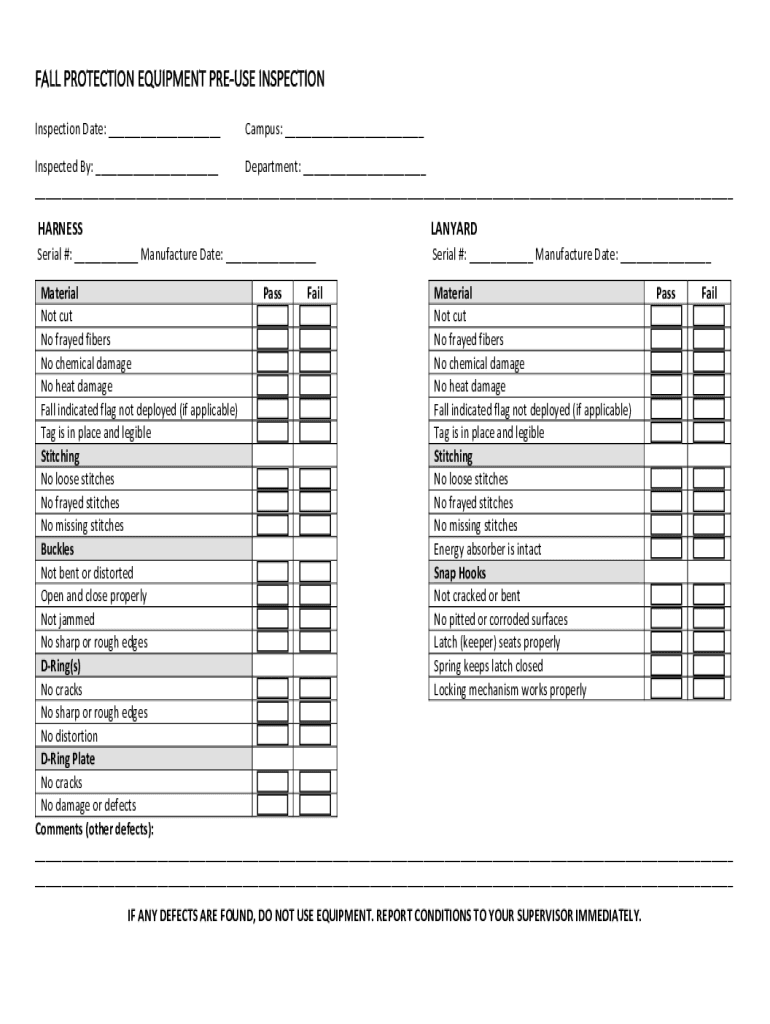
The "Fall Protection Equipment Pre-Use Inspection" refers to a systematic check conducted prior to using any fall protection gear. The inspection aims to ensure that all components of the equipment, such as harnesses and lanyards, are in proper working condition and free from damage. This pre-use inspection is essential for maintaining safety standards and preventing accidents in environments where there is a risk of falling from heights. The inspection assesses various features, including structural integrity, material condition, and proper functioning of mechanical elements.
Key Elements of the Fall Protection Equipment Pre-Use Inspection
Understanding the critical components of the inspection ensures that all necessary checks are performed systematically:
- Harness Checks: Inspect for wear, fraying, cuts, or any signs of deterioration. The buckles and other hardware should be securely fastened and free of corrosion.
- Lanyard Assessment: Evaluate the lanyard for any damage or defects. Check connectors for crack or deformation and verify the locking mechanism operates effectively.
- Serial Number Verification: Confirm that the serial number is visible and matches existing records for traceability.
- Manufacturer's Instructions: Review the manufacturer's guidelines for specific details pertinent to the equipment and adhere to any specific checks or maintenance protocols described.
- Labeling and Marking: Ensure that all labels are legible, including those indicating the date of manufacture and the inspection history.
Steps to Complete the Fall Protection Equipment Pre-Use Inspection
Conducting a thorough inspection involves a detailed process to mitigate potential risks:
- Visual Inspection: Look for obvious signs of wear and tear or physical damage across all equipment parts.
- Test Functionality: Check that all moving parts function as intended, such as locking mechanisms and buckle adjustments.
- Confirm Proper Fit: Before use, ensure that the harness and other personal protective equipment fit the user correctly, allowing for ease of movement yet securing effectively.
- Record Findings: Document each step of the inspection, noting any issues or pass/fail status of components.
- Take Corrective Action: If any defect is detected, remove the equipment from service until repairs or replacements are made.
Why Conduct a Fall Protection Equipment Pre-Use Inspection
The significance of conducting pre-use inspections is underscored by the direct impact on safety:
- Accident Prevention: Regular checks prevent equipment failures that could result in falls and serious injuries.
- Assurance of Compliance: Adhering to OSHA standards and regulations for safety ensures legal compliance and protects the organization from potential liabilities.
- Increased Equipment Longevity: Identifying minor issues early prevents further damage and extends the equipment’s usability.
- Peace of Mind: Knowing equipment has been vetted for safety allows personnel to focus on their tasks with confidence.
Who Typically Uses the Fall Protection Equipment Pre-Use Inspection
This inspection form is crucial for a range of personnel involved in operations where fall risks are present:
- Construction Workers: Engaged in high-altitude tasks on construction sites.
- Maintenance Technicians: Performing repairs on elevated structures or equipment.
- Warehouse Operatives: Working on loading docks or elevated storage areas.
- Safety Inspectors: Tasked with implementing and overseeing safety protocols in various industries.


Important Terms Related to Fall Protection Equipment Pre-Use Inspection
Knowing specific terminology enhances understanding and execution of inspections:
- D-Ring: The attachment point on a harness used to connect to a lanyard or lifeline.
- Anchor Point: A secure point of attachment for lifelines, lanyards, or deceleration devices, which must be able to withstand prescribed forces.
- Lifeline: A rope or cable that serves as a means of connecting the harness to an anchor point.
- Free Fall: The vertical displacement due to gravity before arrestee stops.
Legal Use of the Fall Protection Equipment Pre-Use Inspection
Ensuring that inspections align with legal requirements is essential for organizational compliance:
- OSHA Regulations: These rules mandate the inspection frequency, documentation, and compliance to safety checks.
- State-Specific Rules: Some states may have additional or stricter safety requirements. It is crucial to remain updated on local legislation.
- Documentation and Record Keeping: Legal compliance includes maintaining detailed records of inspections for near-future audits.
Software Compatibility and Integration
For organizations using document management platforms:
- Document Integration: Platforms like DocHub allow for digitized forms to be filled, signed, and stored, streamlining workflows.
- Cloud Storage Options: Integrating with Google Drive or similar services helps maintain easy access and retrieval of inspection records.
- Compatibility: Aligns with tools often used within safety management, facilitating easy tracking and updates of inspection results.
The detailed and thorough practice of completing the Fall Protection Equipment Pre-Use Inspection is central to occupational safety and compliance with regulatory standards. Leveraging digital tools can enhance efficiency in managing and conducting these inspections.




