






Definition & Meaning
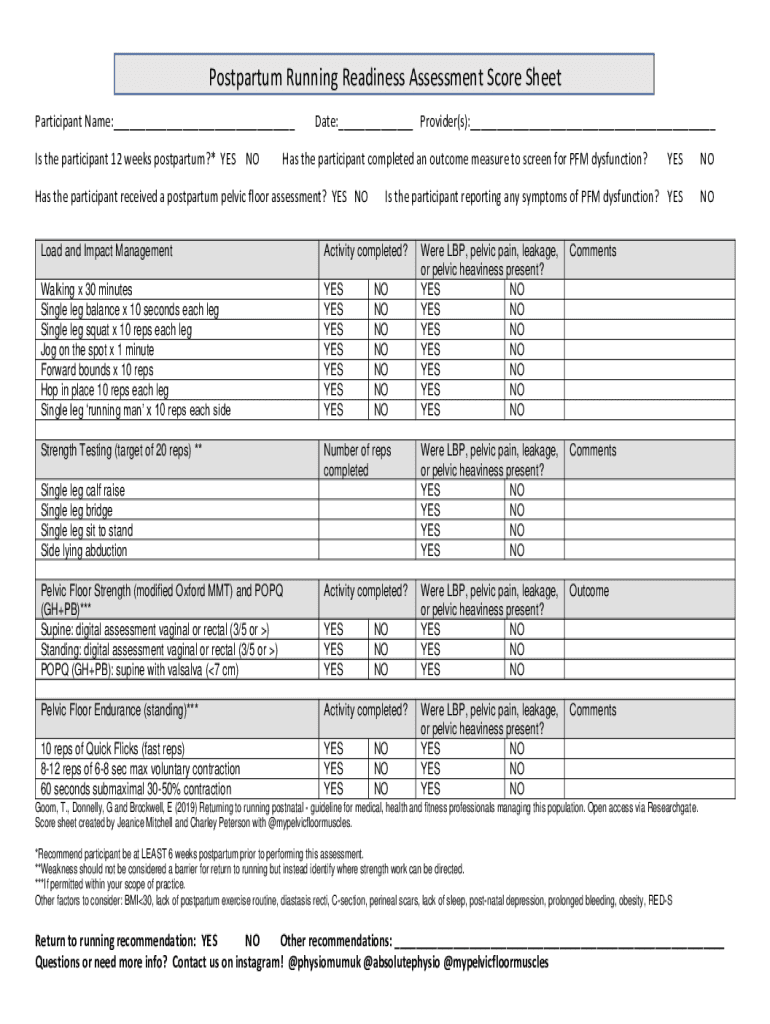
The Postpartum Running Readiness Assessment Score Sheet is a tool designed to evaluate the readiness of postpartum individuals to resume running. This score sheet assesses various physical and health metrics to ensure a safe return to running after childbirth. The assessment typically includes criteria such as recovery milestones, physical strength, and overall health status. Its primary aim is to provide a structured approach to determine whether individuals have sufficiently healed and regained fitness levels that are conducive to running without risking injury or health complications.
How to Use the Postpartum Running Readiness Assessment Score Sheet
To effectively utilize the Postpartum Running Readiness Assessment Score Sheet, individuals should follow a structured approach:
- Identify the Timeline: Ensure that at least 12 weeks have passed postpartum, as this is the commonly recommended timeframe for considering a return to running.
- Consult Healthcare Providers: Work with a healthcare provider or a physical therapist to help complete the assessment accurately.
- Complete Assessment Sections: Evaluate the individual's physical health, strength, flexibility, and endurance based on outlined criteria.
- Review and Interpret Scores: Analyze scores to determine the individual's readiness. Low scores indicate a need for further rest or rehabilitation.
- Develop a Return-to-Running Plan: Based on the assessment results, develop a personalized plan that gradually reintroduces running activities.
Steps to Complete the Postpartum Running Readiness Assessment Score Sheet
Completing the score sheet involves several key steps:
- Gather Necessary Information: Before filling out the sheet, collect relevant medical history, including any complications during childbirth.
- Physical Evaluations: Perform assessments of strength, flexibility, and endurance using exercises like squats or low-impact cardio activities.
- Symptom Assessment: Record any persistent symptoms such as pain, incontinence, or fatigue.
- Document Measurements: Quantify recovery milestones with specific measurements or health metrics, noting the progress since childbirth.
- Confer with Experts: Work with health professionals to verify the accuracy of self-assessed measures.
- Score Calculation: Tally the points across different sections of the sheet to generate a comprehensive score.
Why Use the Postpartum Running Readiness Assessment Score Sheet
This assessment score sheet is beneficial because:
- Ensures Safety: Validates that the individual is physically ready to resume running without risking health.
- Structured Assessment: Provides a comprehensive evaluation by systematically addressing all aspects of physical recovery.
- Facilitates Professional Guidance: Allows healthcare providers to offer tailored advice based on objective metrics.
- Encourages Gradual Progression: Promotes a phased return to fitness, reducing the likelihood of injury.
- Empowers Individuals: Provides postpartum individuals with valuable insights into their recovery journey.
Key Elements of the Postpartum Running Readiness Assessment Score Sheet
The score sheet is composed of several key elements:
- Health Background: Covers the individual's medical history and any complications experienced during or after childbirth.
- Physical Fitness Metrics: Evaluates aerobic capacity, muscular strength, flexibility, and core stability.
- Recovery Milestones: Tracks key indicators such as healing of incisions or affected areas and pelvic floor rehabilitation.
- Symptom Checklist: Identifies ongoing symptoms that may impact running readiness.
- Professional Input: Incorporates insights from healthcare providers or physical therapists as part of the assessment.
Who Typically Uses the Postpartum Running Readiness Assessment Score Sheet
The tool is primarily used by:
- Postpartum Individuals: Especially those aiming to return to a running routine after childbirth.
- Healthcare Providers: Such as physicians, obstetricians, and physical therapists leading postpartum recovery programs.
- Fitness Trainers: Specializing in postpartum fitness and rehabilitation.
- Women’s Health Specialists: Who offer counseling and support for postpartum physical activities.


Examples of Using the Postpartum Running Readiness Assessment Score Sheet
For example, a typical case might involve:
- Scenario One: A postpartum woman at 12 weeks who has no significant symptoms and high scores in strength and symmetry assessments, indicating readiness for gradual running.
- Scenario Two: Another client who, at 16 weeks postpartum, exhibits pelvic pain and scores lower on the core stability aspect, suggesting the need for additional core strengthening exercises before starting to run.
- Scenario Three: Utilized by a postpartum group fitness instructor helping new mothers recover safely and efficiently with structured exercise plans based on their assessment results.
Legal Use of the Postpartum Running Readiness Assessment Score Sheet
The legal use of the form includes:
- Compliance with Healthcare Standards: Ensures alignment with medical guidelines for postpartum care.
- Documentation and Record Keeping: Maintains an official record of assessment and recommendations, valuable for medical and legal purposes.
- Informed Consent: When used by professionals, gaining informed consent prior to assessment is crucial, ensuring individuals understand and agree to the evaluation process.