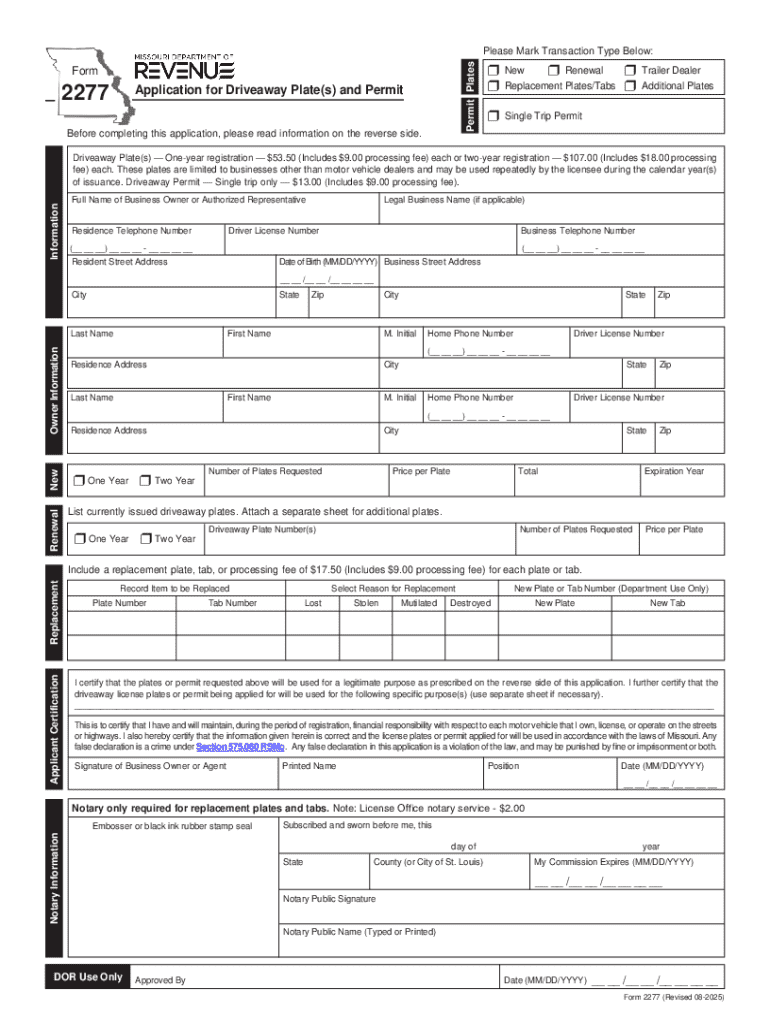







Definition & Purpose of Form 2277
Form 2277, known as the "Application for Driveaway Plate(s) and Permit," is a specialized document that facilitates the legal transport of vehicles by driveaway services within the United States. Driveaway services transport vehicles under their own power rather than shipping them on trailers. The form serves as an official application to obtain both driveaway plates and permits, which are crucial for operators to legally move vehicles across state lines. Understanding the purpose of this form helps businesses and individuals within the automobile transport industry operate in compliance with legal requirements.
Obtaining Form 2277
To obtain Form 2277, individuals and businesses must contact the appropriate state Department of Motor Vehicles (DMV) or its equivalent because the issuance process can vary by state. While some states offer downloadable forms on their DMV websites, others might require that you visit a local office in person. During the application, ensure you have necessary identification and business documentation. The availability of the form online or in-person will depend on the vehicle registration and transport regulations specific to your state.
Steps to Complete Form 2277
-
Gather Necessary Information: Include business identification, vehicle details, and personal identification for responsible parties.
-
Complete the Application Sections: Fill in all required fields, such as company details, license types, and vehicle identification numbers (VIN).
-
Attach Supporting Documents: This often includes vehicle titles, proof of insurance, and any previous permits or licenses.
-
Submit the Application: Follow the listed submission methods, which can include online submission, mailing, or in-person delivery at a designated DMV office.
-
Payment of Fees: Prepare to pay any applicable fees related to the issuance of driveaway plates and permits. Fee structures vary by state.
Key Elements of Form 2277
-
Applicant Information: Business name, contact details, and any relevant business license numbers.
-
Vehicle Details: Information about the vehicle(s) to be transported, including VIN, make, and model.
-
Insurance Information: Proof of valid insurance fulfilling both state and federal requirements.
-
Declarations and Signatures: A formal declaration attesting to the accuracy of the information provided, including signatures of responsible parties.
Legal Use of Form 2277
Form 2277 ensures that vehicles transported by driveaway services comply with legal requirements that regulate the movement of unregistered vehicles on public roads. The form serves as a legal tool to verify that the vehicle in transit adheres to state and federal regulations regarding insurance and vehicle identification. Operating without the appropriate permits can result in penalties, including fines or vehicle impoundment.
Who Typically Uses Form 2277
Form 2277 is primarily used by businesses in the automotive transport sector, including logistics companies specializing in over-the-road delivery of vehicles. These businesses range from small independent contractors to large logistics firms. Occasionally, vehicle manufacturers or dealerships needing to move vehicles between facilities may use this form to ensure compliance during transport.
State-Specific Rules for Form 2277
The requirements and procedures related to Form 2277 can differ significantly from one state to another. For example:
- California: Requires additional emissions documentation.
- Texas: Offers an online submission option via their DMV portal.
- Florida: Necessitates additional insurance coverage for special transport licenses.
Understanding state-specific nuances in the application process ensures compliance and expedites the approval process.
Application Process & Approval Time
The application process involves submitting the completed form with all required documentation to the relevant DMV office. Approval times can vary widely depending on the state and the completeness of the application. Generally, processing can take anywhere from a few days to several weeks. Applicants are advised to submit the application well ahead of the planned transport date to account for potential delays in processing.
Examples of Using Form 2277
-
Scenario 1: A new car manufacturer needs to transport vehicles from the production plant to dealerships in another state. By applying for driveaway plates and permits through Form 2277, they ensure the vehicles are legally transported.
-
Scenario 2: An independent contractor hired to deliver purchased used cars to buyers across state lines must acquire driveaway permits to meet legal requirements.
These examples underscore the practical applications and necessity of Form 2277 in facilitating legal vehicle transport operations in various business contexts.