






Definition and Meaning
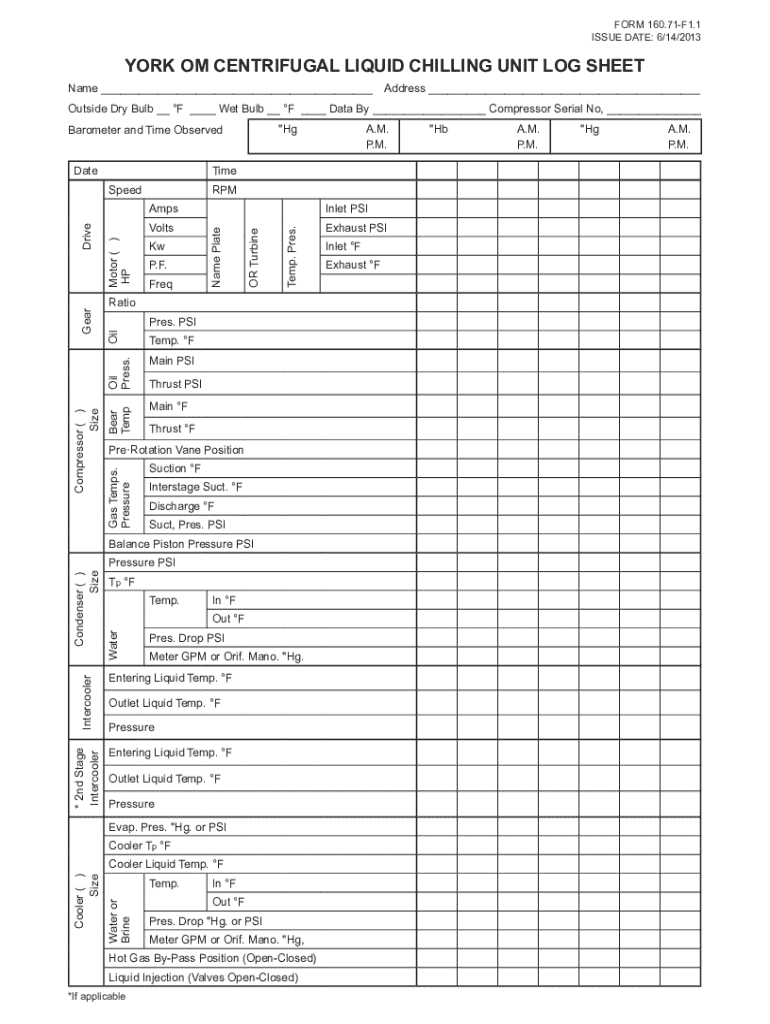
The OM Turbomaster Centrifugal Liquid Chiller Log Sheet (Form 160 71) is a specialized form used for recording operational data and maintaining the service history of centrifugal liquid chillers, particularly those manufactured by York. This document plays a critical role in ensuring proper maintenance and operation by logging essential performance metrics such as temperature, pressure, and equipment status. It serves as a reference for service technicians and facility managers to monitor the chiller’s performance over time, facilitating timely repairs and preventive maintenance.
Key Elements of the OM Turbomaster Centrifugal Liquid Chiller Log Sheet
This form captures a variety of data points critical to understanding and maintaining the optimal performance of the chiller unit. Key elements include:
-
Operating Temperatures: Documentation of the chiller’s inlet and outlet temperatures to ensure they are within the specified range.
-
Pressure Readings: Includes measurements like suction and discharge pressures that provide insight into the system's health.
-
Compressor Details: Logs the compressor’s serial number and operational status, providing a detailed history of its performance.
-
Refrigerant Levels: Helps in maintaining the proper amount of refrigerant within the system to prevent inefficiency or damage.
-
Energy Consumption: Monitors the energy usage of the unit, aiding in energy optimization and cost control efforts.
How to Use the OM Turbomaster Centrifugal Liquid Chiller Log Sheet
To use the OM Turbomaster Centrifugal Liquid Chiller Log Sheet effectively:
-
Familiarize Yourself with the Form:
- Review all sections to understand the required information.
-
Gather Required Data:
- Collect performance metrics such as temperatures, pressure, and energy usage from monitoring devices on the chiller unit.
-
Fill Out the Form:
- Accurately input collected data into the corresponding fields on the form. Ensure completeness and clarity.
-
Review and Verify:
- Double-check all entries for accuracy. Verify that the values fall within the expected range for optimal operation.
-
File and Store:
- Keep the completed form in an organized logbook for future reference and analysis.
Steps to Complete the OM Turbomaster Centrifugal Liquid Chiller Log Sheet
Completing the form requires careful attention to detail. Here is a step-by-step guide:
-
Begin by Recording Identification Information:
- Enter the model and serial number of the chiller, the date of data entry, and the name of the person completing the form.
-
Document Temperature Readings:
- Record the inlet and outlet temperatures in degrees Fahrenheit as per the chiller’s control panel or temperature gauges.
-
Log Pressure Measurements:
- Input the suction and discharge pressures using readings from the pressure gauges or control system displays.
-
Include Compressor and Refrigerant Details:
- Ensure the compressor serial number is correct, and note the current refrigerant levels.
-
Capture Additional Operational Notes:
- Add any observations regarding unusual sounds, maintenance activities performed, or anomalies detected during the operation.
Importance of the OM Turbomaster Centrifugal Liquid Chiller Log Sheet
Maintaining the OM Turbomaster Centrifugal Liquid Chiller Log Sheet is crucial for a variety of reasons:
-
Performance Monitoring: Regular documentation helps in identifying performance trends and irregularities that could indicate underlying issues.
-
Maintenance Efficiency: Facilitates preventive maintenance by providing historical data that can highlight components needing attention.
-
Compliance and Safety: Ensures the chiller operates within manufacturer’s specified parameters, reducing risks of malfunctions and enhancing safety.
Who Typically Uses the OM Turbomaster Centrifugal Liquid Chiller Log Sheet
This form is commonly utilized by:
-
Facility Managers: Responsible for the overall operation and maintenance of building systems, including HVAC units.
-
Service Technicians: Use the logs to diagnose issues, perform routine checks, and plan maintenance activities.
-
Engineers: Analyze the data for efficiency optimization and capacity planning.


Examples of Using the OM Turbomaster Centrifugal Liquid Chiller Log Sheet
Consider some practical scenarios:
-
Regular Maintenance Checks: A technician conducts weekly inspections of the chiller unit and uses the sheet to record all operational data, identifying a slight increase in discharge pressure that could indicate a developing issue.
-
Troubleshooting: During a system malfunction, historical log sheets are reviewed to identify patterns or recurring issues that may inform the root cause analysis.
-
Energy Auditing: Energy usage recorded on the form can be compiled to assess overall efficiency and justify recommendations for upgrades or operational changes.
State-Specific Rules for the OM Turbomaster Centrifugal Liquid Chiller Log Sheet
While the form itself is standardized, specific regulations or compliance requirements may vary by state due to:
-
Local Environmental Laws: Some states have additional mandates for refrigerant management and leak reporting, which may require supplementary documentation.
-
Energy Efficiency Standards: State initiatives might require adherence to particular performance benchmarks that necessitate detailed, regular logging of energy consumption data.
Recognizing these local variations is crucial for ensuring compliance and taking advantage of regional sustainability programs.