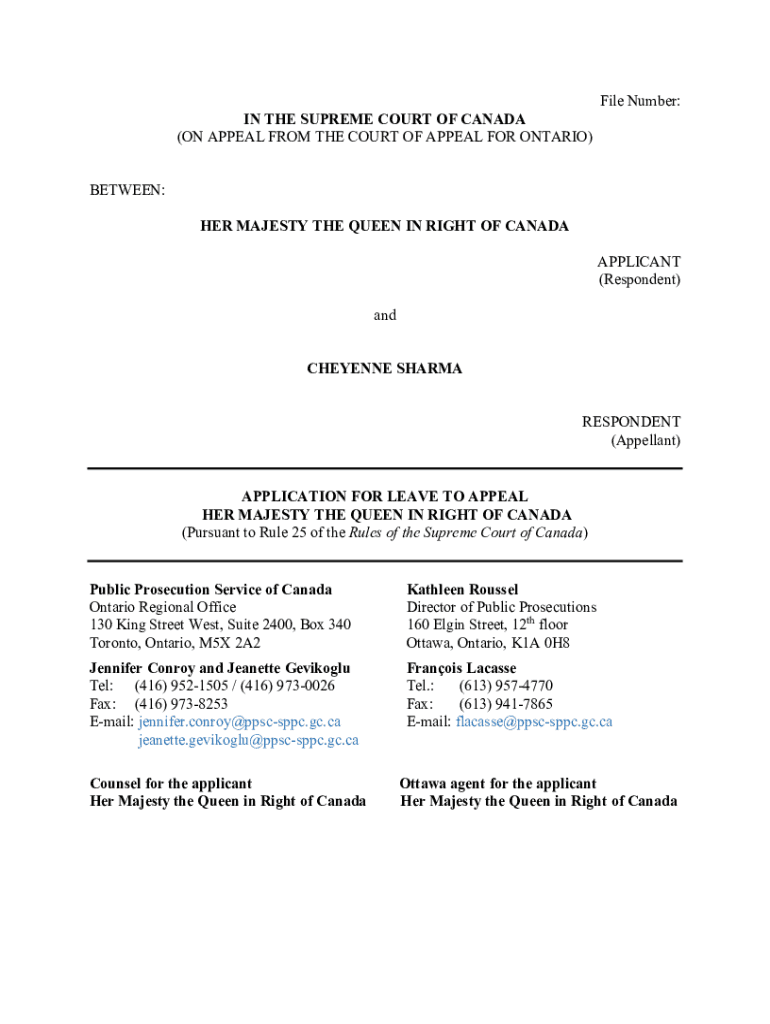







Definition and Meaning
The "Supreme Court of Canada - Information and resources for self" refers to a comprehensive guide designed to help individuals navigate their interactions with the Supreme Court of Canada. This resource is aimed at empowering self-represented litigants by providing them with critical information and tools necessary to understand court procedures, legal documentation, and rights within the Canadian judicial system. Such resources serve to demystify court processes for individuals without legal representation, fostering greater accessibility and understanding of the judicial system.
Important Terms Related to Supreme Court of Canada Resources
Understanding the terminology is crucial for effectively using Supreme Court resources. Key terms include:
- Appellant: The party who appeals a court decision.
- Respondent: The party against whom the appeal is made.
- Judicial Proceeding: Any proceeding before a court of law.
- Leave to Appeal: Permission granted by a court to appeal a decision.
- Docket: A record of all proceedings in a court case.
Each term is fundamental in understanding the legal pathways and documentation typically encountered in Canadian Supreme Court matters.
How to Obtain Supreme Court of Canada Resources
Obtaining information from the Supreme Court of Canada can be done through several methods:
- Direct Download: Resources are often available on the official Supreme Court of Canada website.
- Public Libraries: Many libraries offer access to legal texts, including guides and informational resources.
- Legal Aid Clinics: These clinics provide resources and support for individuals navigating legal processes.
- Court Clerk's Office: Direct inquiries can be made at the Supreme Court’s clerk's office for printed materials or further guidance.
These sources ensure that resources are accessible and understandable to the general public.
Steps to Utilize Supreme Court of Canada Resources
Using the provided resources effectively involves several steps:
- Identify Your Need: Determine the specific context in which the resources will be used, such as preparing for a hearing or understanding procedural requirements.
- Gather Required Documents: Have all relevant documents ready, including court files and any correspondence from the court.
- Consult the Resource: Review the resource for instructions, guidance, and explanations relevant to your situation.
- Prepare Documentation: Use the provided templates and guidelines to prepare mandatory submissions accurately.
- Seek Clarifications: Where necessary, contact legal professionals or the court for clarification of complex sections.
This methodical approach ensures that resources are used effectively for legal preparation and understanding.
Who Typically Uses Supreme Court of Canada Resources
These resources are primarily used by individuals representing themselves in court, also known as self-represented litigants. They are also utilized by:
- Legal Professionals: As a reference or educational tool.
- Students: For educational purposes related to law studies.
- Journalists: In reporting and understanding high-profile cases.
- Public Interest Groups: For research and advocacy efforts.
These diverse user groups highlight the resource’s wide applicability and importance.
Legal Use of Supreme Court of Canada Resources
The resources are specifically designed for legal use in preparing and navigating court proceedings. They provide critical insights into:
- Filing Legal Documents: Guidelines on document preparation and submission processes.
- Understanding Procedural Rules: Detailed frameworks for engaging with court processes.
- Navigating Appeals: Support for understanding the appeal process and requirements.
By equipping users with this knowledge, the resources facilitate legally sound and effective interactions with the court system.
Key Elements and Structure
The resources include several key elements tailored to the needs of users:
- Step-by-Step Guides: Detailed instructions on court processes.
- FAQs: Common questions and clarifications.
- Templates: Samples for court documents and filings.
- Glossary: Explanation of legal terms.
- Case Studies: Real-world examples providing insight into the application of guides.
These components are designed to be user-friendly and accessible, ensuring clarity and ease of use.
Digital vs. Paper Versions
The resources are available in both digital and paper formats, each with unique benefits:
- Digital Version: Allows for easy access, searchability, and the latest updates. It can be accessed online via the Supreme Court's website.
- Paper Version: Useful for those preferring hard copies or without internet access. It can be acquired from libraries or the court's office.
Both formats serve to make legal information widely accessible, regardless of technical expertise or internet connectivity.