






Definition & Meaning
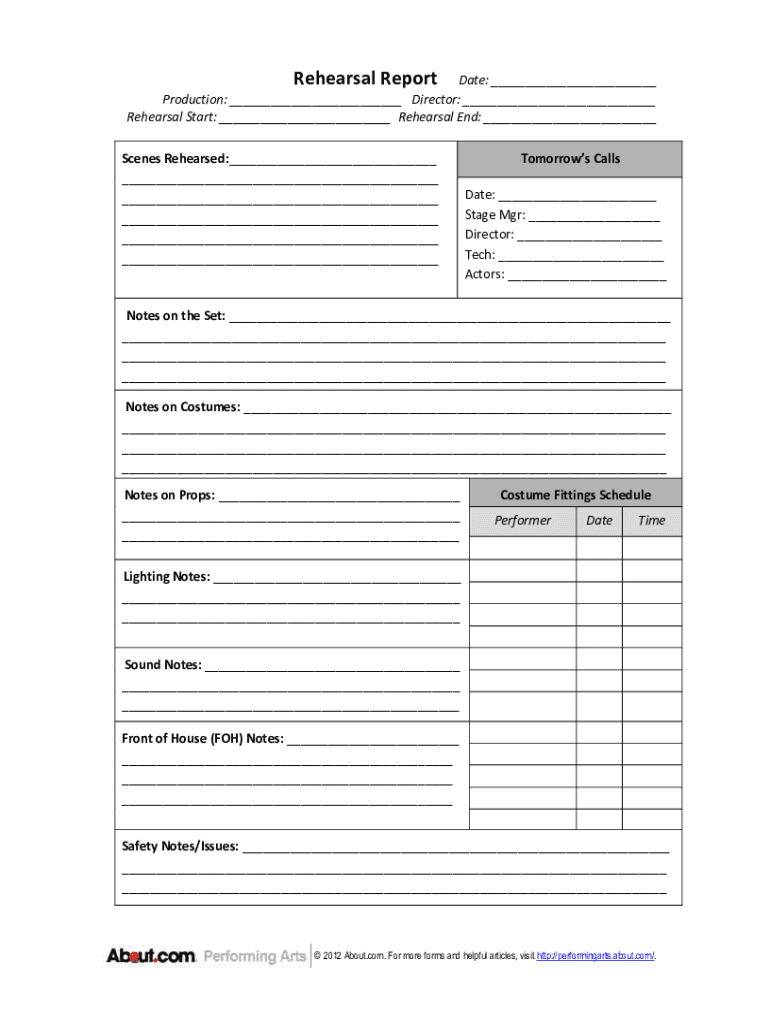
The Rehearsal Report Form serves as a vital communication tool in the realm of theater production management. It is a comprehensive document used by stage managers to capture and convey detailed information about the progress and needs of a rehearsal session. This form typically includes specifics about the scenes rehearsed, any adjustments to schedules, and essential notes related to staging, lighting, sound, and costumes. The Rehearsal Report Form is integral in ensuring all team members—from directors to technical crews—are aligned and informed, promoting an efficient and coordinated production process.
Key Elements of the Rehearsal Report Form
The Rehearsal Report Form is composed of several essential sections that collectively provide a complete snapshot of each rehearsal session. Important components include:
- Date and Rehearsal Details: Records the exact date and time of the rehearsal along with the scenes practiced during that session.
- Notes on Set and Props: Documents any changes or issues related to set design elements and required props.
- Lighting and Sound Adjustments: Captures feedback or requests for alterations in lighting and sound, crucial for technical teams.
- Costume Notes: Details about costumes that might need attention, adjustments, or substitutions.
- Safety Concerns: Lists any safety issues encountered, ensuring the cast and crew's well-being.
- Tomorrow’s Calls: Provides stage managers, directors, and crew members with a heads-up on upcoming rehearsals, easing logistical coordination.
How to Use the Rehearsal Report Form
Utilizing the Rehearsal Report Form efficiently requires a systematic approach:
- Pre-Rehearsal Review: Before the session begins, the stage manager pre-fills known information such as date, time, and planned scenes.
- During Rehearsal: As the rehearsal progresses, the form is continuously updated with observations, immediate changes, and feedback.
- Post-Rehearsal Completion: After the session, the report is completed by adding final notes and highlighting any unresolved issues or follow-up actions.
- Distribution: The updated form is then circulated among key stakeholders, including directors, cast members, and technical staff to ensure everyone is apprised of the day’s developments.
Steps to Complete the Rehearsal Report Form
To accurately fill out a Rehearsal Report Form, follow these steps:
- Identify Key Rehearsal Information: Enter the date, session timings, and scenes or acts rehearsed.
- Record Detailed Observations: Note any required scene adjustments, successful practices, or challenges faced.
- Log Technical Details: Include specific information on lighting, sound, set, and props, with attention to any recommended changes.
- Capture Costume Requirements: Document any wardrobe adjustments needed, new costumes, or fittings required.
- Highlight Safety Issues: Record any incidents or potential hazards, along with preventative measures suggested.
- Prepare for the Next Session: Note any specific preparations or calls for the upcoming rehearsal to facilitate seamless transitions.
Who Typically Uses the Rehearsal Report Form
The Rehearsal Report Form is primarily utilized by:
- Stage Managers: Responsible for maintaining a record of the session and ensuring communication across departments.
- Directors: Use it to track progress and make informed decisions about future sessions.
- Technical Teams: Rely on detailed entries for implementing visual and audio elements critical to the performance.
- Cast Members: Review notes for specific instructions related to performance, cues, or changes in blocking or dialogue.


Examples of Using the Rehearsal Report Form
Consider the following scenarios illustrating the form’s practical application:
- Scene Adjustment Request: The director might note that a scene needs a change in blocking, which is subsequently tracked on the form and communicated to all relevant team members.
- Costume Alteration Feedback: If a costume hampers movement, the report will highlight this, ensuring the costume department can address it promptly.
- Technical Issue Identification: A sound glitch noticed during rehearsal is recorded, prompting the audio engineer to resolve it before the next session.
Digital vs. Paper Version
In the digital age, Rehearsal Report Forms are often completed using online platforms, offering several advantages over traditional paper methods:
- Real-Time Updates: Digital forms allow instant amendments and immediate sharing with the production team.
- Storage and Retrieval Simplicity: Easier to organize, access, and archive past reports without physical storage constraints.
- Enhanced Collaboration: Multiple team members can access and edit the form simultaneously, fostering a collaborative environment.
Integration with Document Workflow Tools
Platforms like DocHub streamline the process of managing Rehearsal Report Forms by offering digital solutions that include:
- Customizable Templates: Tailor digital forms with specific elements necessary for each production.
- Secure Sharing Options: Utilize secured channels for distributing sensitive production updates.
- Efficient Collaboration Tools: Leverage annotation, commenting, and real-time sharing features to refine and enhance communication between all stakeholders involved in the production.