






Definition and Purpose of the Wyoming Advance Directive
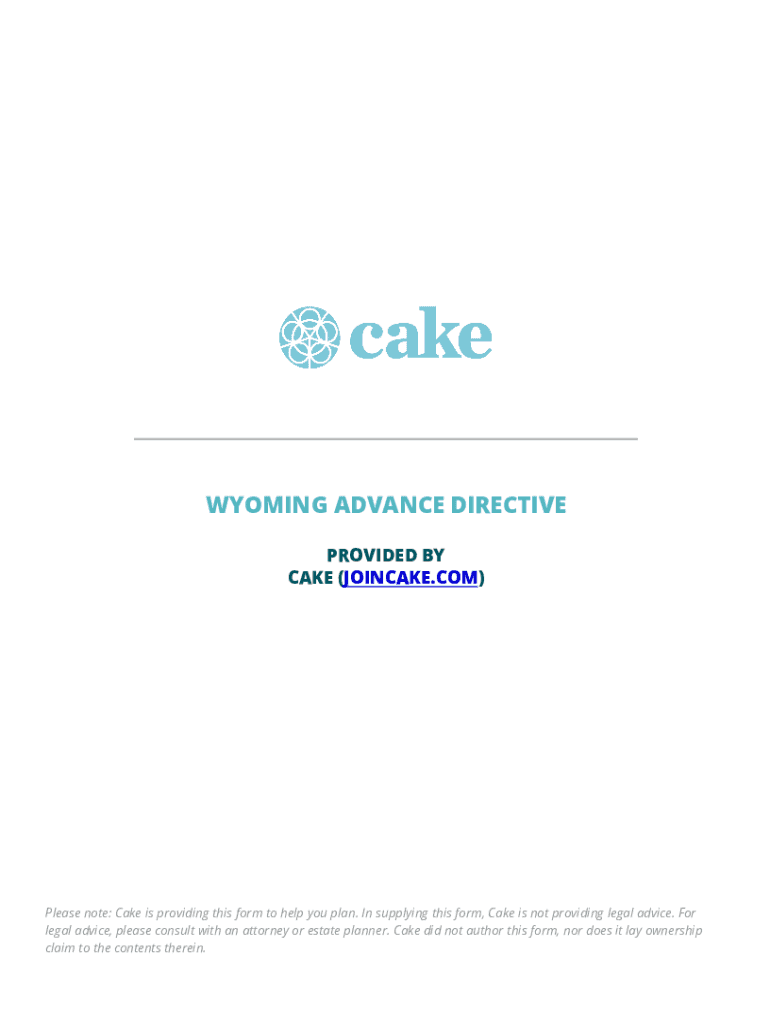
The Wyoming Advance Directive is a vital legal document allowing individuals to articulate their healthcare preferences in circumstances where they may become incapacitated or unable to communicate. This directive empowers a designated agent to make specific medical decisions on behalf of the individual, ensuring that end-of-life preferences and other healthcare wishes are respected. It includes sections on organ donation and is legally binding, provided it meets the state’s specific execution requirements. The directive ensures that healthcare providers and family members have clear guidance on an individual's preferences, reducing ambiguity during critical medical situations.
How to Use the Wyoming Advance Directive
To effectively use the Wyoming Advance Directive, individuals should first thoroughly review and understand the document’s components, ensuring all sections are completed accurately. The directive should be stored in an accessible location and shared with relevant parties such as family members, healthcare providers, and legal representatives.
- Designate a Healthcare Agent: Choose a trusted individual as the healthcare agent to make decisions if you are unable.
- Outline Specific Instructions: Clearly state healthcare preferences, including treatment options and end-of-life care.
- Review Regularly: Periodically update the directive to reflect current wishes and any changes in circumstances or preferences.
Steps to Complete the Wyoming Advance Directive
Completing the Wyoming Advance Directive involves several critical steps to ensure it is legally binding and reflects the individual's wishes:
- Review the Document: Familiarize yourself with the entire form, including terminology and sections.
- Enter Personal Information: Fill out identification details accurately.
- Designate a Healthcare Proxy: Appoint someone trusted as your healthcare agent.
- Specify Healthcare Instructions: Detail your preferences for medical treatment and interventions.
- Organ Donation Choices: Indicate whether you want to be an organ donor.
- Witnessing and Notarization: Have the document witnessed by two independent parties or notarized to meet Wyoming’s legal requirements.
- Distribute Copies: Share the completed document with your healthcare agent, family, and medical providers.
Legal Use of the Wyoming Advance Directive
The Wyoming Advance Directive serves a legally recognized role in ensuring individual healthcare desires are followed in situations where they cannot communicate. Compliance requires the document be properly signed, witnessed, and executed according to state regulations. It stipulates that:
- Healthcare providers and institutions must adhere to the documented wishes.
- Advance Directives can be contested if validity is questioned; hence, proper witnesses or notarization is crucial.
- The document can be revoked at any time by the creator, provided they are mentally competent.
Key Elements of the Wyoming Advance Directive
The Wyoming Advance Directive comprises several essential parts that collectively form a comprehensive healthcare guide:
- Appointment of Healthcare Agent: The individual who will make decisions on your behalf.
- Living Will Section: Specifies treatments you do or do not want if terminally ill or in a persistent vegetative state.
- Power of Attorney for Healthcare: Legal authorization for your designated agent to act.
- Organ Donation Preferences: Indicates consent or refusal to donate organs or tissues.
Important Terms Related to the Wyoming Advance Directive
Understanding key terms within the Wyoming Advance Directive ensures clarity and accurate completion:
- Advance Healthcare Directive: A combined document of a living will and power of attorney for healthcare.
- Healthcare Agent/Proxy: A person designated to make healthcare decisions for someone else.
- Living Will: A written statement detailing a person’s healthcare and end-of-life wishes.
- Persistent Vegetative State: A medical condition involving a prolonged state of unconsciousness.
State-Specific Rules for the Wyoming Advance Directive
Wyoming imposes specific requirements to validate an Advance Directive:
- Witness Requirement: Two disinterested parties must witness the signing, or the document must be notarized.
- Agent Authority: Restrictions are in place regarding who can be appointed as a healthcare agent; often, they cannot be your attending physician.
- Execution and Revocation: Directives must be signed by a competent individual and can be changed or rescinded at any time with proper notification.
Examples of Using the Wyoming Advance Directive
Having a Wyoming Advance Directive in place can guide families and medical professionals through various situations:
- Scenario of Sudden Incapacity: For instance, if an individual falls into a coma after an accident, the healthcare agent can reference the directive to follow the individual's preferences for life support or palliative care.
- Chronic Illness Management: In cases of a degenerative disease, patients can specify treatment levels and intervention measures as conditions progress, ensuring their comfort and dignity.
Using the Wyoming Advance Directive ensures that personal healthcare directives are acknowledged and followed, providing peace of mind and clarity for both the individual and their loved ones.