






Definition and Meaning
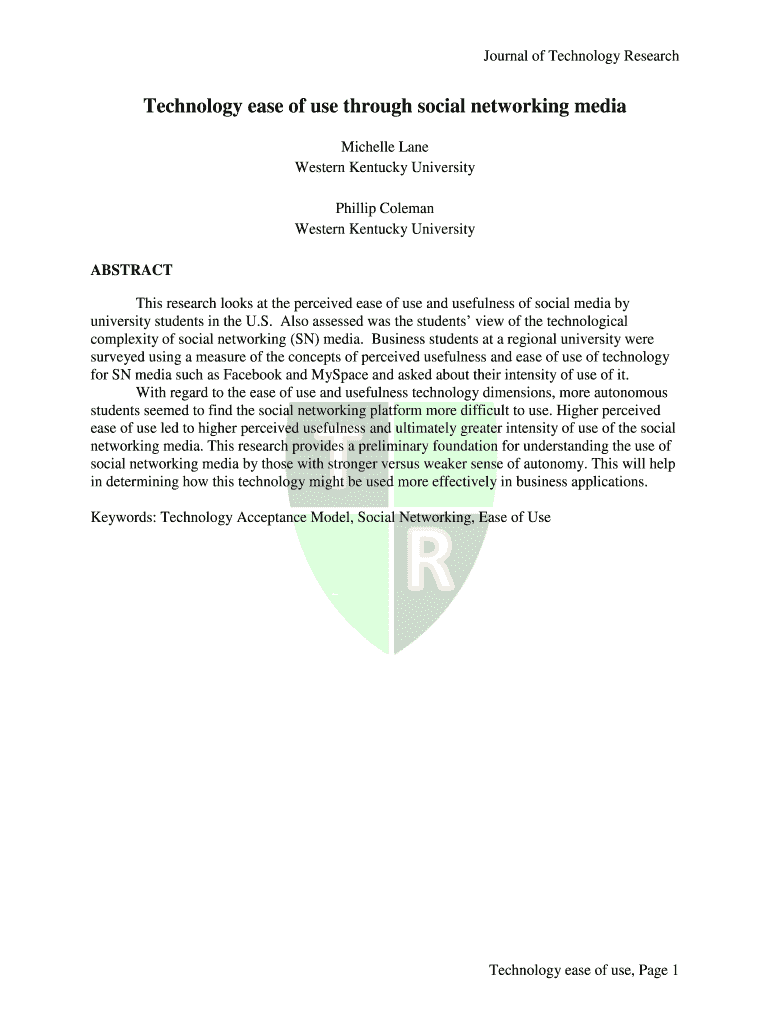
In the context of "Technology ease of use through social networking media," the term refers to the simplicity and user-friendliness of technological platforms, particularly social networks, in facilitating interactions and tasks. The ease of use plays a crucial role in determining how effectively users can navigate, utilize, and benefit from social media platforms. These platforms are designed to enhance communication and connectivity, and their success often hinges on how intuitive and accessible their interface and features are to the typical user.
How to Use Technology Ease of Use Through Social Networking Media
Utilizing the ease of use in social networking media involves adopting best practices that enhance interaction and productivity within these platforms. Users should explore various features such as messaging, sharing, and tagging to effectively communicate and collaborate online. They should take advantage of tutorials and user guides often provided by platforms to familiarize themselves with navigation and functionalities. Easy access to analytics and user metrics also allows individuals and businesses to refine their engagement strategies based on data-driven insights.
Steps to Enhance Technology Ease of Use
Improving the ease of use of social networking media involves several thoughtful steps:
- Simplifying Navigation: Ensure that users can easily access all necessary functions with minimal clicks.
- Providing Tutorials: Offer comprehensive guides and support to assist users in understanding how to use new features.
- Gathering User Feedback: Regularly solicit input from users to identify potential barriers to ease of use and areas for enhancement.
- Improving Accessibility: Make social media platforms inclusive by adhering to accessibility standards for individuals with disabilities.
- Updating Interfaces: Keep user interfaces modern and intuitive with regular updates to avoid obsolescence.
Key Elements of User-Friendly Technology
Effective user-friendly technologies on social networking platforms incorporate several essential elements:
- Intuitive Design: Layouts that require minimal learning for navigation.
- Responsive Support: Customer support that provides timely and helpful responses to user queries.
- Customizable Features: Options for users to personalize settings according to their preferences.
- Quick Loading Times: Fast and efficient load times to reduce user frustration.
- Secure Systems: Strong security measures to protect user data and privacy.
Examples of Technology Ease of Use in Social Networking
To illustrate technology ease of use, consider how social media platforms like Facebook and Twitter simplify communication. Facebook offers features like groups and events that facilitate community building and planning. Twitter’s character limit encourages concise communication, making it easy for users to share thoughts quickly. Both platforms provide mobile apps that ensure users can engage anytime, anywhere, enhancing the overall user experience.
Important Terms Related to Technology Ease of Use
Understanding factors like "user interface," "user experience," "accessibility," and "encryption" is critical when discussing the ease of use in social networking media. These terms represent fundamental components that influence how users interact with technology, shaping their overall experience and satisfaction.
Who Typically Uses Technology Ease of Use in Social Networking Media
A broad spectrum of individuals and organizations benefit from the technology ease of use provided by social networking media. This includes everyday individuals who use these platforms for personal communication and content sharing, businesses and marketers aiming to connect with audiences and analyze engagement metrics, and educators who leverage social media for collaborative learning and information dissemination. Each user group values features that enhance usability and facilitate their specific objectives.
Business Types That Benefit Most
Businesses such as e-commerce companies, digital marketing agencies, and media outlets particularly benefit from social networking media's ease of use. These businesses rely on streamlined communication pathways and powerful analytics tools to reach and engage their target audiences, manage brand image, and execute marketing campaigns efficiently.
Digital vs. Paper Versions
While "Technology ease of use" implies a digital context, it's crucial to understand the benefits of digital over traditional paper versions for social networking. Digital platforms offer instantaneous global reach, enhanced interactivity, real-time updates, and the ability to leverage multimedia content. These advantages are magnified by the network effects generated by large user bases on platforms that emphasize ease of use.
Software Compatibility Considerations
Compatibility with popular software solutions like Google Workspace, Microsoft Office, and collaborative tools like Slack and Zoom is vital for any social networking platform emphasizing ease of use. This compatibility ensures that users can seamlessly integrate their workflows across different platforms, enhancing overall productivity and communication effectiveness.