






Understanding the 20110909 BC Hydro F2011 Net Metering Evaluation Report
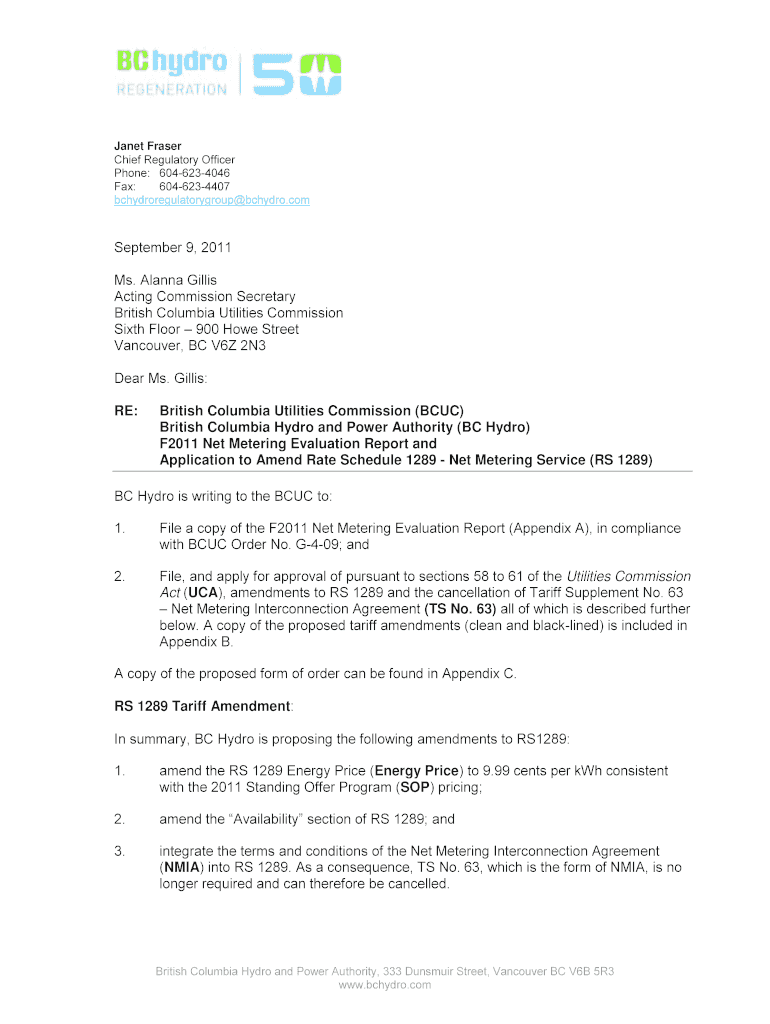
The 20110909 BC Hydro F2011 Net Metering Evaluation Report and Application to Amend Rate Schedule 1289 is a detailed document addressing BC Hydro's proposal to amend its net metering policies. This encompasses changes in energy pricing, eligibility criteria, and integration of terms for better clarity and operational efficiency. Highlighted within the report are critical technical and regulatory details that guide energy practices in alignment with utility commission standards.
How to Use the 20110909 BC Hydro F2011 Net Metering Report
Using the report effectively is crucial for stakeholders, including utility customers, regulators, and policymakers. The document primarily serves as an evaluative tool assessing current net metering practices and proposing amendments. Users can leverage the report to understand financial implications, suggested rate changes, and the impacts on energy participation rates. It facilitates informed decision-making by providing a comprehensive analysis of existing and proposed energy policies.
Steps to Complete and Utilize the Report
- Review the Introduction and Objectives: Gain an understanding of the report's purpose and the context for proposed changes.
- Analyze Financial Implications: Examine the detailed financial assessments that justify the proposed rate amendments.
- Understand Eligibility Changes: Review changes to net metering eligibility criteria, which affect customer participation opportunities.
- Integration of Agreement Terms: Study the integration of interconnection agreement terms into the Rate Schedule 1289 for clarity and ease of implementation.
- Regulatory Review and Feedback: Prepare for engagement with regulatory review processes, including public consultation and feedback cycles.
Key Elements of the Report
- Energy Price Adjustments: Proposal to raise energy prices from 8.16 cents to 9.99 cents per kWh, reflecting market and operational costs.
- Eligibility Criteria Revisions: Changes designed to align customer qualifications with updated energy policies.
- Interconnection Terms: Integration of specific terms into Rate Schedule 1289, ensuring clarity in agreements between BC Hydro and its net metering customers.
Legal Use and Compliance
The report fulfills a crucial legal function by ensuring all proposed amendments comply with the British Columbia Utilities Commission's (BCUC) standards and regulations. Compliance secures legal adherence and protects stakeholder interests in the energy sector.
Who Typically Uses the Report?
The primary users of the report include BC Hydro, energy policy analysts, regulatory bodies like BCUC, and stakeholders interested in energy policy dynamics. It serves as a critical resource for those involved in energy policy development and implementation.


Eligibility Criteria for Net Metering
Eligibility criteria modifications are instrumental in redefining the boundaries for participant inclusion in the net metering scheme. This includes reassessments for residential, commercial, and industrial entities seeking to contribute to and benefit from the mixed energy grid.

Application Process and Approval Time
Applicants seeking to engage with new or amended policies through this report can expect a structured application process that involves detailed documentation, submission, and a review phase with projected timelines based on regulatory schedules.
Examples of Practical Applications
The report outlines case studies and scenarios where the applied amendments have been proposed to generate improved outcomes for consumers and the utility provider. These examples offer insights into potential benefits realized from the practical application of the proposed regulatory changes.
Implications for Business Entities
The changes presented in the report offer unique advantages for different business entities. For instance, small to medium-sized enterprises using renewable energy solutions could see financial benefits from adjusted pricing and enhanced eligibility options.
Integration with DocHub's Document Workflow
For users working within structured document environments, DocHub provides tools to manage, annotate, and collaborate on such complex documents online. This integration supports faster decision-making processes and ensures thorough analysis and compliance tracking.
State-by-State Differences
While the report is specific to British Columbia, similar documents may have counterparts in other jurisdictions. Understanding these differences is crucial for stakeholders operating across varying regulatory landscapes, ensuring locally compliant energy practices.