






Definition & Meaning
Mobile Home Parks, or MHP for short, refer to a designated area or community where prefabricated homes, such as trailer homes and manufactured homes, are situated. MHPs are designed to offer affordable and flexible living arrangements, often providing amenities such as water, sanitation services, and recreational facilities. These parks are typically owned by a single entity that leases out plots of land to mobile home owners. The arrangement allows residents to own their home while renting the plot on which it sits, offering a unique blend of ownership and flexibility.
Residents of Mobile Home Parks benefit from a sense of community while also enjoying the affordability that comes with not having to purchase land. MHPs are subject to regulations that ensure safety, zoning compliance, and environmental stewardship, helping to maintain a harmonious living environment.
How to Use the MOBILE HOME PARKS - MHP
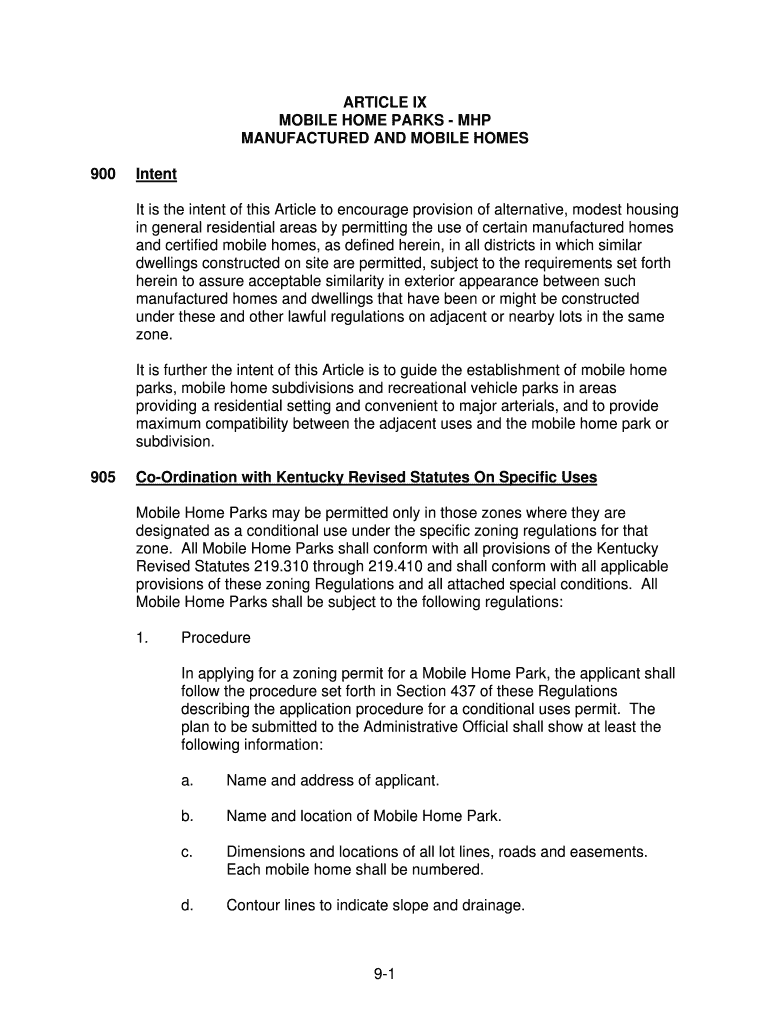
To effectively use the Mobile Home Parks form, individuals or entities need to first understand its purpose—a critical step for ensuring the proper management and operation of a mobile home park. The form is typically required for zoning applications, lease agreements, or regulatory compliance submissions. Its comprehensive fields must capture all relevant information about the park's location, size, facilities, and compliance with local ordinances.
-
Review Requirements: Before completing the form, it is crucial to review any local regulations or guidelines related to Mobile Home Parks. This ensures that all necessary information is gathered and submitted.
-
Gather Information: Collect details such as park dimensions, the number of plots, amenities provided, and compliance certifications. Information regarding plumbing, electrical systems, and waste management may also be required.
-
Complete Fields: Carefully fill out each section of the form, ensuring accuracy and completeness. Use additional sheets as necessary if you run out of space.
-
Submit the Form: Follow submission instructions, which might include online uploads, physical mailing, or in-person delivery to the relevant authority.
Following these steps helps in maintaining compliance, enhancing records, and streamlining operations within the Mobile Home Park.
Steps to Complete the MOBILE HOME PARKS - MHP
-
Preparation: Gather all necessary documents and read the instructions carefully to understand the requirement of each section.
-
Filling Out the Form: Begin with basic information, including the applicant's name, contact information, and details of the mobile home park.
-
Detailed Park Information: Provide comprehensive details about the park, including the number of lots, the size of each lot, available amenities, and any existing regulations it adheres to.
-
Attachments and Supplemental Documentation: Attach relevant documents, such as site plans, environmental reports, and compliance certificates to support the application.
-
Verification and Signatures: Double-check the filled-out information. Ensure that required signatures are in place for validity.
-
Submission: Submit the completed form as specified, whether digitally, by mail, or physically delivering to the designated office.
-
Post-submission Follow-up: Monitor the status of your form submission and respond promptly to any requests for additional information or clarifications.
Completing these steps ensures that your Mobile Home Park application is thorough and assists in avoiding delays or rejections.
Important Terms Related to MOBILE HOME PARKS - MHP
-
Zoning Regulations: Rules that define how properties in specific geographic zones can be used. In the context of MHPs, these regulations ensure the park is located in an area designated for such housing.
-
Manufactured Home: A prefabricated home that is constructed in a factory and then transported to a site for assembly. Unlike mobile homes, these are built after June 15, 1976, and are subject to more stringent standards.
-
Lease Agreement: The contract between the park owner and the resident that outlines terms for renting a lot within the park, often including obligations, rent amounts, and rules.
-
Site Plan: A detailed diagram outlining the layout of the mobile home park, illustrating plots, available amenities, and compliance with zoning laws.
Understanding these terms is vital in navigating the legal and operational landscape of Mobile Home Parks.
State-Specific Rules for MOBILE HOME PARKS - MHP
Laws and regulations surrounding Mobile Home Parks can vary significantly from one state to another:
-
California: Strict environmental standards govern water and waste management in MHPs, focusing heavily on sustainability and recourse for tenants in landlord disputes.
-
Florida: Known for lenient rental regulations, Florida requires park owners to have hurricane preparedness plans due to frequent severe weather.
-
Texas: Offers tax incentives for maintaining certain levels of affordable housing within mobile home parks, promoting accessible living.
Familiarity with your specific state's rules is crucial for compliance and efficient park management.
Key Elements of the MOBILE HOME PARKS - MHP
-
Plot Layout: The configuration of available home sites within the park, important for infrastructure management and visual appeal.
-
Amenities: Facilities such as community centers, playgrounds, or swimming pools that enhance resident quality of life.
-
Utilities: Provision of water, electricity, sewage, and gas, which are fundamental to the daily functioning of the park and occupant satisfaction.
-
Safety Measures: Compliance with local fire codes, emergency access routes, and lighting to ensure resident protection and peace of mind.
These elements significantly impact the quality, safety, and attractiveness of a Mobile Home Park.
Examples of Using the MOBILE HOME PARKS - MHP
-
Compliance Checklist: Utilizing the form as a regulatory checklist ensures adherence to state and local statutes governing mobile home parks.
-
Lease Finalization: The form can help standardize and authenticate lease agreements, providing structure and legality to tenant contracts.
-
Expansion Applications: When the park expands, the form consolidates necessary data for approval applications to local authorities.
These examples highlight practical applications of the form, improving park operations and resident interactions.
Legal Use of the MOBILE HOME PARKS - MHP
The form serves as a legal document ensuring that Mobile Home Parks remain within the regulatory framework of relevant jurisdictions. It facilitates:
-
Zoning Compliance: Ensuring that the park is situated in an appropriately zoned area, in alignment with municipal or county ordinances.
-
Lease Validity: Providing a template for legally binding lease agreements between park owners and residents.
-
Tenant Rights: Safeguards residents' rights by ensuring the park adheres to legal obligations, from notice periods to eviction procedures.
These legal applications help in establishing a fair and protective living environment for all park residents.