







Definition and Meaning
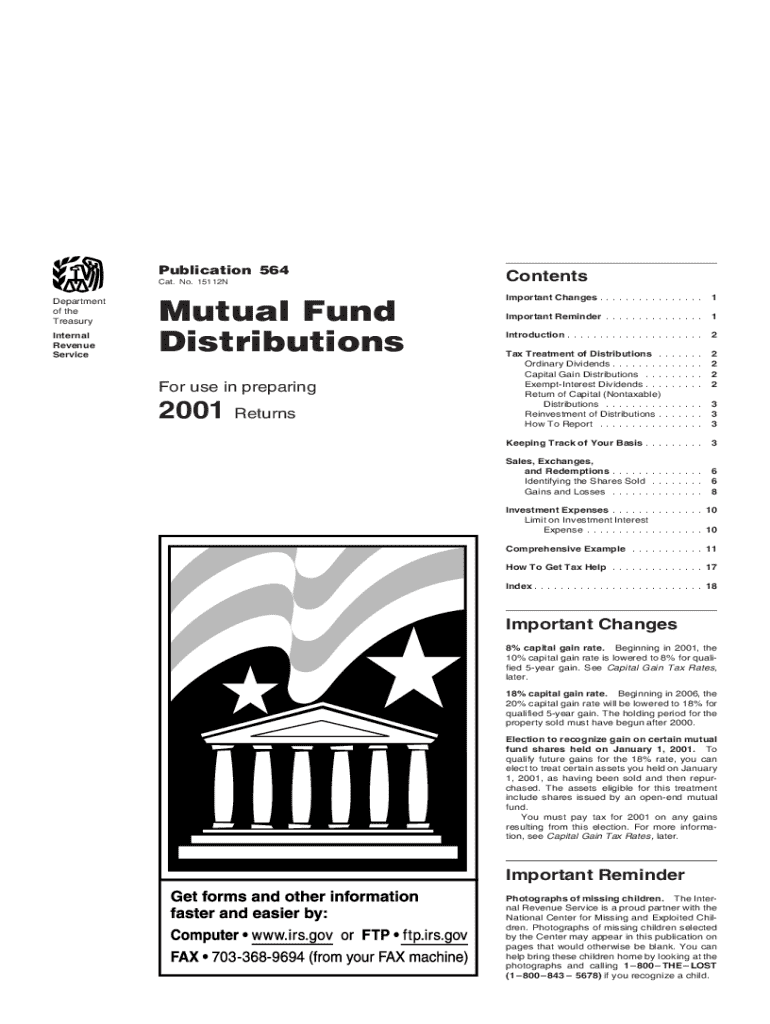
Publication 564 (Rev 2001) - Internal Revenue Service, serves as a comprehensive guide for individual shareholders of mutual funds in the United States. It provides detailed insights into federal income tax obligations related to mutual fund investments, focusing on how distributions, including ordinary dividends, capital gain distributions, and exempt-interest dividends, should be reported for tax purposes. By understanding the document's intended audience and purpose, users can accurately determine the taxes applicable to their investment income.
How to Use Publication 564 (Rev 2001)
Using Publication 564 effectively requires awareness of its coverage on mutual fund distributions and reporting requirements. Start by identifying the types of distributions received from mutual funds. Then, follow the guidance to report these distributions accurately on your tax return. This involves calculating the proper amount of taxable income and understanding the impact of capital gain rates, which the publication explains in depth.
Practical Steps for Usage
-
Identify Distribution Types:
- Ordinary dividends
- Capital gain distributions
- Exempt-interest dividends
-
Calculate Basis:
- Use purchase and sale information to track your investment basis.
-
Report Income:
- Follow guidelines for reporting distributions on tax forms such as Form 1040.
How to Obtain Publication 564 (Rev 2001)
Obtaining Publication 564 is straightforward. The Internal Revenue Service provides multiple avenues to access this document:
-
Online Access:
- Visit the IRS website to download a PDF version of the publication.
-
Physical Copies:
- Request a paper version by contacting the IRS directly through their publication request service.
-
Libraries and Tax Agencies:
- Many public libraries and tax service agencies keep copies of IRS publications.
Steps to Complete Publication 564 (Rev 2001)
While Publication 564 itself is an informational guide rather than a form requiring completion, it aids in correctly preparing related tax documents:
-
Review Distributions:
- Examine documentation from mutual funds to classify distributions accurately.
-
Refer to Applicable Sections:
- Use the publication to understand the proper tax treatment of each type of distribution.
-
Follow Tax Reporting Guidance:
- Implement the steps laid out in the publication to ensure proper tax form completion.
Essential Document Preparation
- Gather all year-end statements from mutual funds.
- Note any changes in capital gain rates which may affect tax liability.
- Use examples in Publication 564 to double-check calculations against IRS standards.
Key Elements of Publication 564 (Rev 2001)
Publication 564 (Rev 2001) covers several key elements essential for tax reporting:
-
Distributions:
- Definitions and tax implications for different distribution types.
-
Cost Basis:
- Instructions on tracking and adjusting the cost basis of shares.
-
Capital Gains:
- Updates on capital gain rates and their tax effects.
-
Examples:
- Practical illustrations to aid understanding of complex tax rules.
Who Typically Uses Publication 564 (Rev 2001)
This publication is primarily utilized by:
Individual Shareholders
- Individuals holding shares in mutual funds seeking to accurately report investment income to the IRS.
Tax Professionals
- Accountants and tax preparers helping clients manage taxes on mutual fund distributions.
Financial Advisors
- Advisors providing guidance on tax-efficient investing and reporting to mutual fund investors.
Legal Use of Publication 564 (Rev 2001)
Publication 564 is a legal document provided by the IRS, serving as an authoritative source for tax reporting guidance related to mutual funds. It helps taxpayers comply with federal tax laws, ensuring accurate reporting of mutual fund income, thereby avoiding penalties for non-compliance.
IRS Guidelines
The IRS provides specific guidelines within Publication 564:
-
Tax Compliance:
- Ensure that shareholders are correctly applying tax rules to their mutual fund distributions.
-
Updates and Changes:
- Stay informed of annual updates and legislative changes affecting tax treatment of mutual fund income.
Filing Deadlines / Important Dates
While Publication 564 itself doesn't impose specific deadlines, it is instrumental in meeting general IRS filing obligations:
-
Tax Year Deadlines:
- Information in Publication 564 aligns with annual tax deadlines such as April 15th for individuals.
-
Extension Dates:
- Assistance in preparing for extended deadlines if filing extensions are sought.




