






Definition and Meaning of the Controlled Prescription Medication Treatment Agreement
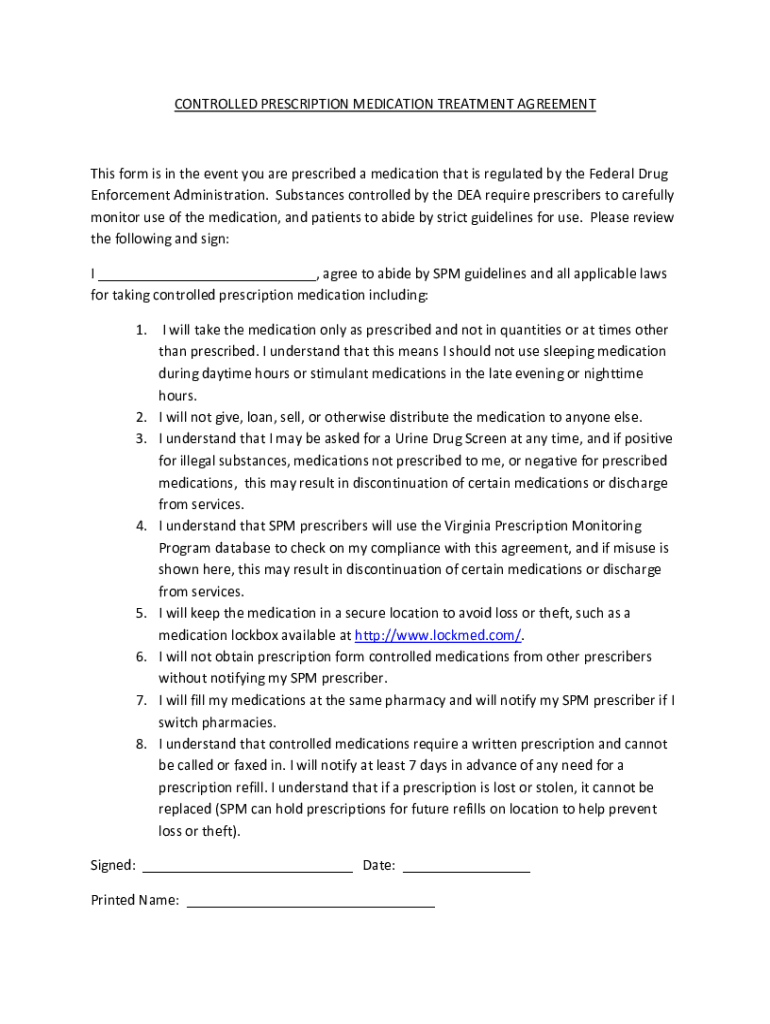
The Controlled Prescription Medication Treatment Agreement is a formal document outlining the responsibilities and guidelines for patients prescribed controlled substances. These agreements are particularly critical for medications regulated by the Drug Enforcement Administration (DEA) due to their potential for abuse and addiction. The main goal is to ensure safe and effective use of these medications while minimizing legal and health risks.
Key Objectives:
- Promote patient adherence to prescribed dosages and reduce the risk of dependency or abuse.
- Establish rules regarding medication sharing, storage, and management.
- Facilitate transparent communication between patients and healthcare providers.
How to Use the Controlled Prescription Medication Treatment Agreement docx
Using the Controlled Prescription Medication Treatment Agreement effectively involves understanding its structure and purpose. The document serves as a mutual commitment between the patient and the healthcare provider.
Steps for Effective Use:
- Review and Understand: Before signing, thoroughly read the agreement to ensure comprehension of terms and conditions.
- Discuss with Prescriber: Engage in an open dialogue with the prescribing physician about any concerns or clarifications.
- Sign and Commit: Both patient and provider should sign the document to formalize the agreement.
- Follow Guidelines: Adhere strictly to the prescribed dosages and report any side effects or concerns immediately to the healthcare provider.
Important Terms Related to the Controlled Prescription Medication Treatment Agreement
Understanding key terms within the treatment agreement is essential for compliance and effective use.
Common Terms:
- Controlled Substances: Drugs regulated by the DEA due to their potential for abuse.
- Prescribed Dosage: The specific amount and frequency of medication to be taken.
- Drug Screening: Tests conducted to monitor medication levels and ensure compliance.
Steps to Complete the Controlled Prescription Medication Treatment Agreement docx
Filling out the Controlled Prescription Medication Treatment Agreement involves several essential steps to ensure accuracy and compliance.
- Enter Patient Information: Start by providing detailed personal and contact information.
- Review Medication Details: Confirm the medication name, dosage, and regimen with your healthcare provider.
- Acknowledge Terms: Carefully read through the guidelines and responsibilities regarding medication usage and storage.
- Signature: Both patient and provider must sign and date the agreement to finalize it.
Key Elements of the Controlled Prescription Medication Treatment Agreement
The agreement is composed of various critical elements designed to ensure patient safety and compliance.
Core Components:
- Adherence to Prescription: Commitment to follow the specific medication regimen.
- Medication Management: Proper storage and prohibition of sharing medications.
- Regular Follow-ups: Scheduling and attending regular appointments to monitor treatment progress.
Legally Binding Nature of the Agreement
The Controlled Prescription Medication Treatment Agreement is a legally binding document, holding both patient and provider accountable for compliance and mutual obligations.
Legal Considerations:
- Regulates conduct related to controlled substance use.
- Ensures legal protection for prescribers by documenting informed patient consent.
- Provides a framework for addressing non-compliance or breaches of the agreement.
Who Typically Uses the Controlled Prescription Medication Treatment Agreement
This agreement is generally utilized by individuals who are prescribed medications that are under DEA regulation, due to their potential for addiction and misuse.


Common Users:
- Patients with chronic pain requiring opioid medications.
- Individuals undergoing treatment for anxiety with benzodiazepines.
- Persons participating in substance abuse recovery programs involving controlled prescriptions.

State-Specific Rules for the Controlled Prescription Medication Treatment Agreement
While the overarching principles of the agreement are consistent, specific legal requirements and guidelines can vary by state.
Considerations:
- Some states may have specific regulations or mandates regarding the use and management of controlled prescriptions.
- Prescribers may have to report prescriptions to state-specific prescription monitoring programs.
Examples of Using the Controlled Prescription Medication Treatment Agreement
Practical application of the treatment agreement can be illustrated through various scenarios.
Illustrative Scenarios:
- A patient receiving opioid therapy for chronic pain management signs the agreement to formalize the treatment plan and responsibilities.
- In a substance abuse rehabilitation program, participants sign the agreement to comply with medication rules, ensuring structured and monitored usage.
Each of these sections provides detailed insights into the features, implications, and proper use of the Controlled Prescription Medication Treatment Agreement, catering to various audiences involved in the prescription process.