






Definition & Meaning
The Health and Medical Services Committee plays a significant role in overseeing healthcare-related matters within governmental settings. This committee is usually responsible for reviewing and advising on policies, contracts, and operational decisions related to public health and medical services. Its focus includes areas such as mental health, public health clinic operations, and the coordination of services among healthcare providers.
- Purpose: To ensure efficient and effective delivery of health and medical services.
- Scope: Covers various health sectors, including mental health clinics and public health initiatives.
- Authority: Provides recommendations that guide policy and operational decisions.
How to Use the HEALTHMEDICAL SERVICES COMMITTEE
Engaging with the Health and Medical Services Committee typically involves a process of submission, review, and feedback. Whether you're a county department or an external contractor, understanding how to navigate this process is essential.
- Prepare Submission: Gather necessary documents and data related to your proposal or issue.
- Submit Proposal/Request: Present your documents to the committee for review.
- Review Period: The committee assesses the proposal's compliance, potential impact, and alignment with existing policies.
- Feedback & Resolution: The committee provides feedback, possibly requiring adjustments before approval.
Key Elements of the HEALTHMEDICAL SERVICES COMMITTEE
Several critical elements define the scope and function of a Health and Medical Services Committee. These components ensure systematic oversight and development of health services.
- Review and Advisory Role: Evaluates proposals from departments or providers.
- Policy Development: Serves as a policy advisory body to local or state governments.
- Contract Approvals: Involvement in approving contracts for new healthcare services or hires.
- Coordination with Other Committees: Works alongside other committees like finance for holistic decision-making.
Steps to Complete the HEALTHMEDICAL SERVICES COMMITTEE Form
Completing forms related to interactions with the Health and Medical Services Committee can be an intricate process that ensures all necessary information is captured.
- Identify Necessary Information: Determine the specific information required for the form, such as details of the proposal or project.
- Gather Documentation: Collect supporting documents, including evidence of need, feasibility studies, and budgetary justifications.
- Fill Out Detailed Sections: Provide comprehensive answers in all relevant sections to avoid delays.
- Review and Confirm Accuracy: Double-check entries for accuracy before submission.
- Submit Form With Attachments: Ensure that all documents are correctly attached and submit through the designated method.
Important Terms Related to HEALTHMEDICAL SERVICES COMMITTEE
Understanding specific terms used within the scope of the Health and Medical Services Committee's work can help in navigation and clarity.
- Resolution: A formal decision adopted by the committee, usually requiring further approval.
- Contractual Agreement: Binding agreements that the committee reviews and approves.
- Fiscal Analysis: Examination of financial implications related to healthcare services or proposals reviewed by the committee.
Examples of Using the HEALTHMEDICAL SERVICES COMMITTEE
Examples of interactions with the Health and Medical Services Committee can provide practical insights into its functions and operations.
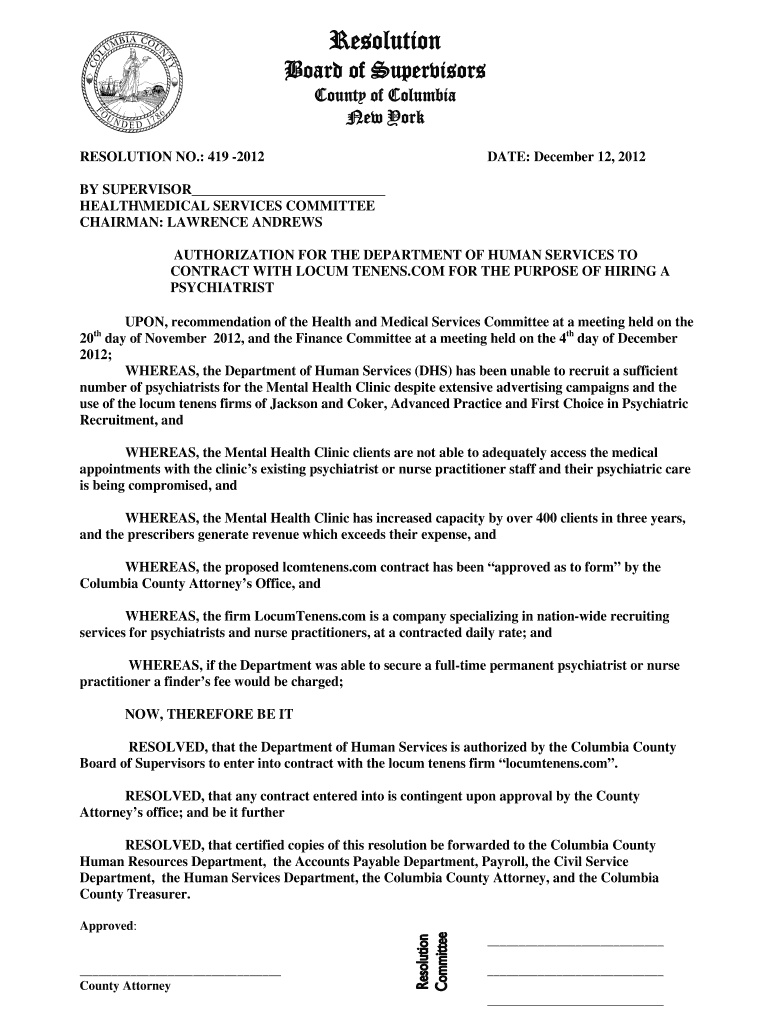
- Psychiatrist Hiring Resolution: Utilizing the committee to approve contracts when hiring healthcare professionals due to shortages, ensuring continued patient care.
- Implementation of Health Initiatives: Submission and approval of new public health initiatives designed to improve community healthcare services.
Who Typically Uses the HEALTHMEDICAL SERVICES COMMITTEE
Various stakeholders interact with this committee, ranging from governmental bodies to healthcare service providers.
- Government Departments: Agencies involved in public health may submit proposals or requests for changes in service delivery models.
- Healthcare Providers: Clinics and hospitals may need committee reviews for expansions or changes in health service offerings.
- Non-profit Organizations: Entities seeking to partner with government agencies on health initiatives often work with these committees.


Legal Use of the HEALTHMEDICAL SERVICES COMMITTEE
Compliance with legal frameworks is crucial in the committee's recommendations and approvals.
- Adherence to Laws: Ensures decisions align with municipal, state, and federal healthcare regulations.
- Confidentiality Agreements: Maintains confidentiality of sensitive health data during the review process.
- Due Diligence: All contracts approved by the committee undergo rigorous legal scrutiny including review by legal departments.
Penalties for Non-Compliance
Failure to comply with guidelines or legal requirements related to the Health and Medical Services Committee can have significant repercussions.
- Project Halt: Non-compliance may result in the suspension of healthcare projects or funding.
- Legal Action: Violations of healthcare laws or ethics can lead to legal penalties.
- Contract Termination: Agreements made under false pretenses can be voided, impacting ongoing service delivery.
State-Specific Rules for the HEALTHMEDICAL SERVICES COMMITTEE
While the role of these committees is generally consistent, there can be state-specific variations that affect operations.
- State Regulations: Unique regulations in each state may dictate specific operational procedures for the committee.
- Funding Models: Differences in state funding allocations can influence committee decisions and priorities.
- Local Health Concerns: State-specific health issues might shape the committee's focus areas and operational priorities.