







Definition & Meaning
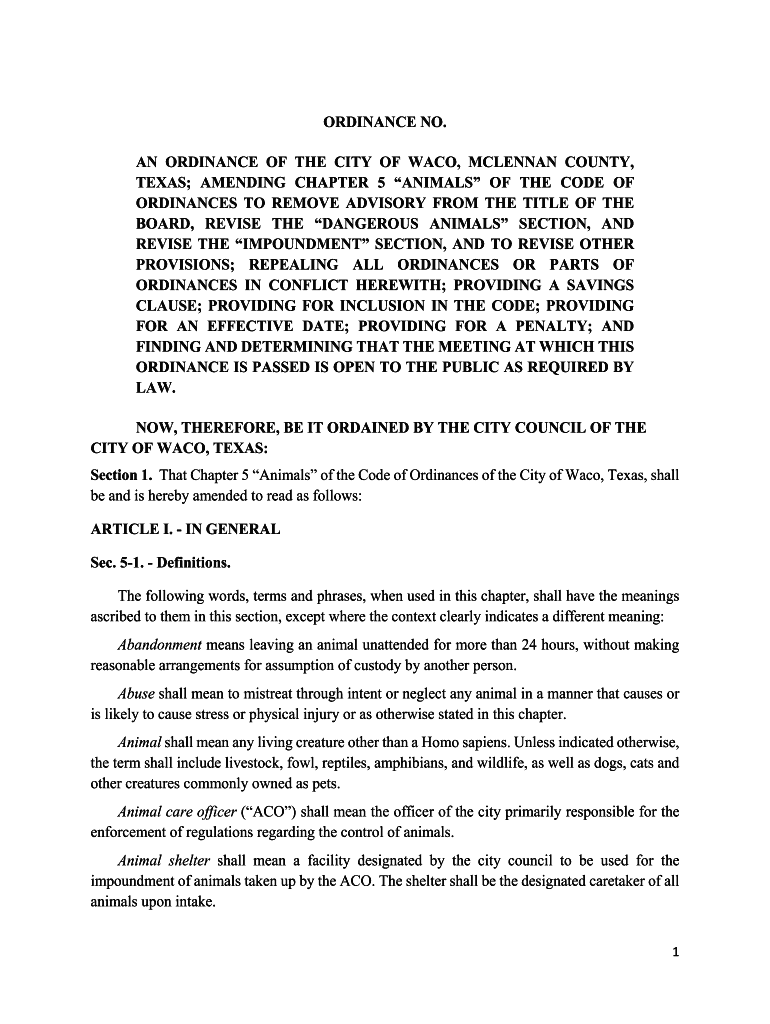
The "ORDINANCE NO AN ORDINANCE OF THE CITY OF WACO" is a legal document issued by the City of Waco, Texas, specifically addressing adjustments to Chapter 5 of the city’s Code of Ordinances, which pertains to animal regulations. This ordinance includes revisions that redefine terms and regulations concerning dangerous animals, procedures for impoundment, and the establishment of an Animal Welfare Board. The ordinance is designed to promote a safe community environment by enforcing responsible animal ownership and care standards, aligning local laws with broader animal welfare principles.
Key Elements of the Ordinance
The ordinance outlines several critical components to ensure a comprehensive understanding of its implications:
- Definitions: Clarifies the terms used within the document, such as "dangerous animals" and other relevant classifications.
- Regulations: Specifies the rules governing the care, control, and management of animals in the city.
- Animal Welfare Board: Details the creation and duties of a board responsible for overseeing animal-related initiatives.
- Penalties: Outlines potential fines and consequences for violations of the ordinance.
- Public Participation: Includes provisions for public meetings and discussions during the ordinance’s passage, ensuring transparency and community involvement.
How to Use the Ordinance
Residents and officials can utilize the ordinance as a guideline for understanding animal-related responsibilities and legal requirements within Waco:
- Reference for Definitions: Use the ordinance to understand specific terms and their legal implications.
- Compliance Check: Ensure compliance with the outlined regulations to avoid penalties.
- Participate in Animal Welfare: Engage with the Animal Welfare Board to contribute to ongoing community discussions regarding animal management.
- Address Violations: Use the ordinance to identify and report potential violations.
Why the Ordinance Matters
The ordinance plays a crucial role in safeguarding public safety and well-being through the following:
- Encourages Responsible Ownership: By defining owner obligations, it promotes responsible pet ownership.
- Public Safety: Addresses issues related to dangerous animals to prevent harm to residents.
- Community Engagement: Invites public participation in shaping animal welfare policies.
- Legal Framework: Provides a solid legal framework for law enforcement and community members alike.
Who Typically Uses the Ordinance
A range of stakeholders may find this ordinance relevant, including:
- City Officials: Enforced by those responsible for regulatory compliance and animal control.
- Animal Control Officers: Guides daily operations related to animal management and impoundment.
- Residents: Individuals within Waco owning animals or concerned about animal-related incidents.
- Animal Welfare Advocates: Groups interested in promoting and enhancing community welfare for animals.


Legal Use of the Ordinance
The ordinance operates within the legal context of municipal and state regulations, ensuring that:
- Consistency with State Laws: Aligns with Texas state laws regarding animal welfare and control.
- Enforcement: Provides legal backing for enforcement actions by city officials and law enforcement.
- Judicial Support: Can be referenced in cases involving disputes or violations of animal regulations.
Penalties for Non-Compliance
Failing to adhere to the stipulations outlined in the ordinance can result in the following penalties:
- Fines: Monetary penalties for violations, varying depending on the severity and nature.
- Animal Seizure: In severe cases, animals may be seized and impounded.
- Legal Action: Potential for legal proceedings in cases of persistent non-compliance or egregious violations.
State-Specific Rules
While the ordinance is specific to the City of Waco, it must be understood in the context of broader Texas animal laws:
- Preemption by State Laws: Where state laws exist, they may preempt local ordinances.
- Harmonization: Ensures that local regulations harmonize with state animal welfare and control norms to avoid legal conflicts.
Steps to Complete the Ordinance Process
Engaging with the ordinance involves understanding key steps for residents and officials:
- Review the Document: Familiarize yourself with the ordinance's content and scope.
- Understand Obligations: Assess your responsibilities under the ordinance.
- Attend Public Meetings: Engage in community discussions around the ordinance.
- Compliance: Implement necessary measures to comply with the ordinance’s requirements.
- Enforcement: Report non-compliance to authorities if observed, supporting community safety efforts.




