




01. Edit your secured futures travel request online
Type text, add images, blackout confidential details, add comments, highlights and more.

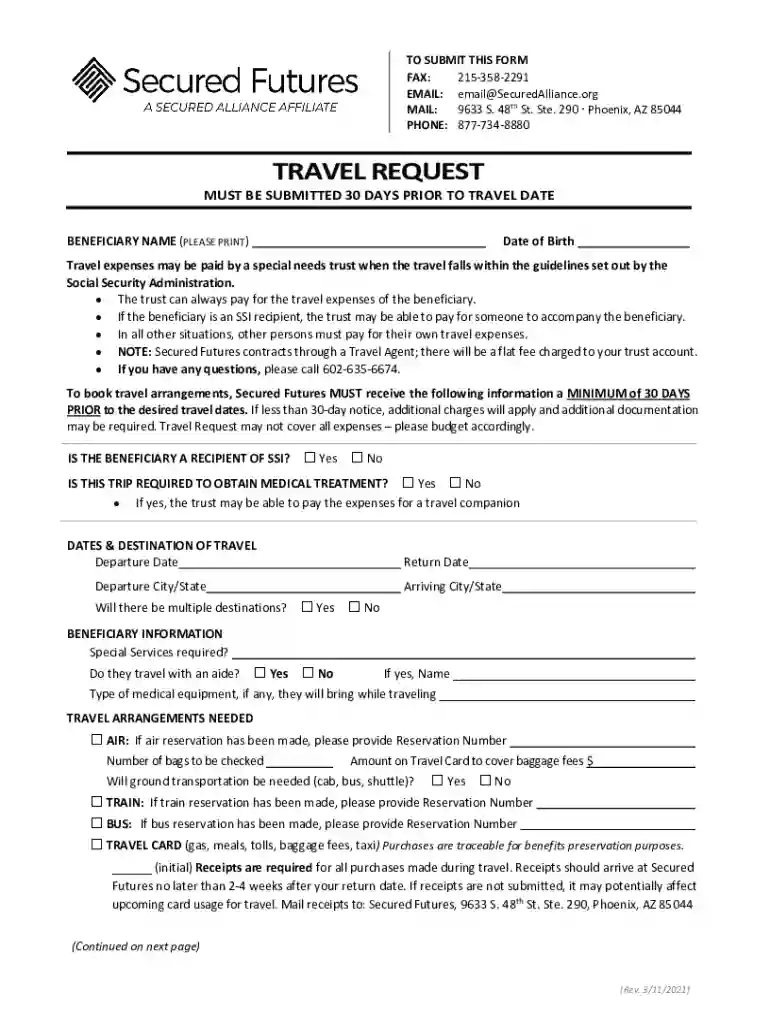
Type text, add images, blackout confidential details, add comments, highlights and more.

Draw your signature, type it, upload its image, or use your mobile device as a signature pad.

Send it via email, link, or fax. You can also download it, export it or print it out.
A trust fund is a fiduciary arrangement that allows a third party, or trustee, to hold and manage assets on behalf of a beneficiary or beneficiaries. It's a legal entity designed to safeguard assets and ensure they are distributed according to the instructions of the trust's creator. Trusts can serve various purposes, such as minimizing estate taxes, protecting assets from creditors, or ensuring funds are handled responsibly for minors or individuals with special needs. Trusts can be revocable or irrevocable, with each type having distinct characteristics concerning control, flexibility, and tax implications.
Understand Your Goals: Determine the purpose of the trust fund—whether it's for asset protection, tax savings, charitable purposes, or to provide for beneficiaries.
Contact Secured Futures: Reach out to Secured Futures to initiate the process. They will provide guidance and information on the best type of trust to suit your needs.
Gather Necessary Documents: Collect information such as the details of assets to be included in the trust, the names of beneficiaries, and any specific instructions for asset distribution.
Draft the Trust Agreement: Work with Secured Futures to draft a comprehensive trust document that outlines the terms, the role of the trustee, and the rights of the beneficiaries.
Sign and Notarize: Once the trust document is finalized, execute it by signing in front of a notary to ensure its legality.
Fund the Trust: Transfer the assets you wish to include into the trust. This step is crucial for the trust to operate as intended.
Review and Update: Regularly review the trust with Secured Futures to ensure it continues to meet your objectives and make updates as necessary.
Secured Futures offers expertise and personalized service in setting up trust funds. They ensure compliance with all legal requirements and work with you to tailor a trust that aligns with your financial and personal goals. Trusts managed with the help of Secured Futures can provide peace of mind by ensuring assets are administered according to your wishes and can protect beneficiaries from financial mismanagement.
Trust fund regulations can vary significantly by state, impacting tax implications, privacy levels, and administrative requirements. For instance, some states might offer more favorable tax treatments for certain types of trusts or mandate specific registrations or fees. Consulting with Secured Futures offers expert insights into these regional differences, ensuring compliance with local laws and maximizing the benefits of your trust fund.
Trust forms and agreements can be prepared and submitted via different methods:
Trusts must comply with legal standards to be valid and enforceable. They should be created with clear intent, against a backdrop of existing legal frameworks, such as state trust laws and federal regulations like the ESIGN Act for electronic signatures. It's essential to ensure that the trust fund does not contravene any laws, such as those related to fraud or tax evasion, which helps maintain its integrity and protect beneficiaries' interests.
We've got more versions of the secured futures travel request form. Select the right secured futures travel request version from the list and start editing it straight away!
At DocHub, your data security is our priority. We follow HIPAA, SOC2, GDPR, and other standards, so you can work on your documents with confidence.
Frequently asked questions and answers about virtual currency transactions. These FAQs generally apply to transactions involving digital assets completed
To select or change your payment method by phone, contact the Trust Beneficiary Call Center or your local Fiduciary Trust Officer.


