






Definition and Importance of THE CADET NCO and THE TEAM
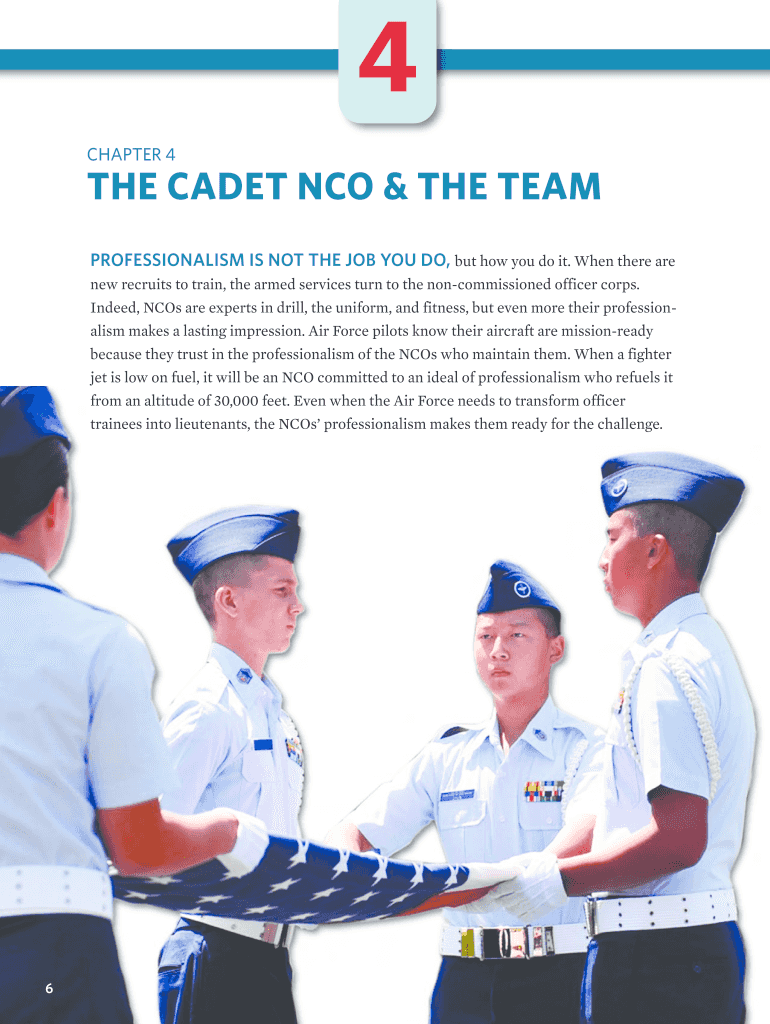
THE CADET NCO and THE TEAM form a critical part of military operational hierarchy and teamwork. This content focuses on defining the role of Cadet Non-Commissioned Officers (NCOs) and explaining why their role is indispensable in team settings. Cadet NCOs bridge the gap between enlisted personnel and officers, ensuring efficient communication and task execution. Their responsibilities include maintaining discipline, readiness, and leadership among the team, which are essential for mission success.
Qualities of a Professional Cadet NCO
Cadet NCOs are expected to embody professionalism, exemplified by prioritizing team and community interests above personal gains. They possess specialized skills pertinent to their rank and adhere strictly to an ethical code that guides their actions in both routine and complex situations. Their role extends to mentoring junior members, underlining the significance of setting high standards and demonstrating competence through action.
Steps to Complete The CADET NCO and THE TEAM Form
Completing THE CADET NCO and THE TEAM form requires attention to several detailed steps. It is vital to ensure that all sections are filled accurately, reflecting the correct roles and duties of a Cadet NCO and how they integrate with their teams.
- Gather Necessary Information: Collate details about the cadet's rank, role duties, and team structure.
- Fill Personal Information: Start with filling basic personal information of the Cadet NCO, including name, rank, and unit.
- Describe Role Responsibilities: Clearly delineate the Cadet NCO’s responsibilities that are understandings for team functions.
- Highlight Key Achievements: Document any notable achievements or experiences in leadership roles that showcase the application of their skills.
- Review and Submission: Review the completed form for any errors or omissions before submission.
Key Elements of THE CADET NCO and THE TEAM
Each section of the form should include specific key elements that highlight various aspects of the Cadet NCO role:
- Personal Identification Information: Crucial for recognition and retrieval of documents.
- Leadership Experience: Important to understand the individual's past roles.
- Team Interaction Dynamics: Provides insight into how the Cadet NCO collaborates with team members.
- Skills and Training: Details related to skills acquired through training programs are included.
- Readiness Assessment: Information about the Cadet's readiness to perform in high-pressure environments.
Legal Use of THE CADET NCO and THE TEAM
Compliance with applicable military regulations is a prerequisite for the legal use of THE CADET NCO and THE TEAM documentation. This includes ensuring that all information is truthful and represents the actual roles and abilities of each Cadet NCO.
Compliance and Ethical Standards
Cadet NCOs must operate within defined ethical boundaries while using this form. It must not misrepresent capabilities or achievements, as such actions can lead to penalties for non-compliance with military guidelines.
Required Documents for THE CADET NCO and THE TEAM
When working with this form, several accompanying documents are generally required:
- Proof of Rank or Promotion: To validate the current standing and responsibilities of the Cadet NCO.
- Training Certificates: Certificates that authenticate any specialized training undertaken by the officer.
- Performance Reviews: Prior performance reviews that reflect the cadet’s ability to fulfill their designated role.
Verification Process
These documents typically undergo a verification process to ensure authenticity and accuracy. It is essential that all submitted documents provide clear evidence that supports the information entered on the form.
Examples of Using THE CADET NCO and THE TEAM
Practical examples help illustrate how THE CADET NCO and THE TEAM form is applied in different scenarios.
Real-World Scenario
In a case where a military unit is reassigned to a new mission, the form is updated to reflect modified duties and any additional responsibilities of the Cadet NCO. This ensures clarity in command and direction during transitions, enhancing overall team effectiveness.
Eligibility Criteria for Cadet NCO Roles
Eligibility to be recognized as a Cadet NCO involves meeting certain prerequisites:
- Completion of Basic Training: The cadet must have completed fundamental training courses.
- Demonstrable Leadership Skills: Proven track record of leadership abilities within a team.
- Physical and Mental Fitness: Must meet the military’s fitness standards to effectively perform assigned duties.


State-Specific Rules and Guidelines
While the primary focus is on federal and military guidelines, some state-specific regulations may also influence how THE CADET NCO and THE TEAM form is utilized. It is crucial to be aware of any specific state requirements that apply to military documentation, ensuring compliance across different jurisdictions.
Variations in State Requirements
Certain states may have additional regulations regarding the handling of military forms or specific information that needs to be included. Verifying these through appropriate military channels ensures adherence to all relevant legal frameworks.
Digital vs. Paper Version of THE CADET NCO and THE TEAM
Finally, the form is available in both digital and paper formats, each having its advantages and contexts of use:
- Digital Version: Offers convenience and speed, particularly useful for quick submissions and updates.
- Paper Version: Useful for situations where electronic submission is not feasible or preferred due to security considerations.
Benefits and Challenges
Each version has specific benefits and challenges, with digital forms offering quicker processing times, while paper forms may provide easier access in low-tech environments or where electronic infrastructure is limited.