






Definition & Meaning
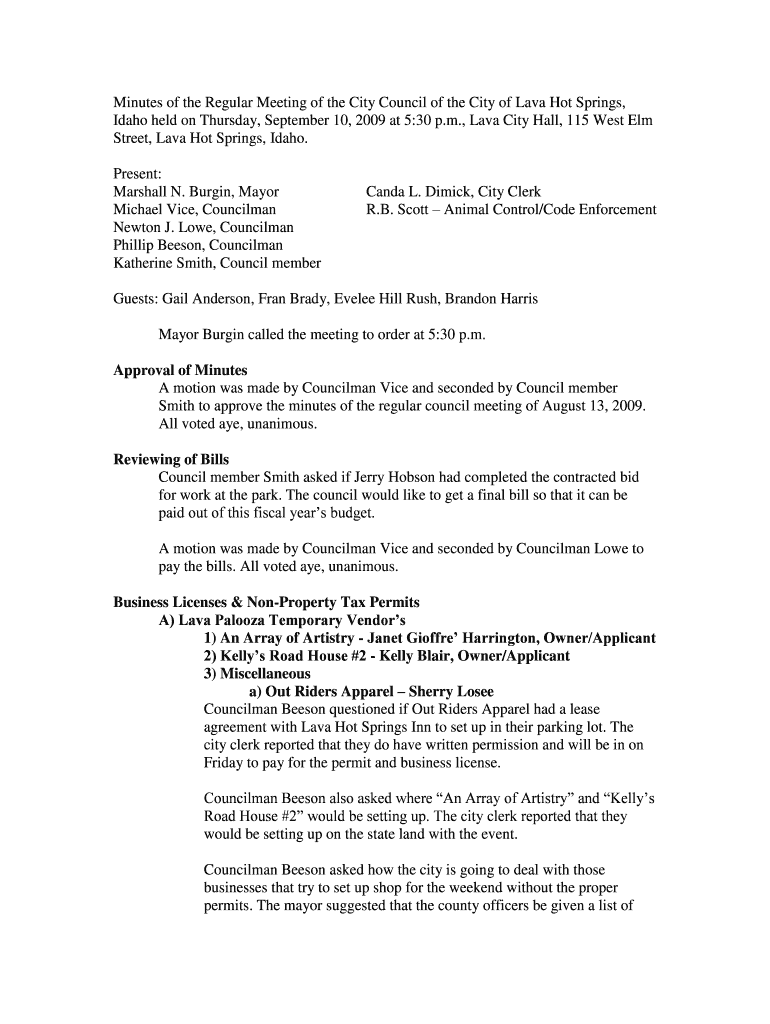
The "Minutes of the Regular Meeting of the City Council of the City of Lava Hot Springs Idaho held on Thu" refer to the comprehensive documented record of discussions, decisions, and actions taken during a scheduled City Council meeting. These minutes serve as an official record and provide transparency to stakeholders and the community regarding municipal governance. The minutes capture essential aspects of the council meeting—ranging from routine administrative approvals to significant policy decisions—allowing citizens to understand local governance dynamics.
Key Components
- Record of Attendance: Lists the names of present and absent council members, staff, and any notable attendees.
- Agenda Overview: Summarizes the topics and reports discussed during the meeting, providing clarity on the meeting's structure and focus.
- Decisions and Resolutions: Details the outcomes of votes on various issues, including approvals or rejections of proposals or measures.
- Public Participation: Notes any public comments or citizen input offered during the meeting, reflecting community engagement.
How to Use the Minutes of the Regular Meeting
The minutes serve multiple purposes for various stakeholders:
For Citizens
- Stay Informed: Residents can review the minutes to stay updated on local government actions and community issues.
- Engage in Civic Participation: Understanding decisions and discussions helps citizens effectively participate in future meetings or public hearings.
For Council Members
- Reference for Future Meetings: Minutes provide a historical record, assisting members in tracking past actions and ensuring continuity in policy discussions.
- Accountability Check: Offers an official record for council members to verify past contributions and decisions.
How to Obtain the Minutes
Accessing the minutes of a City Council meeting is typically straightforward:
Online Platforms
- City's Official Website: Most municipalities, including Lava Hot Springs, often make meeting minutes available on their websites for public access.
- Document Repositories: Some cities use cloud-based services to host minutes and other public records.
Physical Copies
- City Clerk's Office: Individuals may request printed copies directly from the city clerk's office, often located in the city's main administrative building.
- Public Libraries: Local libraries sometimes keep archives of municipal records, including city council minutes.
Key Elements of the Minutes
Understanding the structure of the meeting minutes is crucial for interpreting their content effectively:
Approval of Past Minutes
- Verification: Confirms that the minutes from prior meetings are accurate and approved by the council, ensuring a consistent record.
Financial Matters
- Budget Allocations: Details the distribution and approval of funds for various city projects and operational needs.
- Billing Approval: Lists the approved expenditures such as vendor payments or service contracts.
Regulatory and Licensing
- Permits and Licenses: Includes approvals for business licenses, construction permits, and other regulatory compliance documents that impact local businesses and development.
Legal Use of the Minutes
The minutes act as a legal document and can be used in various legal and administrative contexts:
Basis for Legal Challenges
- Evidence in Disputes: Minutes can be presented as evidence in legal settings to demonstrate that due process was followed.
- Verification of Decisions: Used to confirm that decisions were made according to established protocols and within legal frameworks.
Government Auditing
- Transparency Assurance: Auditors may review minutes to ensure governmental transparency and accountability in policy implementation and fiscal management.
Why Should You Review the Minutes
The minutes are an invaluable resource for:
Promoting Transparency
- Open Governance: Reviewing the minutes assures citizens that the city council operates transparently and is accountable for its decisions.
Supporting Informed Activism
- Community Engagement: Understanding council activities empowers citizens and advocacy groups to engage effectively with local governance issues.
Ensuring Civic Participation
- Preparation for Meetings: Citizens who review past minutes are better prepared to contribute meaningfully to future discussions and initiatives.
Examples of Using the Minutes
Several real-world scenarios demonstrate the practical application of meeting minutes:
Community Projects
- Development Planning: Residents can track local developmental projects through minutes, allowing them to provide timely feedback or raise concerns.
Budget Adjustments
- Fiscal Oversight: Minutes provide insights into budget adjustments and financial planning, enabling citizens to understand local economic priorities.
Steps to Complete the Minutes
While citizens do not typically complete meeting minutes, understanding the process is beneficial:
- Attendance Tally: Record initial roll call to establish quorum.
- Agenda Setting: Outline the agenda items to be covered, ensuring all topics are addressed during the meeting.
- Document Discussions: Capture detailed notes on debates, presentations, and public comments.
- Vote Recording: Document all votes, specifying the outcome and any dissenting voices.
- Drafting and Approval: Compile notes into a draft version for initial council review, followed by official approval in the next meeting.
By thoroughly documenting and disseminating these records, the City Council of Lava Hot Springs upholds democratic principles and ensures that all stakeholders are informed and engaged.