






Definition and Purpose of FM 4-40
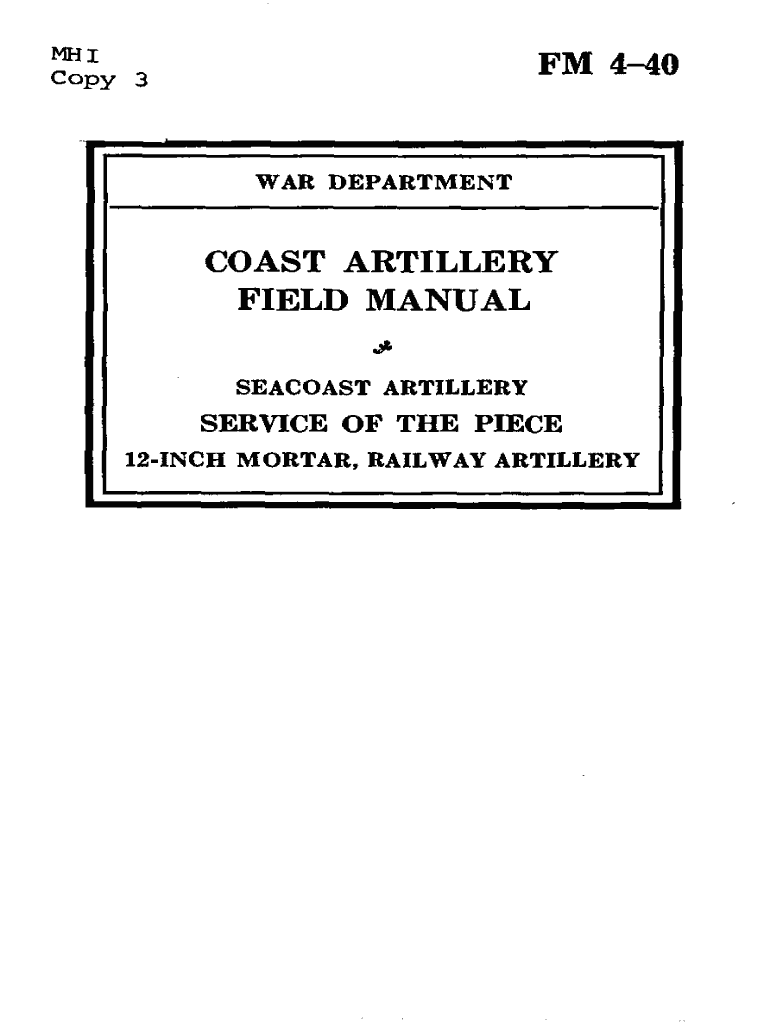
The FM 4-40 is a Coast Artillery Field Manual dedicated to detailing the service of the 12-inch mortar employed in railway artillery. This form provides comprehensive guidance related to the organization, roles of personnel, necessary safety precautions, care and adjustment of equipment, as well as procedures for emplacement and withdrawal from firing positions. Primarily, the FM 4-40 emphasizes technical handling and training efficiency, alongside adherence to crucial safety protocols during operations.
Key Components and Elements
The manual is structured to equip users with knowledge about the following essential elements:
- Organization of Operations: It outlines how tasks and responsibilities are to be distributed among the personnel involved in artillery service.
- Safety Protocols: A significant focus is placed on safety measures to protect both the crew and equipment during rail-bound artillery operations.
- Technical Handling: Detailed instructions are provided for the technical operation of mortars, underscoring precision and control.
- Training Efficiency: The manual advocates for effective training practices to ensure artillery crews are well-prepared for deployment.
- Equipment Care: Regular maintenance and adjustment procedures to ensure the longevity and reliability of the mortars.
How to Use the FM 4-40
Understanding the applications and proper usage of the FM 4-40 involves:
- Familiarization with Equipment: Recognize the elements of railway artillery and how the FM 4-40 provides a structured approach to their use.
- Adhering to Procedures: Follow the step-by-step methods detailed within to ensure correct emplacement and withdrawal of artillery pieces.
- Implementing Safety Measures: Utilize the manual’s detailed safety instructions to mitigate risks associated with handling heavy artillery.
Step-by-Step Application
- Preparation: Equip personnel with an understanding of the FM 4-40 protocol.
- Execution: Implement the procedures as directed in field operations.
- Assessment: Continuously review compliance with FM 4-40 to adapt and improve operational strategies.
Who Typically Uses the FM 4-40
The FM 4-40 is predominantly used by military personnel tasked with railway artillery operations. This includes:
- Artillery Crews: Those directly responsible for the operation and management of railway-based mortars.
- Logistical Personnel: Individuals involved in the transport and setup of artillery equipment.
- Training Officers: Responsible for instructing military personnel in the effective use of the manual for operational readiness.


Legal Use and Compliance
Compliance with the FM 4-40 is critical to ensure that:
- Operations adhere to legal mandates governing military artillery operations.
- Safety and procedural efficiency are maintained to protect both personnel and equipment.
- Standards are met in the engagement of railway artillery, ensuring the credibility and reliability of operations.
Penalties for Non-Compliance
Failing to adhere to the guidelines outlined in FM 4-40 can result in:
- Operational Failures: Compromised safety could lead to accidents or ineffective artillery deployment.
- Disciplinary Actions: Military personnel may face reprimands or penalties for non-compliance with established procedures.
- Resource Loss: Damage to artillery equipment or infrastructure due to negligence in following safety protocols.
Important Terms Related to FM 4-40
Understanding the terminology within the FM 4-40 is essential:
- Emplacement: Positioning of artillery for operational use.
- Mortar: Type of artillery piece used in railway artillery.
- Withdrawal: The careful removal of artillery following operations.
Examples of Using the FM 4-40
Practical examples showcase the applications of FM 4-40:
- Training Exercises: Demonstrate the precision required in railway artillery deployment and ensure readiness.
- Operational Deployments: Real-world scenarios where FM 4-40 principles guide action plans.
Versions or Alternatives to the FM 4-40
While the FM 4-40 is specific to railway artillery, other manuals or regulations might provide:
- Additional Guidance: Related to different artillery forms or technological advancements.
- Historical Perspectives: Previous versions capturing the evolution of artillery practices.