




01. Edit your low income certification guidelines online
Type text, add images, blackout confidential details, add comments, highlights and more.

Type text, add images, blackout confidential details, add comments, highlights and more.

Draw your signature, type it, upload its image, or use your mobile device as a signature pad.

Send form 656 b via email, link, or fax. You can also download it, export it or print it out.
IRS Form 656, also known as the Offer in Compromise (OIC), allows taxpayers to negotiate their tax liabilities. This form facilitates the process of settling unpaid taxes for less than the total amount owed, making it a viable option for individuals and businesses facing financial difficulties. Along with the form, the IRS provides a detailed booklet outlining the eligibility criteria and application procedures.
Before applying for an Offer in Compromise, it is essential to meet specific eligibility requirements. Key criteria include:


Completing IRS Form 656 involves several detailed steps:
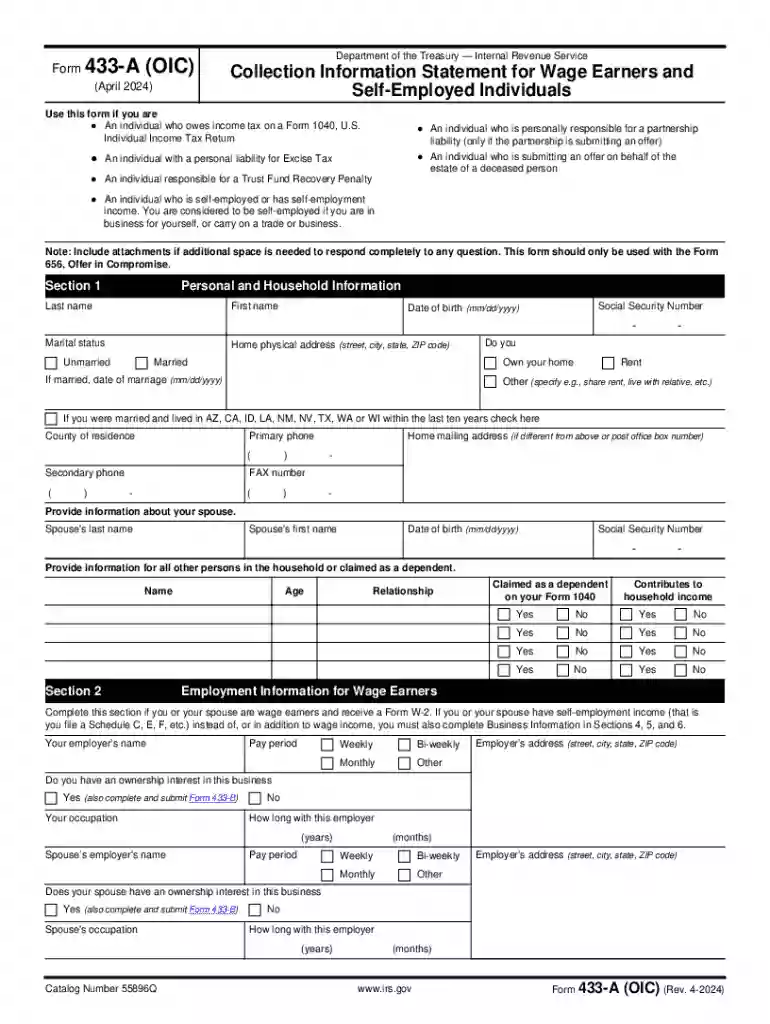
Utilizing Form 656 involves a strategic approach guided by the Offer in Compromise booklet. The form should be submitted after careful consideration of your overall financial situation, ensuring all necessary documents, such as Form 433-A (Collection Information Statement for Wage Earners and Self-Employed Individuals), accompany the application.
IRS Form 656 consists of multiple components:
You can obtain IRS Form 656 and the corresponding booklet directly from the IRS website. Taxpayers can also request a physical copy by contacting the IRS through their toll-free number. Many professional tax preparation services or software solutions also offer access to these forms.
Understanding the terminology specific to IRS Form 656 is critical for successful application:
Practically speaking, IRS Form 656 is particularly beneficial for:
Failing to comply with the Offer in Compromise agreement can result in severe consequences:
Form 656 is a legally binding agreement with the IRS. Proper submission and adherence to guidelines ensure legality. Taxpayers are advised to consult legal or tax professionals to review compliance with the ESIGN Act, which governs electronic documentation and signatures.
Adhering to IRS guidelines and timelines is essential when submitting Form 656:
We've got more versions of the low income certification guidelines form. Select the right low income certification guidelines version from the list and start editing it straight away!
| Versions | Form popularity | Fillable & printable |
|---|---|---|
| 2024 | 4.3 Satisfied (48 Votes) | |
| 2023 | 4.8 Satisfied (55 Votes) | |
| 2022 | 4.5 Satisfied (54 Votes) | |
| 2021 | 4.9 Satisfied (52 Votes) | |
| 2020 | 4.4 Satisfied (190 Votes) | |
| 2019 | 4.4 Satisfied (141 Votes) | |
| 2018 | 4.3 Satisfied (207 Votes) | |
| 2017 | 4.1 Satisfied (50 Votes) | |
| 2016 | 4.4 Satisfied (703 Votes) | |
| 2015 | 4 Satisfied (44 Votes) | |
| 2014 | 4 Satisfied (43 Votes) | |
| 2012 | 4.1 Satisfied (61 Votes) | |
| 2011 | 4.2 Satisfied (69 Votes) |
At DocHub, your data security is our priority. We follow HIPAA, SOC2, GDPR, and other standards, so you can work on your documents with confidence.
Form 656 is not a stand-alone form and is intended for tax professional use only. Individuals requesting consideration of an offer must use Form 656‐B, Offer
You and your spouse/ex-spouse must submit separate offers to compromise each persons responsibility for the joint tax debt. Each Form 656 will require the $205Read more


