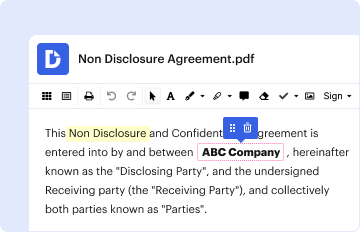
Type text, add images, blackout confidential details, add comments, highlights and more.
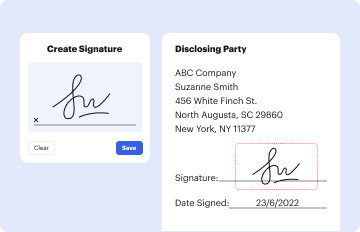
02. Sign it in a few clicks
Draw your signature, type it, upload its image, or use your mobile device as a signature pad.
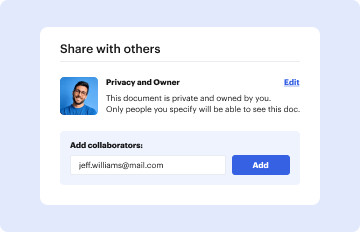
03. Share your form with others
Send it via email, link, or fax. You can also download it, export it or print it out.
How to use or fill out Subject Access Request (SAR) form Subject Access request - GDPR with our platform
Ease of Setup
DocHub User Ratings on G2
Ease of Use
DocHub User Ratings on G2
Click ‘Get Form’ to open it in the editor.
In Part 1, provide your contact details in block capitals. Ensure you include your name, surname, address, Eircode, phone number, and email address if applicable.
Move to Part 2 and detail your request. Include specific information about your past interactions with the department, relevant dates for the data you seek, and any reference numbers that may assist in locating your data.
In Part 3, declare that all provided information is true by signing and dating the declaration section.
Review Part 4 to tick the areas of the department where you believe your personal data may be held. This will help streamline the process.
Finally, check Part 5 to ensure you have completed all sections of the form fully and provided adequate proof of identity before submitting it via post or email.
Start filling out your Subject Access Request form today for free using our platform!
Fill out Subject Access Request (SAR) form Subject Access request - GDPR online It's free
See more Subject Access Request (SAR) form Subject Access request - GDPR versions
We've got more versions of the Subject Access Request (SAR) form Subject Access request - GDPR form. Select the right Subject Access Request (SAR) form Subject Access request - GDPR version from the list and start editing it straight away!
Subject access request sar form subject access request gdpr templateSubject access request sar form subject access request gdpr exampleSubject access request formSubject access request time limitSubject access request form UKSubject access request GDPR time limitSubject access request gov UKWhat is included in a subject access request
Security and compliance
At DocHub, your data security is our priority. We follow HIPAA, SOC2, GDPR, and other standards, so you can work on your documents with confidence.
This document provides information about how to submit a request to exercise rights you have with respect to your personal data under privacy laws andRead more
K9db: Privacy-Compliant Storage For Web Applications By
by KD Albab Cited by 22 The GDPR, for example, provides Subject Access Requests (SARs) that al- low a data subject (i.e., an end user) to request a copy of their data
Cookie consent notice
This site uses cookies to enhance site navigation and personalize your experience.
By using this site you agree to our use of cookies as described in our Privacy Notice.
You can modify your selections by visiting our Cookie and Advertising Notice.