







Definition & Meaning
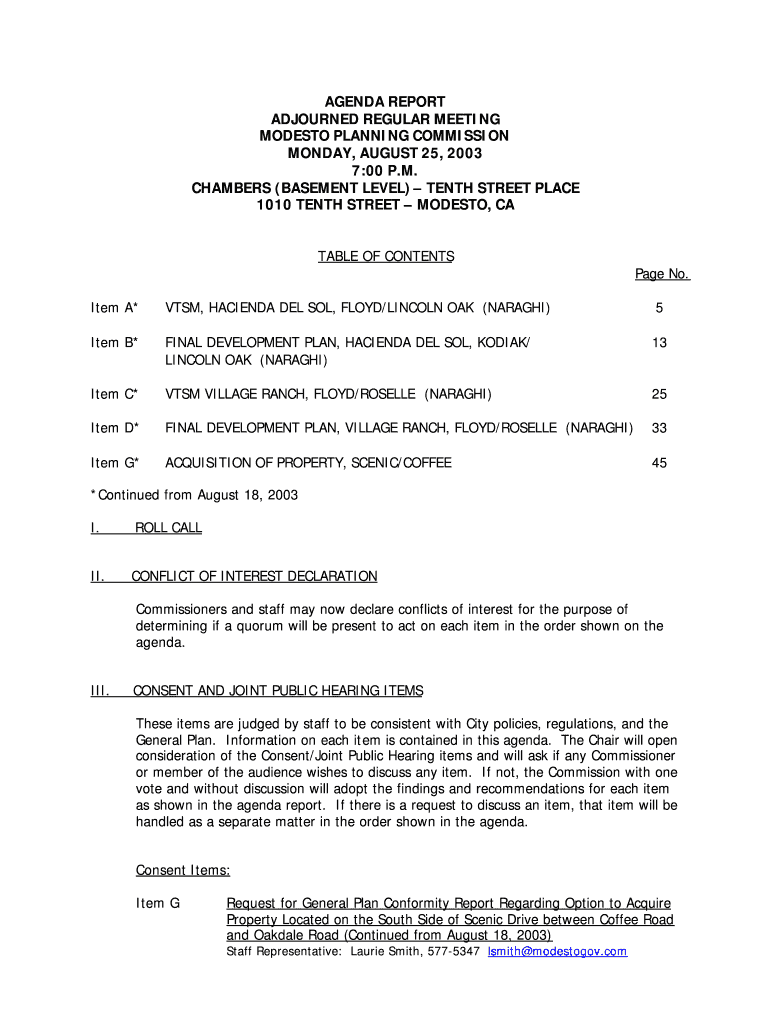
The "Item A* VTSM, Hacienda Del Sol, Floyd Lincoln Oak (Naraghi) 5 Item B* Final Development Plan, Hacien" represents a detailed agenda and development planning document associated with residential projects approved by planning commissions. Specifically, this form includes deliberations on subdivision maps and development plans in Hacienda Del Sol, with notable mentions of Floyd Lincoln Oak (Naraghi) and possibly other significant areas.
Components of the Form
- Subdivision Maps: Visual layouts depicting how land will be divided for residential or commercial use.
- Development Plans: Detailed projections of how the property will be developed, considering architecture, infrastructure, and environmental impacts.
- Public Hearings: Procedures included in the agenda that allow for community input and transparency in planning.
How to Use the Form
Using this form involves understanding its comprehensive scope and applying it correctly in planning processes.
Steps for Utilization
- Review the Agenda: Start by examining the agenda section to understand meeting topics and timelines.
- Participate in Hearings: Engage in public hearings as outlined to provide insights or raise concerns.
- Analyze Development Plans: Evaluate the detailed plans for potential impacts on existing community layouts.
- Update Documents: Customize and update necessary subsections relevant to your specific project or area of interest.
Steps to Complete the Form
Completion involves a meticulous process of gathering information and complying with local regulations.
Sequence of Actions
- Collect Required Data: Ensure all necessary data on subdivision and development plans is included.
- Attend Meetings: Participate in roll call and oral communications as outlined.
- Draft Submissions: Based on public hearings and discussions, draft final submissions of development plans.
- Submit for Approval: Present the finalized document for planning commission approval, adhering to deadlines.
Key Elements of the Form
Several vital components ensure the effectiveness and legality of this form in planning processes.
Essential Sections
- Roll Call & Conflict Declarations: Ensures transparency and accountability.
- Consent & Business Items: Identifies areas requiring collective or individual attention.
- Data Collection Tools: Utilizes form fields to gather essential information from various stakeholders.
Legal Use of the Form
Adhering to the legal framework is crucial when applying this form.
Compliance Guidelines
- Zoning Laws: Observe state-specific zoning laws to confirm permissible land use.
- Environmental Regulations: Ensure compliance with environmental assessments and sustainability standards.
- Document Security: Utilize tools like DocHub for securing and managing documents electronically, ensuring data protection.
Important Terms Related to the Form
Familiarizing yourself with key jargon is fundamental to navigating this document effectively.
Terminology Overview
- VTSM (Vest Tentative Subdivision Map): A preliminary map indicating intended subdivision layouts.
- Final Development Plan: A detailed blueprint post-discussion, ready for execution.
- Naraghi: Refers to a specific geographic area or landholding affected by these plans.
Who Typically Uses the Form
Identifying the stakeholders can help streamline collaborations and focus efforts effectively.


Potential Users
- Developers: Those involved in real estate development and planning.
- Community Planners: Individuals engaged in urban development and public policy.
- Local Governments: Agencies responsible for land use planning and community development.
State-Specific Rules for the Form
Each state may have unique regulations impacting the form’s application.
Considerations by State
- California Example: The form may adhere to the California Environmental Quality Act, ensuring all developments meet environmental standards.
- Local Ordinances: Understanding and integrating local by-laws within the document.
Examples of Using the Form
Practical scenarios highlight how the form can be utilized effectively.
Case Studies
- Residential Developments: Use of the form to propose new housing projects in growing urban areas.
- Community Engagement: Engaging stakeholders through public hearings sponsored by planning commissions.
Required Documents
Gathering and organizing the right documents is essential for accurate submissions.
Necessary Inclusions
- Official Maps: Including both current and proposed subdivision layouts.
- Development Projections: Quantitative and qualitative assessments of project impacts.
- Stakeholder Endorsements: Approval or feedback from relevant community members.
Form Submission Methods
Various methods ensure proper submission and record-keeping.
Available Options
- Online Platforms: Leverage tools like DocHub for electronic submissions.
- Mail: Traditional mailing methods for submitting paper copies to planning commissions.
- In-Person: Direct submissions during planning meetings.




