
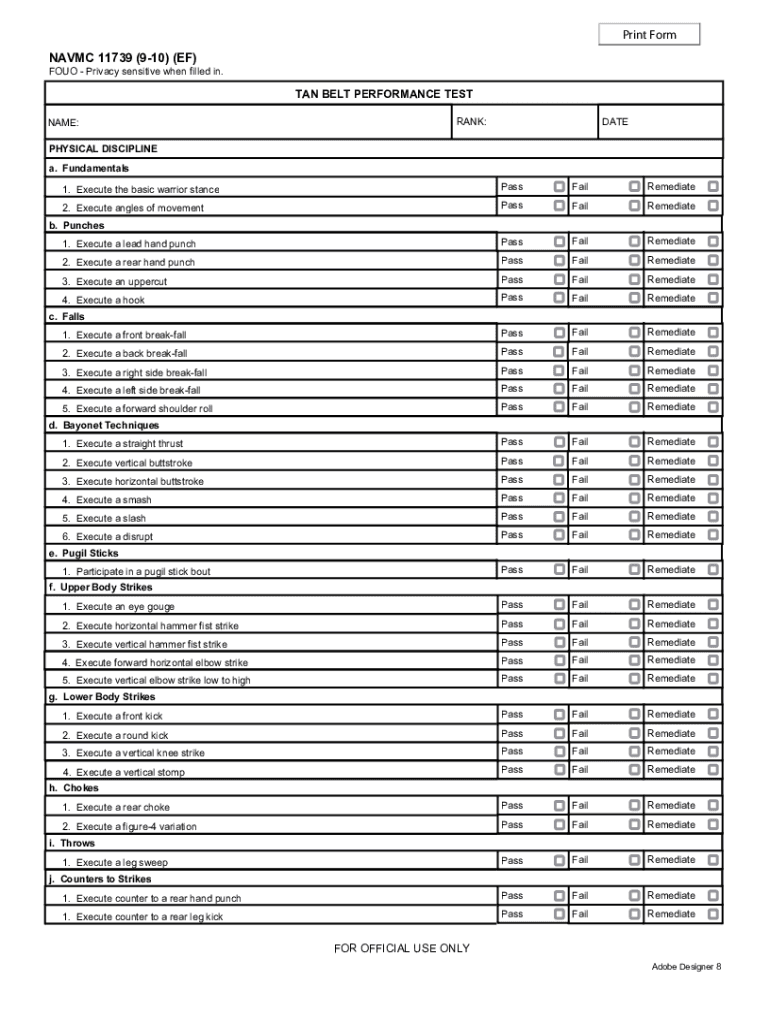







Definition and Importance of the NAMC 11739 - Tan Belt Performance Test
The NAMC 11739 - Tan Belt Performance Test is a structured assessment used to evaluate a student's proficiency in a particular physical discipline, specifically focusing on fundamental techniques such as stances, strikes, falls, counters, and manipulations. This form quantifies the student's performance through a pass/fail/remediate grading system for each technique listed. A passing score of at least 80% is required, allowing no more than 10 failed techniques to achieve the tan belt. Understanding this form and achieving a successful evaluation is essential for students aiming to advance in their physical discipline journey.
How to Use the NAMC 11739 - Tan Belt Performance Test
Using the NAMC 11739 form effectively involves several steps:
-
Review the Entire Form: Before beginning the test, students should familiarize themselves with each section of the form, understanding the criteria for each technique.
-
Practice Techniques: Engage in rigorous practice, focusing on the fundamental skills outlined in the test. Emphasis should be on perfecting stances, strikes, and falls.
-
Simulate the Performance Test: Conduct mock tests under conditions similar to the actual evaluation. This helps students gauge their readiness and make necessary adjustments.
-
Seek Feedback: Instructors should provide constructive criticism based on practice sessions, helping students refine their techniques before the official test.
-
Complete the Test: During the assessment, students should perform each technique meticulously as per the guidelines set out in the form.
Obtaining the NAMC 11739 - Tan Belt Performance Test Form
To acquire the NAMC 11739 form, students should follow these steps:
-
Contact Training Institution: Reach out to the educational or training institution that administers the physical discipline program.
-
Visit Official Websites: Some institutions or governing bodies might have the form available for download on their official websites.
-
Request Through Instructors: Often, instructors have access to necessary forms and can facilitate obtaining the document for their students.
Steps to Complete the NAMC 11739 Form
Completing the NAMC 11739 involves detailed steps:
-
Fill Out Personal Information: Clearly provide your name, date of birth, and other required identification details on the form.
-
Detail Each Technique Performance: Mark each skill as pass, fail, or remediate based on your execution.
-
Instructor's Evaluation: Instructors need to assess and document each technique's performance level.
-
Finalize and Review: Go through the completed form for accuracy before submission.
-
Submit the Form: Deliver the form to the designated body or institution as specified in their guidelines.
Key Elements of the NAMC 11739 Form
The form emphasizes:
- Basic Stances: Foundational positions from which all techniques initiate.
- Strikes and Counterstrikes: Offensive and defensive maneuvers.
- Falls and Recoveries: Techniques for safely falling and returning to a standing position.
- Manipulations: Skills involving control over an opponent.
- Assessment Sections: Divided by technique types, each rated, to guide students on their areas for improvement.
Importance of the NAMC 11739 Form in Training Programs
The NAMC 11739 form is pivotal for:
- Tracking Progress: Offers a clear, quantitative measure of a student's abilities and progress.
- Setting Benchmarks: Establishes a standardized expectation for skills at the initial belt level.
- Guiding Further Training: Identifies strengths and areas for improvement, crucial for tailoring future training.
Who Typically Uses the NAMC 11739 Form
- Students: Involved in physical training programs needing documented proof of their achieved skills.
- Instructors: To evaluate and ensure that the students meet the required standards before progressing.
- Organizations: Administering training programs wanting standardized assessment methods.


Legal Use of the NAMC 11739 Form
The form must be used within the context and regulations set by the governing body overseeing the discipline. This ensures:
- Validity of Assessment: The form serves as an official record of achieved competency.
- Standardized Evaluation: Ensuring fairness and credibility in the skill accreditation process across different training centers.




