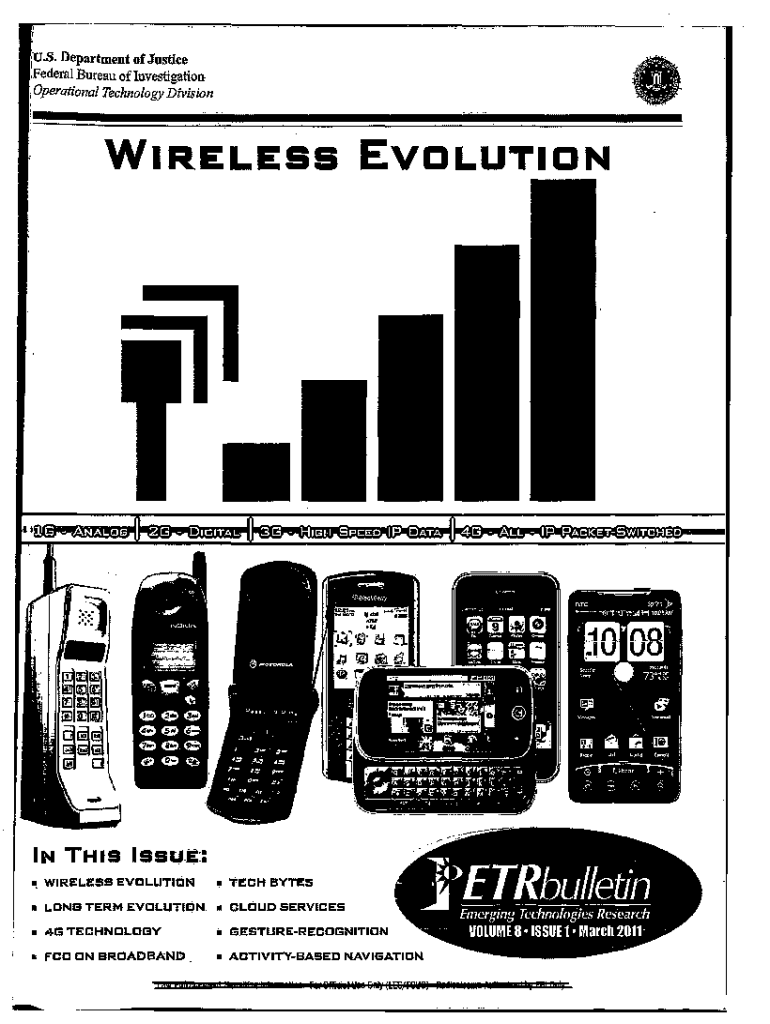







Definition and Meaning of Wireless Evolution - Federation of American Scientists
Wireless Evolution, as understood from the context of the Federation of American Scientists, refers to the progression and adaptations in wireless communication technology over time. This encompasses advancements from early wireless networks like 3G, through 4G, and into current and emerging technologies. Focusing on both technical and societal implications, this evolution includes improvements in data transfer speed, network efficiency, and the integration of newer technologies such as cloud services and gesture recognition. The Federation of American Scientists often underscores how these advancements directly impact areas like law enforcement, public safety, and data security.
How to Use the Wireless Evolution - Federation of American Scientists Document
To utilize the Wireless Evolution - Federation of American Scientists document effectively, one must first understand its structure and content. The document generally covers key topics such as network transitions, technological challenges, and implications for public safety. Users can leverage this information to:
- Analyze the impact of technological advancements on law enforcement.
- Explore strategies for lawful interception and communication protocols.
- Understand the requirements for maintaining secure and efficient communication systems.
By approaching the document with specific queries or objectives, users can extract relevant insights that assist in optimizing communication strategies within their organization or community.
Obtaining the Wireless Evolution - Federation of American Scientists Document
Accessing the Wireless Evolution - Federation of American Scientists document can typically be achieved through several methods:
- Official Websites: Check directly on the Federation of American Scientists' official site, as it may host reports, publications, or links to the document.
- Library Resources: Many libraries, especially those in academic or government institutions, provide access to such documents.
- Online Databases: Utilize online academic databases and repositories where similar reports may be archived.
These methods ensure that users obtain the most current and verified version of the document for their research or operational needs.
Steps to Complete Tasks Using the Wireless Evolution Document
When tasked with completing actions or projects using insights from the Wireless Evolution document, follow these steps:
- Identify Specific Information Needed: Determine the exact types of data or examples required for your task.
- Extract Data: Use the document to source relevant data points, figures, or case studies.
- Integrate Information: Apply the extracted data to inform decisions or design strategies.
- Review and Iterate: Periodically assess the implementation of strategies based on document insights and adjust as necessary.
By adhering to this structured approach, users can systematically apply the document's insights to achieve desired outcomes effectively.
Key Elements of the Wireless Evolution Document
The document is structured around several core elements that provide a comprehensive overview of wireless technology development:
- Network Evolution: Details on transitions from 3G to newer networks.
- Technological Challenges: Discusses issues like counterfeit gadgets and security vulnerabilities.
- Public Safety and Law Enforcement: Highlights how advancements assist in law enforcement functions.
- Collaboration Calls: Emphasizes the need for industry and enforcement body synergies.
These elements help frame the document as a foundational tool for understanding and leveraging wireless technological shifts.
Legal Use and Implications
The Wireless Evolution document also touches on the legal aspects of wireless technology advancements. Legal use typically involves:
- Compliance with Communication Laws: Ensuring adherence to relevant communication regulations and standards.
- Privacy Concerns: Understanding how data protection laws affect technology use, especially in surveillance contexts.
- Lawful Interception Strategies: Implementing correct and lawful procedures for data interception in law enforcement.
Legal context provided in the document aids stakeholders in navigating complex regulatory landscapes.
Examples of Using Wireless Evolution Insights
Real-world application scenarios are instrumental in understanding how insights from the Wireless Evolution document can be applied:
- City Planning: Integrating advanced wireless networks for smart city infrastructure.
- Law Enforcement Training: Developing programs that teach officers how to utilize new technologies ethically and legally.
- Public Safety Initiatives: Deploying improved communication tools in emergency response systems.
These examples showcase the document's utility in guiding practical implementations across various domains.
Form Submission Methods: Digital vs. Paper
The comparison between digital and paper versions of related documents like Wireless Evolution can influence how they are utilized:
- Digital Version: Offers benefits like ease of distribution, searchability, and real-time updates.
- Paper Version: Useful where digital access is limited or traditional means are preferred.
Both versions ensure accessibility to the document's rich insights but selecting the most suitable format can depend on user needs and organizational capabilities.
Eligibility Criteria for Accessing the Wireless Evolution Document
Eligibility to access detailed reports from the Federation of American Scientists often includes:
- Institutional Affiliation: Members of partner organizations or institutions might get direct access.
- Public Access: Certain documents may be available to the public without restrictions.
- Purchase or Subscription Requirements: Some documents could require purchase or subscription through databases.
Understanding these criteria can assist individuals and organizations in accessing valuable resources needed for their work.