
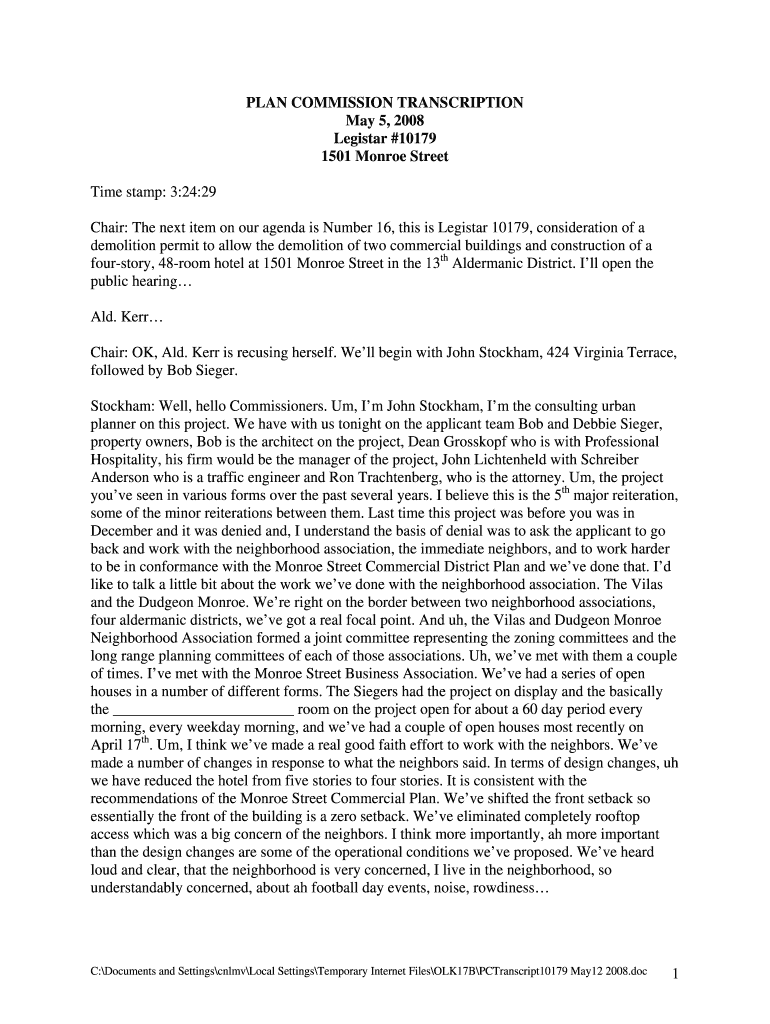







Definition and Purpose of PLAN COMMISSION TRANSCRIPTION May 5 - City of Madison
The PLAN COMMISSION TRANSCRIPTION May 5 - City of Madison is a detailed record of discussions and decisions made during a City of Madison Plan Commission meeting held on May 5, 2008. This transcription captures stakeholder views regarding urban development projects, such as the proposal for demolishing two commercial buildings to construct a four-story, 48-room hotel at 1501 Monroe Street. Valuable for urban planners, developers, and community members, this document offers insights into local planning decisions and public concerns like traffic flow, noise, and community impacts.
Accessing the PLAN COMMISSION TRANSCRIPTION May 5 - City of Madison
To obtain the PLAN COMMISSION TRANSCRIPTION May 5 - City of Madison, interested parties typically need to approach the City of Madison’s official channels. Documents like these might be available through the city's public records office or published online on the city's official website. For direct access, visiting city government offices or libraries may also be necessary. Contacting the city’s planning department can provide guidance on official procedures for accessing such records.
Steps to Analyze the Transcription Effectively
- Initial Review: Begin by reading the entire transcription to understand the context of the meeting discussions.
- Identify Key Stakeholders: Note contributions from different stakeholders, including neighborhood associations and traffic engineers.
- Focus on Major Themes: Highlight recurring concerns such as traffic, noise, and community impact.
- Analyze Responses: Examine how the applicant's team addressed concerns, including any proposed design changes or operational restrictions.
- Consider Conditions for Approval: Pay attention to conditions set by the commission for approval, including ongoing jurisdiction and potential changes.
Key Participants in the PLAN COMMISSION TRANSCRIPTION May 5 - City of Madison
The transcription outlines contributions from a variety of participants:
- Neighborhood Associations: Representing community interests and raising local concerns.
- Traffic Engineers: Offering expert analysis on potential traffic implications.
- Applicant’s Team: Presenting modifications to address previous objections.
- Plan Commission Members: Deliberating on approval conditions and future oversight.
Importance of PLAN COMMISSION TRANSCRIPTION for Stakeholders
- Urban Planners: Utilize the transcription to understand guidelines and community concerns for proposed developments.
- Developers: Assess public feedback and modifications necessary for project approval.
- Residents: Engage with local government decisions impacting their community.
- Policy Makers: Learn about public sentiment and planning priorities.
Key Elements in the PLAN COMMISSION TRANSCRIPTION
- Project Proposal: Details of the proposed hotel at 1501 Monroe Street.
- Public Hearings: Insights into community feedback and concerns.
- Response and Modifications: Applicant’s efforts to address issues raised during hearings.
- Approval Conditions: Commission’s stipulations for project advancement.
Legal Considerations and Compliance
The PLAN COMMISSION TRANSCRIPTION captures discussions relevant to local zoning laws and urban planning regulations. Stakeholders must remain compliant with local ordinances when proposing changes to urban landscapes. Developers are required to follow legal stipulations and address community feedback to obtain necessary approvals.
Variants and Related Documentation
Apart from the May 5 transcription, similar documents might exist for previous or subsequent meetings. Comparing these records can provide broader insights into ongoing urban development issues and planning commission procedures over time.
Practical Examples of Utilizing the Transcription
- Developers preparing for future proposals can study previous stakeholder feedback and adapt plans accordingly.
- Community advocates wanting to influence planning can use transcription details to strengthen arguments in public hearings.
- Academic researchers analyzing urban planning trends can extract themes and stakeholder dynamics from the transcription.
Digital Versus Paper Transcription Formats
Both digital and paper formats of the PLAN COMMISSION TRANSCRIPTION are likely available, catering to different user preferences. Digital formats provide easy access and searchability, while paper versions ensure a permanent, tangible record. Access to either may depend on city policies and resources for public documentation.
Each section and topic in the transcription offers a wealth of data for those involved in or affected by urban planning in the City of Madison, enabling informed decision-making and engagement.




