







Definition & Meaning
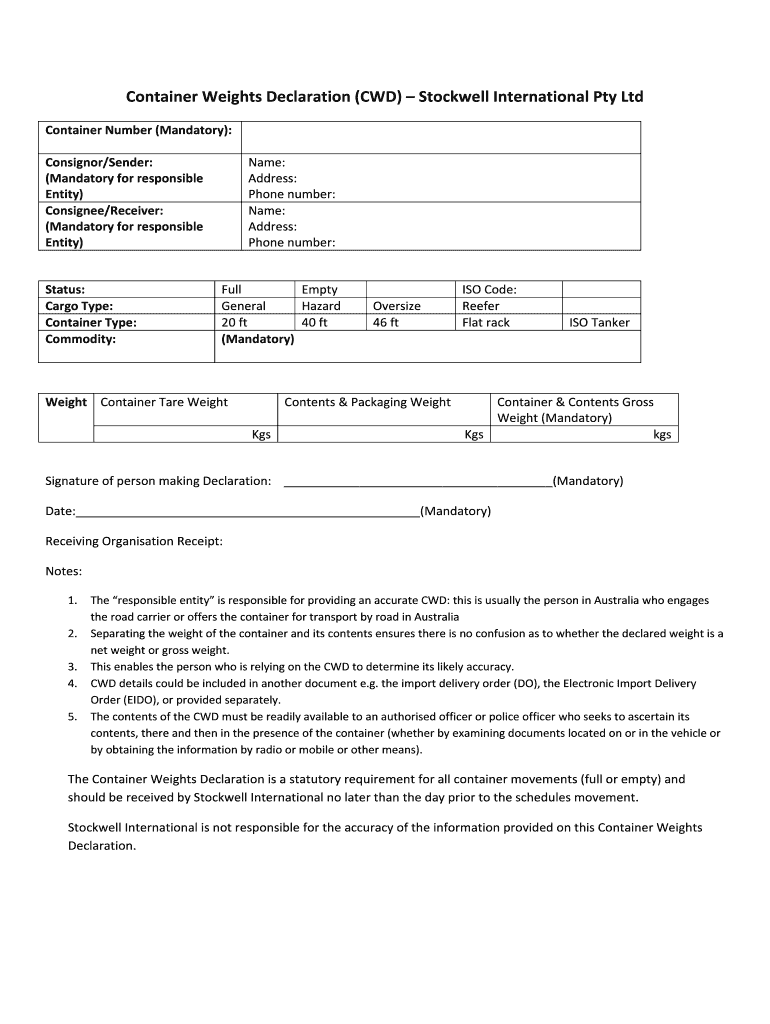
The Container Weights Declaration form - Freight is a crucial document required for the transportation of shipping containers, both full and empty. It ensures the accurate reporting of a container's weight, including the net and gross weights. This accuracy is vital to maintaining safety standards during transport, preventing overloading of vehicles, and ensuring compliance with international shipping regulations. By mandating specific information about the container's contents, type, and the stakeholders involved, this form aims to reduce the risk of accidents and inefficiencies in handling cargo.
Steps to Complete the Container Weights Declaration Form - Freight
-
Collect Container Details: Begin by gathering the necessary information for the form, including the container number, type, and the total number of items. Ensure that this data is precise to avoid discrepancies.
-
Consignor and Consignee Information: Enter the contact details of both the consignor (the sender or owner of the goods) and the consignee (the receiver or buyer). Accurate data entry is essential for traceability and accountability.
-
Calculate and Record Weights: Obtain the exact net weight (weight of the goods alone) and gross weight (including the container tare weight) of the container. Misreporting can lead to safety issues and penalties.
-
Declaration Verification: Review all the entered details for accuracy. It is essential to verify the authenticity of the provided weights and the individuals responsible for determining them.
-
Submission Before Deadline: Submit the completed form by the specified deadline, typically the day before the container's scheduled movement. Late submissions might result in shipping delays or fines.
Importance of the Container Weights Declaration Form - Freight
Utilizing the Container Weights Declaration form is critical for several reasons. Firstly, it promotes safety by ensuring that all stakeholders are aware of the actual weight being transported, preventing vehicle overloading. It also facilitates smooth operations as it aligns with international standards like the SOLAS (Safety of Life at Sea) Convention, which mandates verified gross mass documentation for containers. Furthermore, accurate weight declaration minimizes the risk of damage to cargo, equipment, and the environment, supporting efficient and sustainable shipping practices.
Key Elements of the Container Weights Declaration Form - Freight
The form comprises several vital components that establish its comprehensive nature:
- Container Number: Unique identification used to track and manage the container efficiently.
- Weight Details: Clear distinction between net and gross weights as well as tare weight, ensuring complete transparency.
- Consignor and Consignee Information: Essential for logistics management, enabling smooth communication and accountability.
- Declaration Statement: A confirmation by the responsible entity verifying the accuracy of all provided information.
- Submission Date: Indicates compliance with submission deadlines, reducing the risk of shipment delays.
Legal Use of the Container Weights Declaration Form - Freight
The legal significance of the Container Weights Declaration form cannot be understated. It is a document that aligns with various maritime laws and regulations, ensuring that shipping companies abide by safety and weight verification standards. Incorrect data entry can lead to hefty fines and increased liability risks for the responsible parties, emphasizing the need for meticulous accuracy. Organizations must incorporate stringent verification processes and maintain records of submitted forms to demonstrate due diligence in case of regulatory reviews.
Penalties for Non-Compliance
Non-compliance with the regulations regarding the Container Weights Declaration form can lead to several penalties. Misreporting or failure to submit the form on time can result in:
- Fines: Penalties imposed by maritime and transportation authorities for inaccuracies or delayed submissions.
- Delayed Shipments: Containers may be barred from loading onto vessels, causing significant logistical setbacks and increased costs.
- Increased Liability: In the event of accidents or damages, entities may face heightened liability and insurance premiums due to negligence in declaration accuracy.
Form Submission Methods (Online / Mail / In-Person)
There are several methods available for submitting the Container Weights Declaration form, ensuring flexibility and convenience for entities:
- Online Submission: Offers a fast and efficient way to deliver the form, typically integrated with digital freight management systems. It provides an audit trail and immediate confirmation of submission.
- Mail Submission: Traditional but reliable, ensuring physical documentation is maintained. Suitable for entities without access to digital platforms.
- In-Person Submission: Allows direct interaction, ensuring accuracy and completeness through immediate verification with authority staff.
State-specific Rules for the Container Weights Declaration Form - Freight
While the general principles of the Container Weights Declaration form apply broadly across the industry, there can be state-specific differences in its implementation:
- California: May require additional environmental disclosures due to stringent state regulations on emissions and cargo handling.
- New York: Might necessitate supplementary security information in alignment with port authorities' safety measures.
- Texas: Could incorporate additional details related to agricultural or energy-related materials, reflecting the state's economic focus.
Understanding these variances is crucial for ensuring compliance and avoiding legal or operational challenges.




