






Definition & Meaning
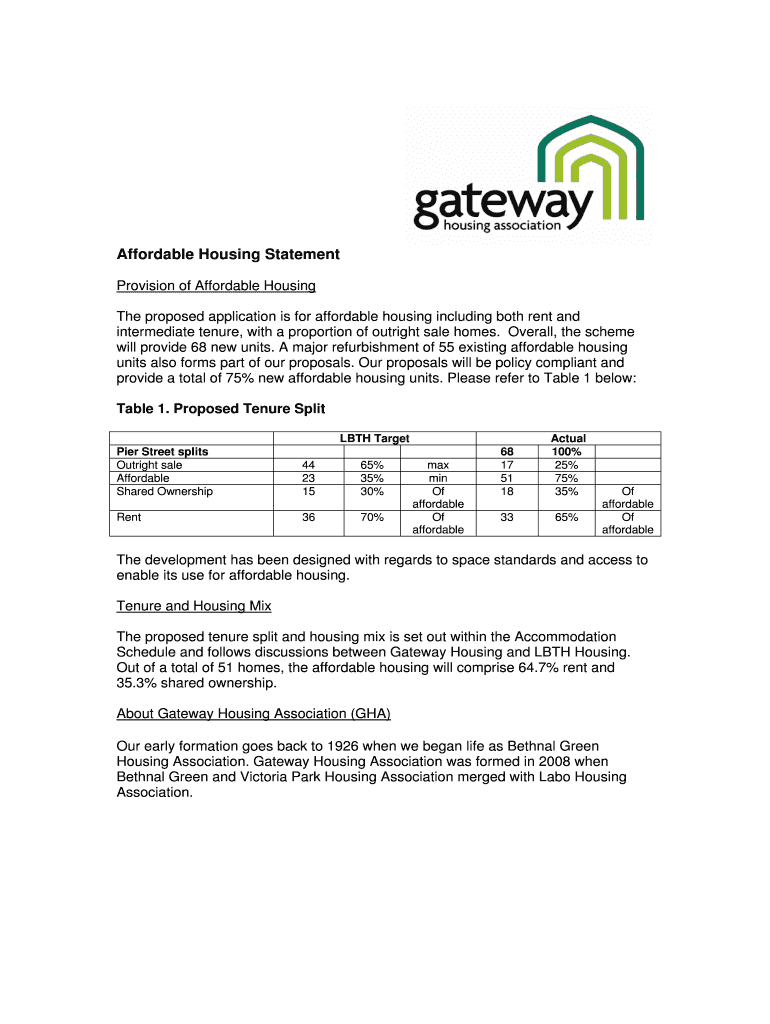
The "Affordable Housing Statement doc" is a formal document typically used in the housing sector to outline the details and intentions of affordable housing projects. It includes comprehensive information about the number of housing units, tenure splits, target demographics, and compliance with local housing regulations. The primary aim of this document is to ensure transparency and alignment with regional housing policies, thereby facilitating the development of sustainable, community-oriented housing solutions.
Affordable housing statements generally cover various aspects, including financial projections, community benefits, and the potential impacts on local infrastructure. As part of a development application, this document is critical for demonstrating a project's commitment to providing accessible housing options for low-to-middle-income residents. Its structured format ensures that all relevant stakeholders, including local councils, development agencies, and community members, understand the scope and benefits of the proposed housing initiatives.
How to Use the Affordable Housing Statement doc
To effectively utilize the "Affordable Housing Statement doc," stakeholders must first gather all pertinent information regarding the housing project. This includes details such as the proposed site location, the total number of housing units, and the intended target market. Once compiled, the document should be structured to align with local council requirements, showcasing the project's adherence to policies and objectives surrounding affordable housing.
- Begin by clearly stating the purpose of the housing development.
- Detail the project's compliance with local and state housing regulations.
- Include demographic information for prospective tenants.
- Provide comprehensive data on the financial viability of the project.
Engaging with a housing consultant or legal expert may be beneficial to ensure that the document meets all regulatory standards and maximizes its potential for approval by the relevant authorities. This will streamline the approval process and increase the likelihood of securing necessary permits and endorsements.
Key Elements of the Affordable Housing Statement doc
The core components of an "Affordable Housing Statement doc" include several sections that provide clarity and insight into the housing project. Each section must be meticulously detailed to ensure that it fulfills its purpose. Here are the primary elements to include:
- Executive Summary: Offers a brief overview of the project's goals and benefits.
- Project Details: Contains specifics on location, size, and scope of the development.
- Tenure Mix: Specifies the proportion of rental units versus shared-ownership units.
- Community Impact: Highlights potential socio-economic benefits for the local community.
- Sustainability Measures: Outlines efforts to incorporate environmentally friendly practices.
- Financial Plan: Includes budgets, funding sources, and cost projections.
- Compliance and Regulations: Addresses adherence to local policies and standards.
By ensuring that each section is thoroughly addressed, the statement becomes a comprehensive guide that aids local authorities in their decision-making process. This methodical approach increases the proposal's credibility and likelihood of approval.
Steps to Complete the Affordable Housing Statement doc
Creating a complete and effective "Affordable Housing Statement doc" involves a systematic approach. Here is a step-by-step guide to assist in its preparation:
-
Research Local Requirements: Determine specific local council guidelines and regulations governing affordable housing projects. This ensures the document aligns with regulatory frameworks.
-
Gather Necessary Data: Accumulate relevant data about the project, such as demographic studies, financial plans, and sustainability initiatives.
-
Draft the Document: Begin drafting the statement by focusing on key sections, ensuring they are concise yet comprehensive.
-
Review and Revise: Engage with stakeholders and experts to review the document, correcting errors and optimizing clarity.
-
Submission: Submit the final document to the appropriate authorities, ensuring all required attachments and supporting materials are included.
Completing the process efficiently requires collaboration among developers, planners, and legal advisors to ensure the document accurately reflects the project's aspirations and complies with all necessary regulations.
Who Typically Uses the Affordable Housing Statement doc
The "Affordable Housing Statement doc" serves various users involved in the housing development process. These include:
- Developers: Utilize the document to outline and propose new affordable housing projects.
- Local Authorities: Review the document to assess project compliance with housing policies.
- Community Planners: Use it to evaluate the project's impact on the wider community and infrastructure.
- Financial Institutions: Reference the statement when considering funding applications related to the project.
- Non-Profit Organizations: Engage with the document to support their missions in expanding affordable housing availability.
Each user relies on the document for its detailed information and structured approach, which informs their decision-making and support actions in the housing development ecosystem.


State-Specific Rules for the Affordable Housing Statement doc
The preparation of an "Affordable Housing Statement doc" must account for state-specific rules that can vary widely across jurisdictions. Each state may have distinct policies regarding what constitutes affordable housing, funding opportunities, and approval processes. Understanding these variations is crucial for effectively crafting the document.
- Local Policy Compliance: Ensure the document addresses state and city requirements for affordable housing quotas and initiatives.
- Financial Regulations: Consider state-specific funding programs and incentives designed to bolster affordable housing developments.
- Environmental and Zoning Laws: Acknowledge state regulations on sustainable building practices and land-use permissions.
Being cognizant of these varying requirements will help streamline the approval process and prevent unforeseen delays due to regulatory discrepancies.
Legal Use of the Affordable Housing Statement doc
Legal adherence is a cornerstone of the "Affordable Housing Statement doc" due to its role in obtaining necessary development approvals. Ensuring legal compliance involves:
- Contractual Obligations: The document may form part of legal agreements between developers and local councils, outlining conditions for project approval.
- Regulatory Compliance: Must demonstrate adherence to housing legislation and building codes at the federal, state, and local levels.
By aligning the document with all applicable laws and regulations, developers can protect themselves from potential legal challenges and facilitate a smoother approval process.
Examples of Using the Affordable Housing Statement doc
Real-world examples of "Affordable Housing Statement doc" applications provide insight into the document's impact on housing projects:
- Urban Redevelopment Projects: Developers may use the statement to convert former industrial sites into mixed-income residential communities.
- Community-Led Initiatives: Non-profits might employ the document as part of their strategy to improve local housing standards.
- Partnership Developments: Collaboration between private firms and government bodies often requires such documentation to underline mutual commitments.
These examples underline the document's versatility and its critical role in various affordable housing scenarios, showcasing its functionality in achieving diverse housing objectives across different contexts.