







Definition and Meaning
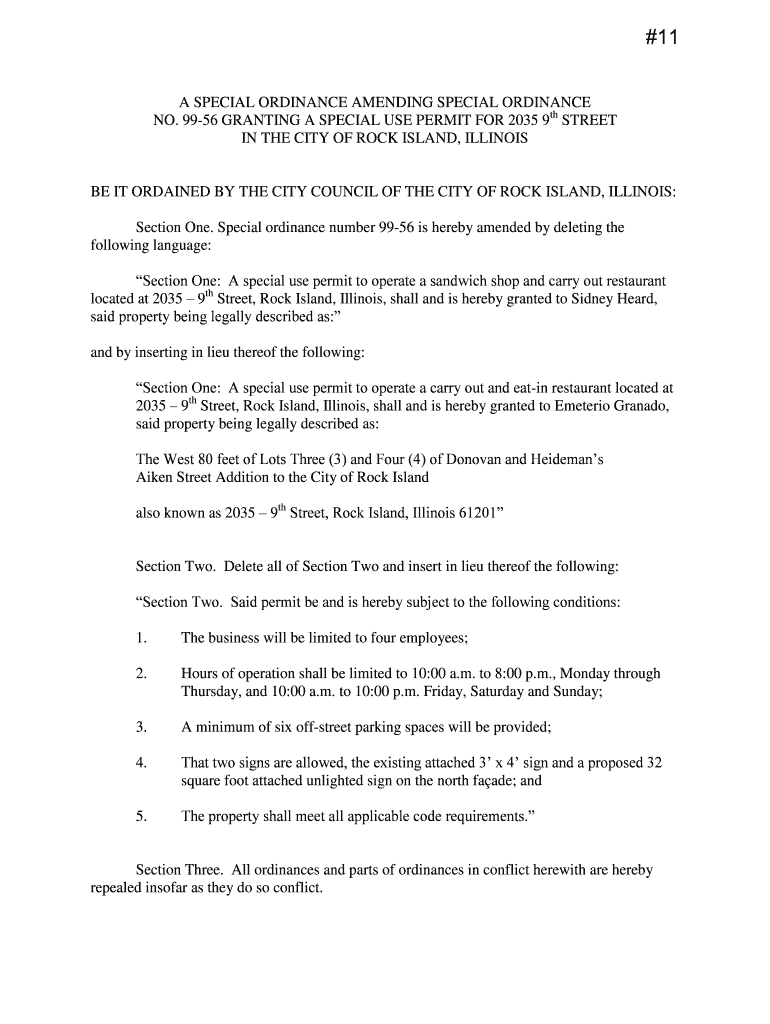
A special ordinance is a legislative act that amends a previous ordinance by altering its terms or conditions. In the case of Special Ordinance No 99-56, the amendment involves transferring the rights and responsibilities associated with a special use permit from one individual or entity to another. This type of ordinance often arises to reflect changes in ownership or operational strategies, such as updating the permit holder for a restaurant located at a specific address. Understanding the specifics of the amendment, including the nature of the rights granted and any new conditions imposed, is crucial for maintaining compliance with local government regulations.
How to Use the Ordinance
When dealing with a special ordinance amendment like No 99-56, it is crucial to understand how it fits within your broader business or legal context. Utilize the ordinance to:
- Ensure compliance: Review the operational conditions outlined in the ordinance, such as employee limits and hours of operation.
- Implement changes: Make necessary adjustments to your business operations to align with new requirements.
- Communicate updates: Inform all relevant stakeholders, including staff and legal advisors, of the changes.
By following these steps, businesses can seamlessly integrate the new ordinance conditions into their daily operations.
Steps to Complete the Application
- Review Ordinance Details: Thoroughly analyze the amendment's terms to understand new requirements.
- Gather Required Information: Prepare necessary documentation, such as proof of business ownership and identity.
- Fill Out Application Form: Ensure all fields are accurately completed, following the specific instructions provided.
- Submit the Application: Choose the appropriate method for submission, whether online or in-person, and adhere to deadlines.
- Follow Up: Keep track of the application's progress and address any additional requests from the issuing authority promptly.
Completing these steps helps ensure timely approval and compliance with the ordinance.
Legal Use of the Ordinance
The legal use of special ordinance amendments like No 99-56 encompasses:
- Changing the operational conditions: Adjust policies to meet new parking, signage, and compliance requirements.
- Reassigning permit ownership: Transfer rights and responsibilities legally, ensuring the new holder is recognized by the issuing authority.
- Formalizing updates with local authorities to prevent legal disputes and ensure business continuity.
The ordinance provides a framework for legal changes within permitted activities, maintaining alignment with municipal codes and regulations.
Key Elements of the Ordinance
- Permit Holder Change: The amendment transitions the permit from Sidney Heard to Emeterio Granado.
- Operational Conditions: Details any limits on employees or specific business hours.
- Compliance Requirements: Specifies adherence to local codes and ordinances, including parking and signage guidelines.
Understanding these key elements helps stakeholders navigate the ordinance effectively and align their operations with municipal requirements.
Who Typically Uses the Ordinance
Business owners and managers especially use the ordinance amendment in contexts such as:
- Ownership Transition: Facilitating the legal handover of business operations from one owner to another.
- Operational Compliance: Ensuring current practices meet local government requirements.
- Urban Planning: Aligning business developments with city planning initiatives and zoning laws.
Managers, legal advisors, and city planners regularly interact with such ordinances to ensure seamless business operations.

Examples of Using the Ordinance
Consider a restaurant transferring ownership while expanding operational hours. The amendment specifies:
- Transfer of Operations: Ensures legal compliance with the new owner's operation strategies.
- Operational Expansion: Aligns new working hours and employee numbers with local legislation.
These examples highlight how businesses can leverage ordinance amendments to legally and operationally transition through changes.
State-Specific Rules
Although the ordinance amendment applies primarily to municipal contexts, local state laws might influence additional considerations, such as:
- Environmental Regulations: State-specific environmental guidelines might interplay with new operational conditions.
- Building Codes: Changes might require updates in line with state building standards.
State-specific rules necessitate comprehensive analysis to maintain full compliance and avoid inadvertent legal issues.
Required Documents
Gather several key documents when applying or re-evaluating compliance with an ordinance amendment:
- Proof of Identity: Verification documents for the new permit holder.
- Business Ownership Documents: Evidence of ownership transfer.
- Compliance Proof: Documentation showing adherence to updated operational conditions and codes.
Having these documents ensures a smooth amendment process and ongoing compliance.
Important Terms Related to the Ordinance
- Special Use Permit: A permit allowing deviations from standard zoning regulations to facilitate specific business operations.
- Amendment: Adjustments made to a previously issued ordinance to reflect changing operational or ownership conditions.
- Municipal Code: Local laws governing business operations within a city's jurisdiction.




