






Definition and Meaning
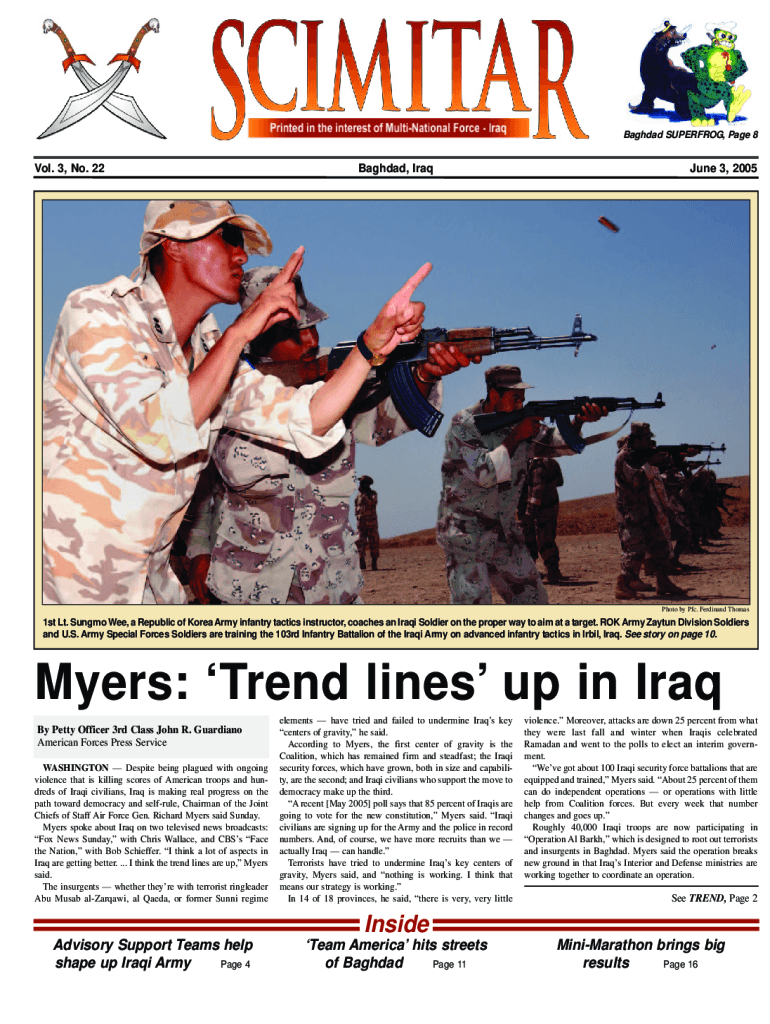
The document "Myers: 'Trend lines' up in Iraq - D1 static dvidshub" is a military publication dated June 3, 2005, which provides insights into the U.S. military operations in Iraq. It features updates about the collaborative training efforts for Iraqi soldiers by U.S. and South Korean forces. The title suggests an optimistic outlook on progress in Iraq, indicating that the trajectory of ongoing efforts was perceived to be moving in a positive direction at that time.
The document also references various events and initiatives, highlighting the dual focus on military operations and community engagement. This includes activities like the Baghdad SUPERFROG competition and a mini-marathon organized for troops, reflecting the efforts to boost morale among deployed forces.
How to Use the Myers Document
To make effective use of the "Myers: 'Trend lines' up in Iraq - D1 static dvidshub" document, a few approaches can be considered. Primarily, it serves as a historical record of military activities and social initiatives undertaken in Iraq by coalition forces in early June 2005.
- Researchers and historians can analyze its contents to study the progression of military strategies and public relations efforts during the Iraq War.
- Military analysts may extract data for reports on coalition training programs with Iraqi forces.
- Cultural studies featuring multinational collaboration and participation in events like cultural celebrations can draw insights from the document.
Steps to Complete the Myers Document
While this specific document is not meant to be completed but reviewed, the steps for thorough analysis are as follows:
-
Access the Document: Obtain a clear, legible copy from authorized military archives or digital repositories.
-
Read Thoroughly: Carefully read through each section to understand the updates and activities described within.
-
Highlight Key Sections: Note critical aspects concerning military operations, community engagement, and training efforts.
-
Compile Data: Compile identified information for analysis or reports, categorizing it under appropriate headings.
-
Cross-reference with Other Sources: Where applicable, corroborate the information by cross-referencing it with other military and political documents from the same period.
Who Typically Uses this Document
Several groups may find this document relevant:
-
Military Historians: To examine historical military initiatives and collaborations during the Iraq War era.
-
Defense Analysts: For evaluating training strategies and their outcomes.
-
Academic Researchers: Focused on war studies, political science, and Middle Eastern affairs.
-
Policy Makers: Considering past lessons to inform future decisions on international military commitments.
Key Elements of the Document
The document covers multiple aspects of military and civilian initiatives:
-
Training Efforts: Details on programs involving U.S. and South Korean forces training Iraqi soldiers.
-
Democracy Progress: Despite ongoing violence, efforts towards democratic processes in Iraq.
-
Community Engagement: Activities like the Dubai SUPERFROG competition and cultural events.
-
Detainee Release: Initiatives focused on community relations and the release of detainees.
State-Specific Rules
While the document does not directly address state-specific rules as it is a federal military publication, it implicitly operates under Department of Defense regulations and protocols. Its content reflects comprehensive adherence to the oversight of military activities within an international operation context governed by U.S. guidelines.
Examples of Using the Document
-
Case Study: A deep analysis of coalition force training contributions to Iraq's stability.
-
Cultural Integration: How military forces engage with host nations through public events.
-
Strategic Military Reports: Evaluating training program efficacy and outcomes over a set period.
Legal Use of the Document
The legal use of the "Myers: 'Trend lines' up in Iraq - D1 static dvidshub" involves abiding by publication restrictions and U.S. military document disclosure guidelines. Researchers and analysts must ensure that their use complies with national security standards, respecting the confidentiality of sensitive operational details not meant for public dissemination.
Digital vs. Paper Version
Understanding the format differences can influence how users interact with the document:
-
Digital Version: Allows for easy distribution, keyword searching, and cross-referencing with other documents.
-
Paper Version: Useful for archival storage and traditional analysis methods that may not require digital tools.
Both formats offer unique advantages, whether for detailed historical research, legal inquiries, or military educational purposes.