
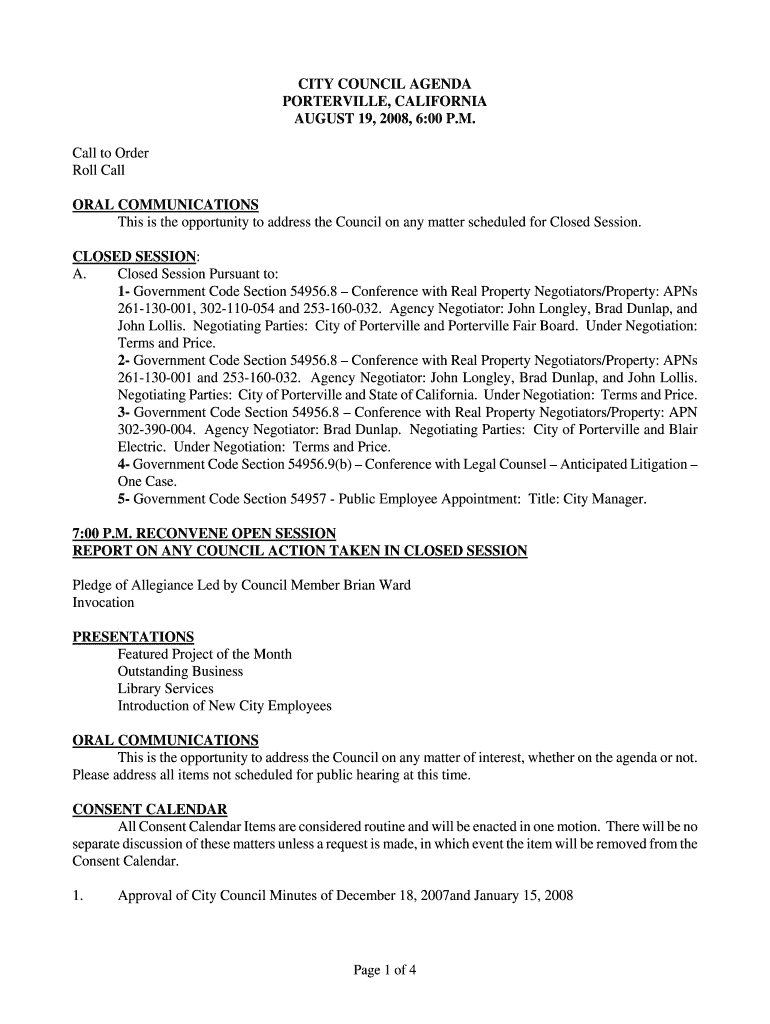







Definition and Meaning
A "20080819 Face Sheet doc" typically refers to a document primarily used for administrative purposes. It acts as a summary or cover sheet, containing essential information about the related content or event. This particular face sheet may include details about meetings, applications, or other formal proceedings. In this context, the "20080819" likely denotes a specific date, suggesting the document was created on August 19, 2008. Its main purpose is to outline critical information concisely, ensuring that any user can quickly grasp the document's intent and relevant details without delving into the entire content.
How to Use the 20080819 Face Sheet doc
The usage of the 20080819 Face Sheet doc involves several key steps to ensure it fulfills its intended purpose:
-
Information Entry: Accurately input the necessary details such as names, dates, and specific events or actions related to the document. This ensures the sheet serves as an effective summary.
-
Document Organization: Attach the face sheet at the beginning of the associated documents to streamline the review process for recipients. This allows quick access to vital information.
-
Version Control: Keep track of any updates or modifications made to the face sheet. Version numbers or date stamps help avoid confusion, ensuring all parties refer to the latest iteration.
By following these steps, the face sheet becomes a valuable tool for efficiently managing and referencing complex documents or events.
Key Elements of the 20080819 Face Sheet doc
The face sheet includes several crucial elements designed to communicate the necessary information succinctly:
- Title and Date: Clearly marked at the top to identify the document and its creation date.
- Contact Information: Includes names, phone numbers, or email addresses of relevant individuals.
- Summary Section: Provides an overview of the core content or main points.
- Action Items or Decisions: Lists any tasks or resolutions that result from the document or meeting.
- Footer Section: May include disclaimers, references, or additional instructions.
These components ensure that the face sheet effectively serves as a navigational tool and summary reference.
Who Typically Uses the 20080819 Face Sheet doc
This face sheet is often used by various professionals and entities, such as:
- Administrative Staff: For organizing meetings and maintaining records.
- Project Managers: To summarize project details and updates for stakeholders.
- Legal Professionals: As a summary for case files or client meetings.
- Human Resource Departments: For summarizing employee-related documents or internal memos.
By catering to these users, the face sheet helps streamline communication and enhance the efficiency of document management processes.


Important Terms Related to the 20080819 Face Sheet doc
Familiarity with specific terms is crucial for understanding and using the face sheet effectively:
- Agenda: A list of items to be discussed or acted upon in a meeting.
- Consent Calendar: A collection of non-controversial items quickly addressed in meetings.
- Public Hearings: Sessions focusing on gathering public input or feedback.
- Closed Session: Portions of meetings restricted to specific participants, often for privacy reasons.
Understanding these terms ensures effective use of the face sheet across various contexts and scenarios.
Legal Use of the 20080819 Face Sheet doc
When employing this face sheet in formal or legal contexts, several considerations are crucial:
- Confidentiality: Ensure that sensitive information is protected and shared only with appropriate personnel.
- Document Integrity: Maintain the accuracy and unaltered state of the face sheet to preserve its validity.
- Compliance: Align the document's use with relevant laws, regulations, and organizational policies.
Adhering to these guidelines ensures the face sheet's use supports transparency and legality across applications.
State-Specific Rules for the 20080819 Face Sheet doc
Different U.S. states may have unique requirements or conventions regarding the use of face sheets:
- Documentation Standards: Variations in required information or formatting.
- Record Keeping: Divergent rules for storing or archiving official documents.
- Privacy Regulations: State-specific laws concerning the protection of personal identification data.
Understanding and complying with state-specific rules enables the effective and lawful application of face sheets across jurisdictions.
Steps to Complete the 20080819 Face Sheet doc
Completing the face sheet involves several methodical steps:
- Gather Information: Collect all necessary data, such as names, dates, and specific details related to the document's content.
- Fill Out Sections: Input information into the appropriate fields, ensuring clarity and accuracy.
- Verify Accuracy: Review the completed face sheet for errors or omissions.
- Attach and Distribute: Ensure the face sheet is attached to the correct documents, then distribute to relevant stakeholders.
Following these steps guarantees the face sheet serves its purpose efficiently, offering a quick reference for document or event details.




