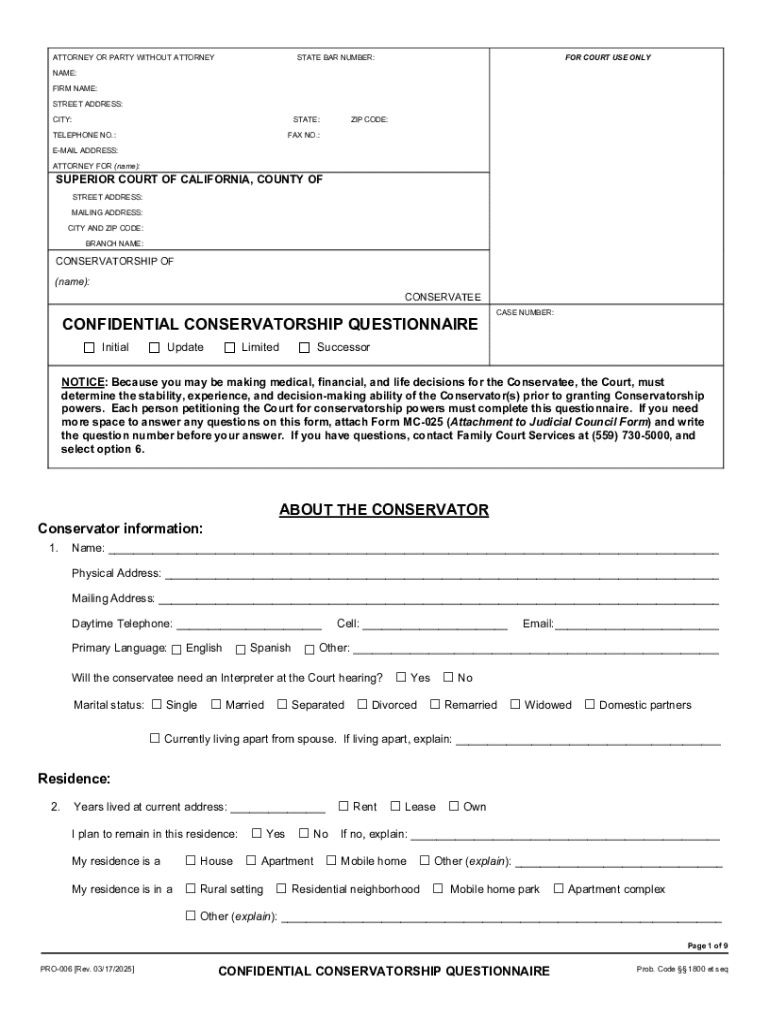







Definition & Meaning
The Confidential Conservatorship Questionnaire is a legal form primarily utilized in the Superior Court of California. It is designed to evaluate the capability of a conservator to manage the affairs of a conservatee. This assessment encompasses important factors, such as the personal and financial aspects of both parties involved. By gathering comprehensive information about the conservator and conservatee, the court can make informed decisions about granting conservatorship powers. This is particularly relevant when a conservatee is unable to manage their own affairs due to age, illness, or incapacity.
Key Elements of the Confidential Conservatorship Questionnaire
Understanding the structure of the Confidential Conservatorship Questionnaire is vital for accurate completion. Key elements of the form include:
-
Personal Information: This section requires detailed data about the conservator and conservatee, including full names, dates of birth, and contact information.
-
Financial Information: Here, the questionnaire assesses the financial status of the conservatee, involving assets, income sources, debts, and liabilities. This helps the court understand the financial implications of the conservatorship.
-
Health Information: Relevant health details of the conservatee are needed to evaluate their ability to manage their personal and financial matters independently. Medical reports and diagnoses might be included.
-
Relationship Details: This part inquires about the relationship between the conservator and the conservatee, establishing trust and potential conflicts of interest.
Steps to Complete the Confidential Conservatorship Questionnaire
Completing the Confidential Conservatorship Questionnaire involves several sequential steps to ensure accuracy and compliance with legal requirements:
-
Gather Necessary Information: Collect all pertinent data regarding personal, financial, and health details of both the conservator and conservatee. Documentation like financial statements and medical records may be required.
-
Fill Out the Questionnaire: Carefully complete each section of the form, ensuring information is accurate and complete. Pay particular attention to sections that require detailed explanations.
-
Review for Accuracy: Double-check the questionnaire for any errors or omissions. This review can prevent delays in processing and potential legal issues.
-
Obtain Signatures: The questionnaire typically requires the signature of the conservator, and sometimes the conservatee or other involved parties. Ensure all necessary signatures are included.
-
Submit the Completed Form: Once thoroughly checked, submit the form as required, either online, via mail, or in person, depending on court instructions.
Legal Use of the Confidential Conservatorship Questionnaire
The Confidential Conservatorship Questionnaire plays a critical role in legal proceedings within California's judicial system. It is used to:
-
Assess Conservatorship Requests: Courts rely on the form to determine eligibility for conservatorship, ensuring that conservators can responsibly manage the conservatee's affairs.
-
Provide a Legal Record: The questionnaire serves as a legal document that records the basis for granting conservatorship, protecting all parties involved.
-
Ensure Compliance: By outlining the responsibilities of conservators, the form helps ensure they comply with legal and ethical standards.
Important Terms Related to the Confidential Conservatorship Questionnaire
Understanding relevant terminology enhances comprehension and completion of the form:
-
Conservator: An individual appointed by the court to manage the personal and financial affairs of a conservatee who cannot do so themselves.
-
Conservatee: The person whose needs are being managed and protected by a conservator due to incapacity or inability.
-
Capacity: The mental and physical ability to manage personal and financial affairs.
-
Fiduciary Duty: The legal obligation of the conservator to act in the best interest of the conservatee.
Eligibility Criteria
The eligibility for using the Confidential Conservatorship Questionnaire involves several factors:
-
Incapacity of Conservatee: The conservatee must demonstrate inability to manage personal or financial matters independently due to incapacity.
-
Appropriate Conservator: The proposed conservator must be deemed responsible and capable of managing care, demonstrating a lack of conflict of interest.
-
Legal Standing: The parties must have legal standing within California to initiate conservatorship proceedings through the Superior Court.


State-Specific Rules for the Confidential Conservatorship Questionnaire
Although the form is used throughout California, applicants should be aware of state-specific rules and requirements:
-
Jurisdictional Differences: Different counties may have unique procedural requirements. It is important to check local court rules.
-
Document Formats and Submission: Some courts require specific formats or submission methods, often detailed on their websites or through legal advisories.
Who Typically Uses the Confidential Conservatorship Questionnaire
A range of individuals and organizations might need to utilize this form:
-
Family Members: Often, relatives seeking to become conservators for an incapacitated family member.
-
Legal Guardians: Appointed guardians who need legal authority to manage another individual's affairs.
-
Attorneys and Legal Representatives: Legal professionals acting on behalf of clients during conservatorship proceedings.
-
Social Services Agencies: Agencies seeking to manage affairs for individuals under their care due to incapacity.
Understanding these key elements of the Confidential Conservatorship Questionnaire, including its legal foundations, critical details, and typical applications, ensures effective and compliant participation in conservatorship proceedings.