
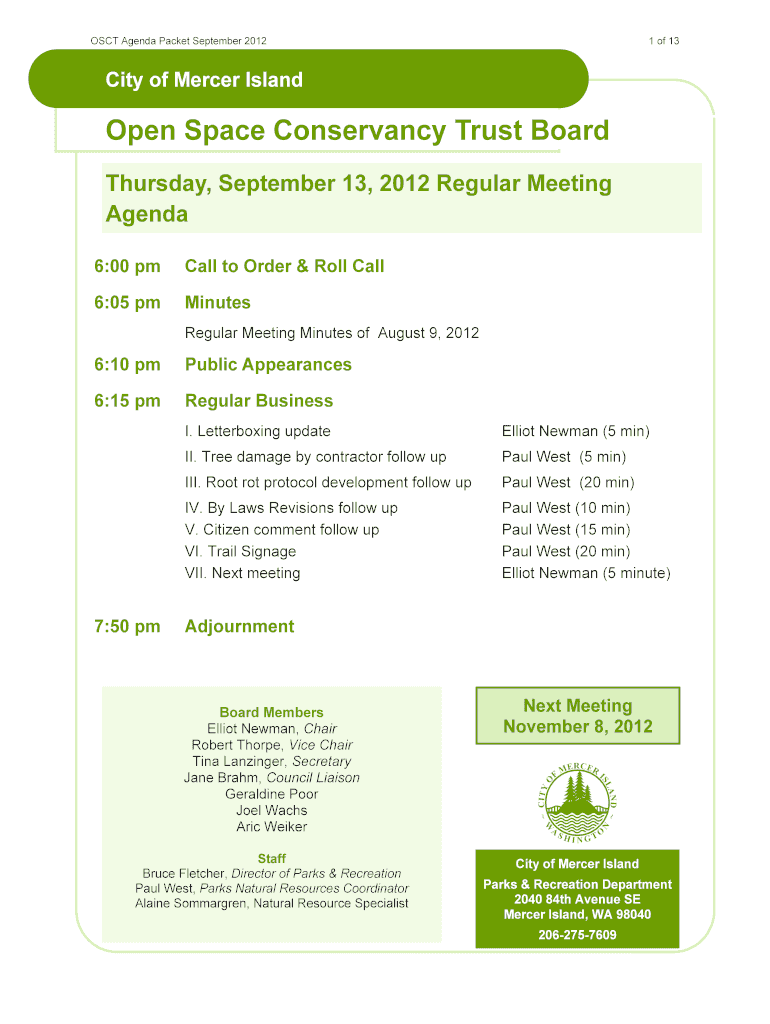







Definition & Significance of the OSCT Agenda Packet
The OSCT Agenda Packet, specifically the "OSCT Agenda Packet September 2012pdf - City of Mercer Island - mercergov," is a critical document used by the Open Space Conservancy Trust Board. This form holds significant importance for providing a structured schedule and comprehensive details of the meeting held on September 13, 2012, in Mercer Island. It includes agenda items such as roll call, approval of previous minutes, public appearances, and updates on significant topics like letterboxing and tree damage by contractors. The document serves as a record of discussions and decision-making processes, ensuring transparency and accountability in public meetings.
How to Use the OSCT Agenda Packet
Accessing the Document
- Visit the City of Mercer Island's official website or specific platforms like DocHub.
- Search for "OSCT Agenda Packet September 2012pdf - City of Mercer Island - mercergov."
- Download the document to your device for offline reference.
Utilizing the Packet
- Review Agenda: Begin by understanding the meeting's schedule, including time allocation for each agenda item.
- Analyze Details: Pay attention to the updates provided on civic issues such as root rot protocol development.
- Prepare Participation: If attending similar meetings, use the packet to align your contributions with documented discussions.
How to Obtain the OSCT Agenda Packet
To obtain the "OSCT Agenda Packet September 2012pdf - City of Mercer Island - mercergov," interested parties can follow these steps:
- Online Search: Use search engines or document management services like DocHub with the exact title.
- Municipal Resources: Access the City of Mercer Island's archives, where public documents are often stored.
- Library Requests: Some local libraries may offer digital or physical copies of municipal meeting documents.
Steps to Complete and Utilize the Agenda Packet
- Understand Context: Read the entire packet thoroughly to grasp the context and purpose of the meeting.
- Highlight Key Points: Mark important sections, especially those relevant to your interests or expertise.
- Prepare Notes: Draft notes on areas where you can contribute or need further clarification.
- Follow-Up Actions: Identify tasks or follow-ups required post-meeting, using the packet as a reference.
Why Use the OSCT Agenda Packet
Benefits
- Transparency: Provides a detailed account of public meetings.
- Engagement: Facilitates civic participation by informing citizens of ongoing projects and discussions.
- Record Keeping: Acts as an official record for future reference and accountability.
Practical Examples
- Community Planning: Helps residents understand and engage in community planning and preservation efforts.
- Environmental Initiatives: Those interested in environmental conservation can track developments like tree preservation strategies.
Who Typically Uses the OSCT Agenda Packet
The "OSCT Agenda Packet September 2012pdf - City of Mercer Island - mercergov" is primarily utilized by:
- Board Members: To prepare for and contribute effectively to meetings.
- Local Residents: Interested in municipal decisions affecting their community.
- Environmental Activists: Tracking conservation efforts and public land management.


Key Elements of the OSCT Agenda Packet
Agenda Components
- Meeting Schedule: Includes start time, roll call, and length of discussions.
- Discussion Topics: Covers business items, such as updates on by-law revisions and public appearances.
- Minutes & Correspondence: Provides minutes from previous meetings and correspondence like citizen letters addressing specific concerns.
Document Features
- Sectioned Layout: Organized into clear sections for easy navigation.
- Comprehensive Updates: Detailed information on ongoing civic and environmental projects.
Examples of Using the OSCT Agenda Packet
Real-World Scenarios
- Community Initiatives: Residents use the document to prepare for discussions on community projects.
- Policy Development: Municipal employees reference the packet for insights into past and upcoming policy changes.
- Civic Engagement: Individuals can utilize it to engage with local government, advocating for issues like park maintenance and environmental protocols.




