







Definition & Meaning
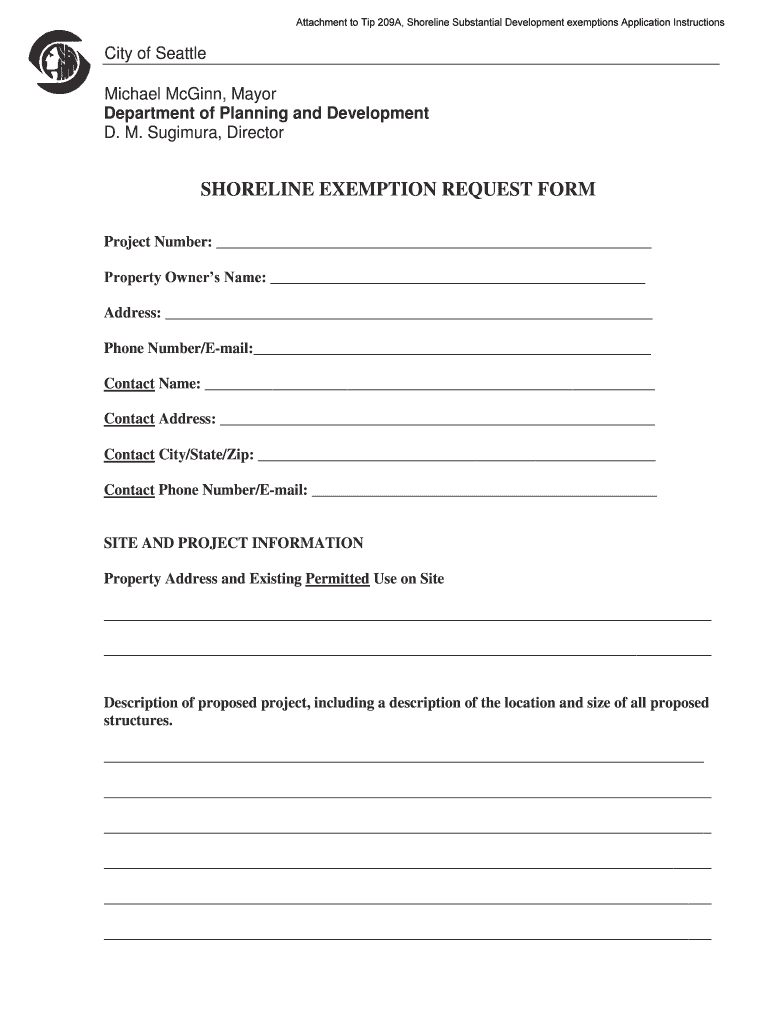
The Shoreline Exemption Request Form is a document used by property owners in specific areas, such as Seattle, to apply for exemptions from certain shoreline development regulations. These regulations typically govern how development and construction activities can take place near shorelines to protect natural habitats and maintain public access to waterways. By submitting this form, applicants seek permission to proceed with projects that would otherwise require substantial development permits.
How to Use the Shoreline Exemption Request Form
To effectively use the Shoreline Exemption Request Form, property owners must first identify whether their project qualifies for an exemption. Typically, projects that have minimal impact on the environment or those that fall under specific categories outlined by local laws may be eligible. Once eligibility is confirmed, applicants should complete all sections of the form with accurate details about the project, including the intended work and its anticipated impact on the shoreline. Accuracy in the form is crucial, as errors may delay processing or result in application denial.
Steps to Complete the Shoreline Exemption Request Form
- Acquire the form: Obtain the form through the appropriate local governmental department, usually available online or at municipal offices.
- Fill out personal information: Enter the property owner’s details, such as name, contact information, and property address.
- Provide project information: Describe the nature of the project, its purpose, and how it complies with exemption criteria.
- Detail environmental impacts: Include any anticipated effects on the shoreline environment and measures to mitigate them.
- Submit supporting documentation: Attach any required plans, maps, or environmental reports mentioned in the form instructions.
- Review and submit: Double-check for completeness and accuracy before submitting the form through the specified channels.
Key Elements of the Shoreline Exemption Request Form
The form typically includes several critical sections: project details, the type of exemption requested, and any associated project numbers. Each section must be completed thoroughly to provide the reviewing authority with a clear understanding of the project’s scope and its potential environmental impacts. Required attachments may include site plans, environmental assessments, and documentation to support claims made in the form.
Legal Use of the Shoreline Exemption Request Form
This form serves a legal function by verifying that a proposed development meets specific exemption criteria under local laws. It is essential that applicants understand the legal implications of their application, as submitting false information or failing to comply with local regulations can result in penalties, including fines or a halt on the project.
Who Typically Uses the Shoreline Exemption Request Form
The primary users of this form are property owners, developers, or contractors planning construction or development activities near shorelines. It is particularly relevant for those working on residential, commercial, or recreational projects that might impact local water bodies or ecosystems. Consulting with environmental professionals or legal advisors may be beneficial to ensure compliance with all regulatory requirements.


Important Terms Related to Shoreline Exemption Request Form
Understanding specific terms related to shoreline management is crucial for accurately completing the form:
- Substantial Development: Refers to any construction or significant modification of land or water use.
- Mitigation Measures: Strategies implemented to minimize environmental impacts.
- Public Resource Protection: Ensuring that development activities do not impede public access to natural resources.
Required Documents
Applicants must prepare and submit a suite of documents as part of the form submission process. Commonly required items include maps of the project site, architectural plans, environmental impact assessments, and any previous permits related to the property. These documents support the information provided in the form and help the reviewing authority assess the exemption request.
Application Process & Approval Time
After submitting the form, the review process typically involves several steps. The municipal authority will assess the form for completeness, review the environmental impact, and consult relevant regulations. The processing time can vary depending on the project's complexity and the workload of the reviewing body. Applicants may be required to provide additional information or undergo an environmental review before receiving a decision.
This detailed content provides comprehensive insight into the Shoreline Exemption Request Form, guiding users through its purpose, completion, and legal context. Each section delivers depth and clarity, ensuring a thorough understanding of the form's role in shoreline development.




