







Definition & Meaning
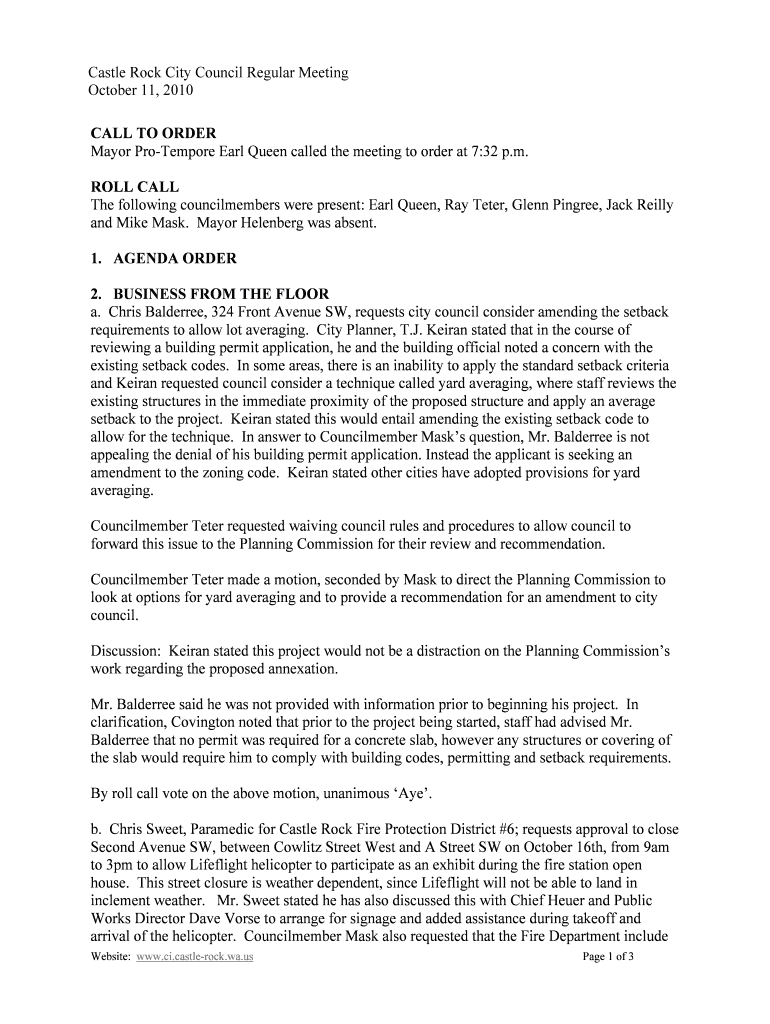
The document titled "CALL TO ORDER CALL TO ORDER Mayor Pro-Tempore Earl - ci castle-rock wa" appears to be an official agenda or notice related to a city council meeting in Castle Rock, Washington. Such documents are typically used to outline the proceedings of a council meeting, beginning with a formal call to order by the presiding officer, in this case, Mayor Pro-Tempore Earl. This establishes an official record of the start of the meeting, followed by discussions on agendas, motions, or resolutions scheduled to be addressed.
How to Use The Agenda
City council agendas serve as structured guides to help council members, city staff, and the public understand what will be discussed during a meeting. They detail the order of topics, time allocations, and any special presentations or public input sessions. Participants should refer closely to the agenda to know when specific items will be discussed and prepare accordingly for any presentations or comments they plan to make.
Order of Proceedings
- Call to Order: The meeting initiates with the call to order by the Mayor Pro-Tempore.
- Roll Call: Attendance is taken to ensure a quorum is present for deliberations.
- Approval of Minutes: Discussion and approval of the minutes from previous meetings.
- Agenda Items: Topics slated for discussion or voting.
- Public Comments: Opportunities for community member input.
Key Elements of The Agenda
The essential components of a city council agenda like this include a "call to order," an outline of the meeting's topics—ranging from administrative procedures and ordinance discussions to community concerns—and closing remarks or adjournment. This ensures transparency and appropriate documentation for community governance.
Steps to Complete Required Actions
Participating in or utilizing this agenda involves several steps, including preparation and active participation during the meeting.
- Review the agenda ahead of the meeting.
- Prepare Materials: Gather any documents or data necessary for topics you will discuss.
- Participate: Be present for roll call, ready to engage in discussions and vote on matters.
- Follow-Up: After the meeting, review minutes and take action on agreed-upon tasks.
Why You Should Engage with This Agenda
Engaging with the city council's agenda ensures that community members are informed and involved in local governance. It allows constituents to express their opinions on matters impacting their community and hold elected officials accountable for their actions and decisions.
Who Typically Uses This Document
This type of agenda is used predominantly by city council members, municipal employees, local stakeholders, and members of the public interested in regulatory changes or community initiatives. It serves as both a scheduling tool and a transparent record of government proceedings.
State-Specific Rules for Castle Rock, WA
In Washington State, and specifically in Castle Rock, city council meetings must adhere to the Open Public Meetings Act. This ensures that meetings are accessible to the public and that records are maintained and shared transparently. This influences how agendas like the "CALL TO ORDER CALL TO ORDER Mayor Pro-Tempore Earl - ci castle-rock wa" are structured and publicized, ensuring legal compliance.
Legal Use of the Agenda
The legal framework governing city council meetings ensures that all proceedings documented in the agenda are legally binding once decisions are ratified in the meeting. Council members may discuss ordinances, resolutions, and other civic matters, following parliamentary procedures to advance community governance.
Important Terms Related to The Agenda
Understanding key terms associated with the agenda helps decipher the document:
- Quorum: The minimum number of members required to be present for the meeting to proceed.
- Motion: A formal proposal by a member that the council takes a specific action.
- Ordinance: A law or regulation enacted by the council.
Examples of Using The Agenda
An example of how a community member might use the agenda includes preparing a public comment on a proposed ordinance. Reviewing the agenda ahead allows individuals to speak thoughtfully on issues, such as the financial participation in a tourism brochure, which the council has previously handled.
Online and Digital Accessibility
In the digital era, these agendas are often provided in multiple formats, including online PDFs, to ensure accessibility. This facilitates easier distribution and engagement, allowing community members to stay informed remotely and participate effectively without being physically present.




