
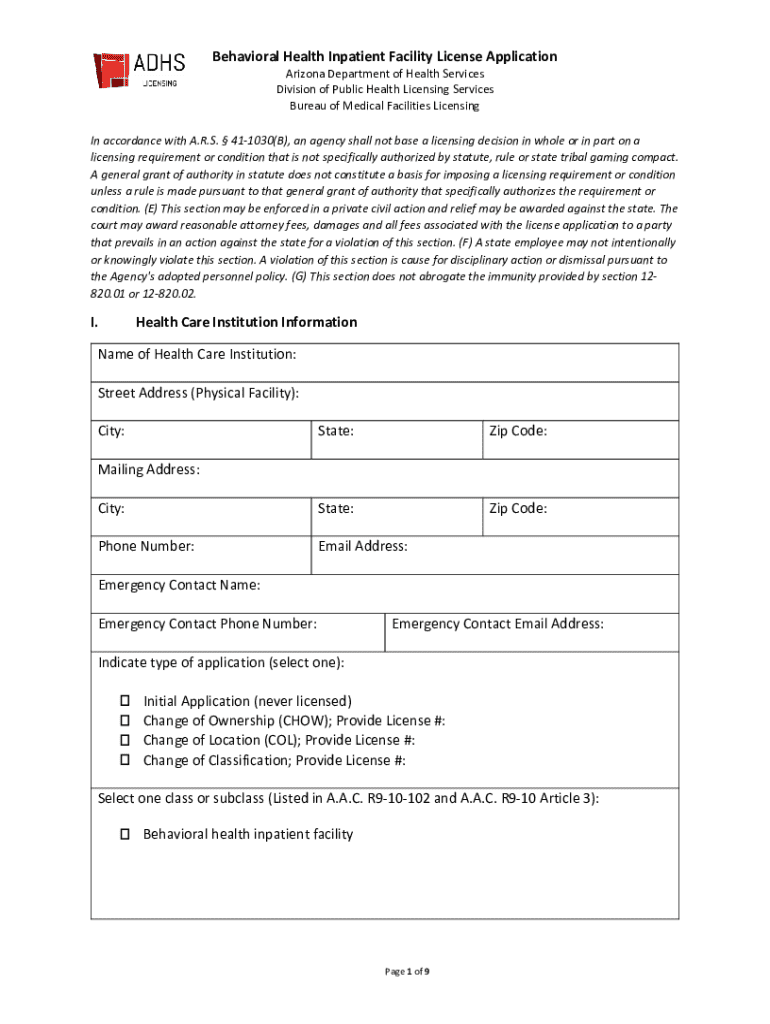







Definition & Meaning of the Arizona Department of Health Services Revised Statutes
The Arizona Department of Health Services Revised Statutes refer to the codified laws and regulations that guide the operations and licensing requirements for health services in Arizona. These statutes serve as the legal foundation for the oversight and regulation of health facilities, including behavioral health inpatient facilities. They provide clarity and structure to the legal obligations and standards that these facilities must adhere to, ensuring the health and safety of patients and the community at large.
How to Use the Arizona Department of Health Services Revised Statutes
To effectively use the Arizona Department of Health Services Revised Statutes, it is crucial to understand the specific areas that pertain to your needs. Whether you are managing a health facility or seeking information for compliance, these statutes can help:
- Identify Applicable Laws: Determine the sections that are relevant to your facility or query, focusing on specific services such as behavioral health.
- Compliance Guidelines: Utilize the statutes to ensure your health services comply with the state-set legal and operational standards.
- Resource for Legal Decisions: Use the statutes as a reference in legal or administrative decisions or when seeking licensure or accreditation.
Steps to Complete the Arizona Department of Health Services Revised Statutes
Completing tasks associated with the Arizona Department of Health Services Revised Statutes involves a systematic approach:
- Access the Statutes: Obtain the most current version of the statutes from official state websites or legal databases.
- Review Requirements: Carefully review the relevant sections to understand the obligations and requirements for your particular needs.
- Documentation Preparation: Gather and prepare any required documentation, such as facility details, ownership information, and compliance records.
- Submission Process: Follow the prescribed process for submitting any necessary applications or reports, ensuring all information is accurate and complete.
Key Elements of the Arizona Department of Health Services Revised Statutes
The Arizona Department of Health Services Revised Statutes encompass several key elements critical for health facility compliance and operation:
- Licensing Requirements: Statutes define the criteria and process for obtaining and maintaining licensure for various health services.
- Operational Standards: Guidelines that detail the standards for facility operations, including staffing, patient care, and safety protocols.
- Reporting Obligations: Requirements for regular reporting to the state, covering aspects like service changes and incident reports.
Legal Use of the Arizona Department of Health Services Revised Statutes
Understanding the legal use of these statutes is essential for compliance and protection:
- Adherence to Laws: Ensuring your facility operates within the legal framework set by these statutes, thereby avoiding legal complications or penalties.
- Legal Defense: Using statutes as a defense and reference in legal disputes or administrative reviews concerning service provision or compliance issues.
Who Typically Uses the Arizona Department of Health Services Revised Statutes
Various stakeholders rely on these statutes for guidance and compliance:
- Healthcare Administrators: Utilize the statutes for operational standards and compliance.
- Legal Professionals: Reference them in health service-related legal cases or compliance issues.
- Regulatory Agencies: Use the statutes to audit and inspect health facilities to ensure adherence to legal standards.


State-Specific Rules for the Arizona Department of Health Services Revised Statutes
In Arizona, these statutes include state-specific rules:
- Health Services Oversight: Unique state regulations that oversee facilities and mandate specific operational conditions in Arizona.
- Licensing Procedures: Tailored processes and criteria for health services licensing peculiar to Arizona’s health department.
Examples of Using the Arizona Department of Health Services Revised Statutes
Real-world applications of these statutes include:
- Licensure Application: A behavioral health facility in Arizona uses the statutes to apply for a new license, ensuring they meet all licensing criteria.
- Compliance Checks: Regular internal audits guided by the statutes help a hospital maintain compliance and prepare for state inspections.
- Dispute Resolution: A legal team references specific statutes in a dispute regarding health service delivery and compliance.
Penalties for Non-Compliance
Failing to adhere to the Arizona Department of Health Services Revised Statutes can result in:
- Fines and Sanctions: Imposing financial penalties on facilities failing to meet statutory requirements.
- License Revocation: The risk of having operating licenses suspended or revoked for severe non-compliance.
- Litigation Risk: Potential legal action taken against a facility if statutory violations result in harm or substandard care.
Application Process & Approval Time
The process of applying based on these statutes includes:
- Gather Necessary Documents: Compile all relevant information as dictated by the statutes.
- Submit an Application: Apply through the designated department channels, adhering to the process outlined in the statutes.
- Await Approval: Typical approval times can vary based on the type of service and the completeness of the application.
Versions or Alternatives to the Arizona Department of Health Services Revised Statutes
While the Arizona Department of Health Services Revised Statutes are prevalent, related documents include:
- Federal Health Regulations: Overarching health service laws that apply nationwide and complement state statutes.
- Local Ordinances: Municipal regulations that supplement or specify further based on local public health needs.
Business Types That Benefit Most from Arizona Department of Health Services Revised Statutes
Various business types can benefit from adhering to these statutes, including:
- Healthcare Facilities: Hospitals, clinics, and specialized care providers leverage statutes for routine operations.
- Behavioral Health Centers: Facilities focused on mental health utilize statutes for compliance and efficient service delivery.
- Long-Term Care Homes: Nursing and assisted living communities navigate statutes in daily care and management activities.




