






Definition and Purpose of EFS-006
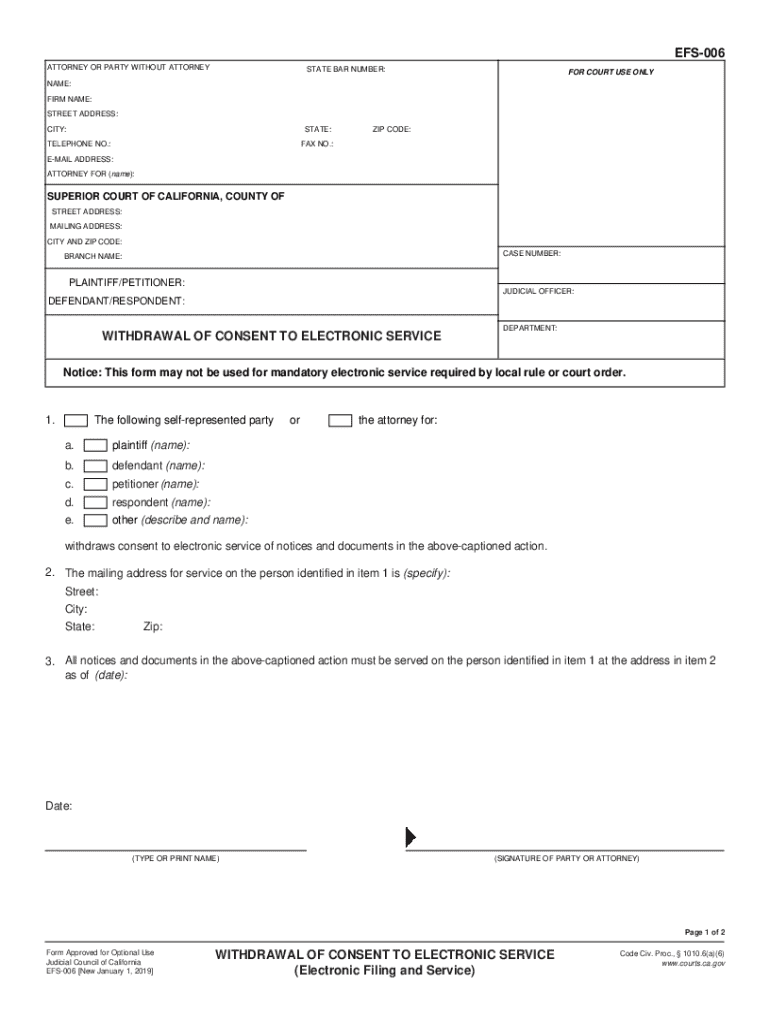
The EFS-006 form is utilized within the Superior Court of California, primarily for withdrawing consent to electronic service of notices and documents in a particular court case. Acting as a legal document, it facilitates participants in a legal process to formally indicate their preference to revert to traditional methods of service. This form ensures that all parties are duly informed through non-electronic means, thereby maintaining a clear and transparent line of communication.
How to Use the EFS-006 Form
Using the EFS-006 involves specific steps to ensure compliance and correct handling:
-
Identify the Parties: Begin by clearly indicated all parties involved in the court case. Each participant's information is vital for the correct processing of the form.
-
Provide Mailing Address: An essential part of completing the EFS-006 is providing a valid mailing address. This address will be used for future correspondences once electronic service is withdrawn.
-
Signatures: Each individual who intends to withdraw their consent for electronic service must sign the form. This provides a legal acknowledgment of their withdrawal decision.
How to Obtain the EFS-006 Form
Acquiring the EFS-006 form can be done through several channels, depending on convenience and preference:
-
Online: Most courts provide downloadable versions of the EFS-006 form on their official websites, allowing users to easily access and print the form at their convenience.
-
In-Person: Alternatively, individuals can visit the courthouse to obtain a physical copy. This method allows for immediate clarification of any questions regarding the form.
Steps to Complete the EFS-006 Form
Completing the EFS-006 form requires careful attention to detail to ensure all information is accurate:
-
Fill Out Personal Information: Start by entering your full legal name, case number, and relevant contact information.
-
Indicate Withdrawal: Clearly state your intention to withdraw consent for electronic service of documents. This declaration should be unambiguous.
-
Provide Mailing Details: Enter a reliable mailing address where future court correspondence should be sent.
-
Signature Verification: Conclude by signing the document, confirming the accuracy of the information provided and the authenticity of your request.
Who Typically Uses the EFS-006 Form
The EFS-006 form is commonly used by parties involved in a legal proceeding within California's judicial system, including:
-
Attorneys: Legal representatives who are managing multiple cases and require a clear paper trail.
-
Litigants: Individuals directly involved in a court case who prefer receiving documents through traditional mail.
-
Court Officials: Staff who manage and process legal documents and need to ensure all communications are properly directed.


Key Elements of the EFS-006 Form
Several critical components are included within the EFS-006 form, each serving a specific function:
-
Identification of Parties: This section ensures all relevant parties are clearly defined.
-
Mailing Address: Acts as the directive for where physical documents should be dispatched.
-
Signatures: Provides a legal testament to the consenting withdrawal from electronic service.
Legal Use of the EFS-006 Form
The legal significance of the EFS-006 form cannot be overstated, as it directly impacts how parties receive legal documents:
-
Compliance: Using the EFS-006 form ensures compliance with legal protocols by formally notifying the court of a change in service preference.
-
Documentation: It serves as an official record, which can be referred back to in case of disputes regarding service of documents.
State-Specific Rules for the EFS-006 Form
California has unique regulations regarding the submission and processing of the EFS-006:
-
Jurisdiction Limits: The form is strictly applicable within the jurisdiction of the Superior Court of California.
-
Filing Procedure: Depending on the county, there may be specific procedures or additional court-specific forms that accompany the EFS-006 to ensure it's accepted.
Filing Deadlines and Important Dates for EFS-006
Timeliness is crucial when dealing with the EFS-006, as with any legal document:
-
Submission Timeframe: It is important to submit the form promptly to ensure that the change in service method takes effect before any critical legal deadlines.
-
Notification Period: Once submitted, parties should allow a reasonable period for the form to be processed and the change in service to be recognized by the court and other stakeholders involved.
These elements ensure that the EFS-006 form meets the needs of legal stakeholders while aligning with California’s court regulations. By understanding these facets, users can effectively manage their legal responsibilities and uphold due process.