






Definition and Meaning
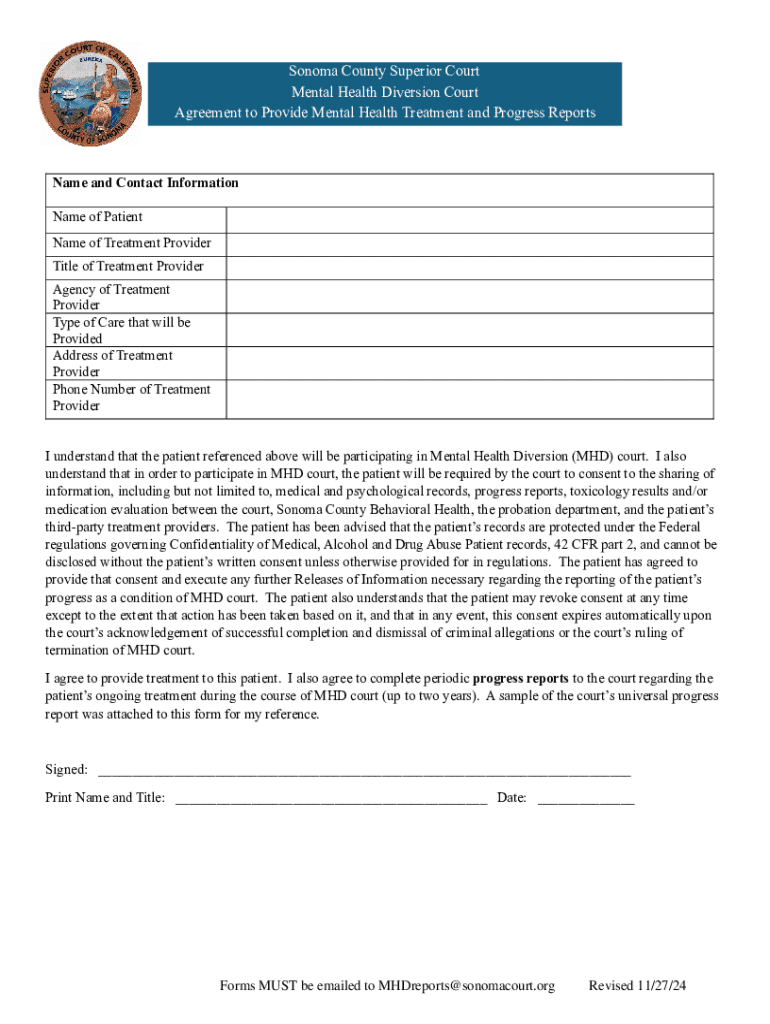
The Mental Health Diversion Court Agreement is a formal document utilized within the legal system to facilitate the diversion of individuals with mental health conditions away from traditional criminal proceedings. This agreement outlines the terms and conditions under which a participant agrees to engage in mental health treatment as an alternative to incarceration. The document plays a crucial role in reshaping the judicial approach to mental health-related offenses, emphasizing rehabilitation over punishment.
Purpose and Objectives
- Rehabilitation Focus: The agreement prioritizes treatment and recovery over punitive measures.
- Judicial Efficiency: It alleviates the burden on traditional court systems by managing cases through specialized programs.
- Reducing Recidivism: By addressing underlying mental health issues, the agreement aims to reduce repeat offenses.
Consent and Confidentiality
Participants must consent to share their medical and psychological information with relevant parties to ensure appropriate treatment and supervision. The agreement carefully delineates confidentiality rights, balancing the participant's privacy with the necessity of information exchange for effective treatment and court supervision.
How to Use the Mental Health Diversion Court Agreement
Entering into the Mental Health Diversion Court Agreement involves a series of structured steps that participants, legal guardians, or attorneys must follow to ensure compliance and understanding.
Initiation and Review
- Initial Assessment: Legal counsel or a mental health professional typically initiates the process, assessing the suitability for the diversion program.
- Agreement Review: Reviewing the agreement thoroughly with legal representation is critical to understanding rights, responsibilities, and potential outcomes.
Execution and Compliance
- Signing the Agreement: Participants must formally agree to the terms by signing the document.
- Adhering to Conditions: The agreement mandates participation in designated mental health programs and regular progress reporting to the court.
Steps to Complete the Mental Health Diversion Court Agreement
Completing the Mental Health Diversion Court Agreement involves several key stages aimed at ensuring all parties are informed and in agreement with the process.
- Initial Evaluation: A thorough evaluation by mental health professionals determines the participant's eligibility.
- Legal Consultation: Engaging with legal counsel helps interpret the agreement's terms.
- Document Preparation: Gather necessary documentation and personal information for inclusion in the agreement.
- Agreement Signing: Official signing of the agreement by all parties involved, including the participant and legal representatives.
- Program Enrollment: Register in the required mental health treatment programs and consent to monitoring.
- Progress Reporting: Regularly submit progress reports as required by the court.
Key Elements of the Mental Health Diversion Court Agreement
The agreement comprises several key elements essential for its successful implementation and monitoring over time.
Treatment Plan
- Customized Programs: The agreement outlines a personalized treatment plan tailored to the participant's specific mental health needs.
- Integration with Court Orders: Treatment integrates directly with judicial requirements, maintaining legal oversight.
Monitoring and Reporting
- Regular Check-ins: Scheduled reporting sessions track the participant's progress.
- Information Sharing: Statutory reporting mandates ensure the court receives accurate updates.
Legal Use of the Mental Health Diversion Court Agreement
The legal framework surrounding the Mental Health Diversion Court Agreement ensures its use aligns with both judicial objectives and participants' rights.
Legal Framework
- Court Mandates: Agreements sanctioned by court orders, providing an alternative to standard legal proceedings.
- Compliance: Legal compliance with the ESIGN Act ensures electronic signature use remains binding.
Rights and Obligations
- Participant Rights: Entitlements regarding confidentiality and voluntary participation are fully supported.
- Obligations: The agreement requires compliance with treatment and court-mandated conditions.
State-Specific Rules for Mental Health Diversion Court Agreements
The specific application of Mental Health Diversion Court Agreements varies by state, influenced by local laws and judicial practices.
U.S. Jurisdictional Variances
- Eligibility Criteria: States may differ on who qualifies based on the nature of the offense and mental health diagnosis.
- Program Availability: Availability of programs and resources may fluctuate depending on state funding and infrastructure.
Adaptations and Modifications
- Custom Solutions: States often tailor mental health interventions to address local demographic needs.
- Legislative Influence: Evolving state laws can affect agreement terms and execution.
Who Typically Uses the Mental Health Diversion Court Agreement
Understanding who uses the Mental Health Diversion Court Agreement can highlight its role within the legal and social health landscape.

Primary Participants
- Individuals with Diagnosed Mental Health Conditions: Focused on individuals identified as suitable for diversion through assessment.
- Legal Representatives: Attorneys play a crucial role in advising and facilitating agreement compliance.
Judicial and Health Services Martions
- Mental Health Professionals: Integral in treatment planning and progress monitoring.
- Court Systems: Specialized courts, like those in Sonoma County, manage these agreements, integrating them into broader judicial procedures.
Important Terms Related to Mental Health Diversion Court Agreement
Knowledge of key terms within the Mental Health Diversion Court Agreement is essential for participants and professionals involved.
Glossary of Terms
- Diversion: Legal strategy redirecting participants from traditional court proceedings toward rehabilitation.
- Confidentiality: Legal protection of participant information within treatment and judicial contexts.
- ESIGN Act: Governs the use of electronic signatures, ensuring their legal recognition and enforceability.
By understanding the intricacies and applications of the Mental Health Diversion Court Agreement, stakeholders can better navigate and optimize its use within the judicial system.