






Definition and Purpose of the Contract
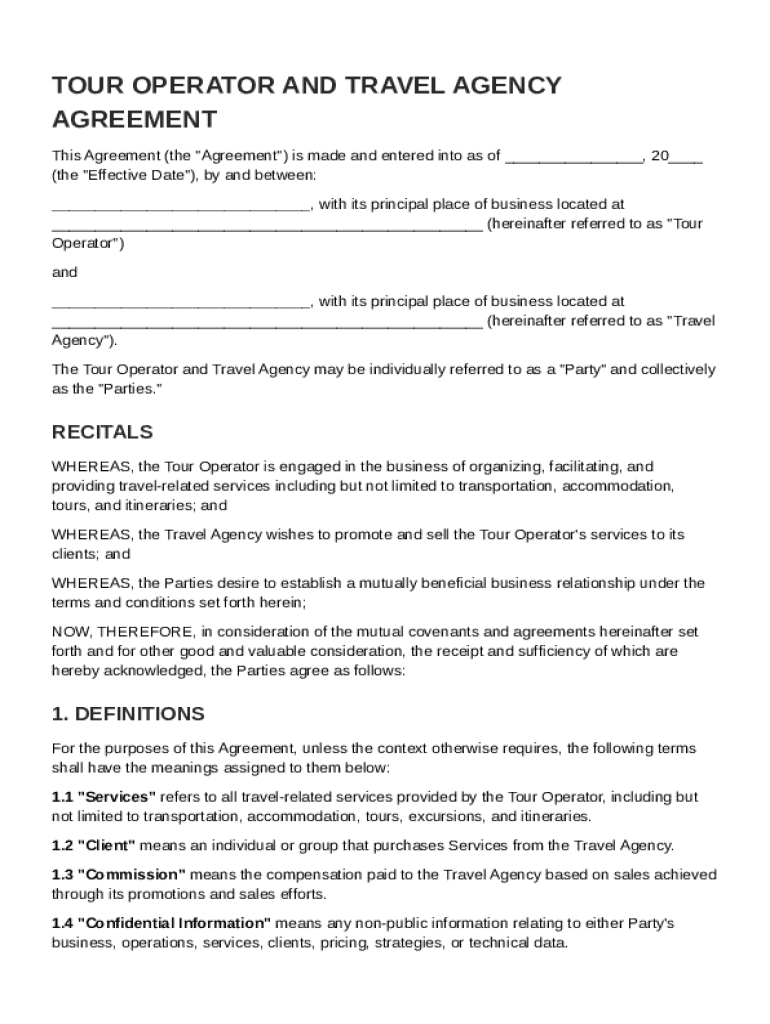
The Tour Operator And Travel Agency Contract Template is designed to establish a formal agreement between a tour operator and a travel agency. This document outlines the roles and responsibilities of each party, including the provision of travel-related services by the tour operator and the promotion and sale of these services by the travel agency. Key areas covered include:
- Definitions of essential terms to ensure clarity.
- Responsibilities and obligations for both parties in the business relationship.
- Financial arrangements, such as commission structures and payment terms.
- Confidentiality and privacy requirements to protect sensitive information.
- Dispute resolution mechanisms to address any conflicts or misunderstandings.
- Conditions for terminating the agreement, if needed.
Steps to Complete the Contract
- Gather Required Information: Collect all necessary details about the tour operator and the travel agency, including business names, addresses, and contact information.
- Define Terms and Conditions: Clearly outline the services to be provided, responsibilities, and expectations of both parties.
- Establish Financial Agreements: Specify the commission structure, payment terms, and any other financial arrangements.
- Set Privacy and Confidentiality Provisions: Include clauses that protect confidential information to prevent unauthorised disclosure.
- Incorporate Dispute Resolution Terms: Determine the methods for handling disagreements, such as mediation or arbitration.
- Review and Sign the Contract: Ensure both parties carefully review the contract's terms before signing to solidify the agreement.
Key Elements of the Contract
- Service Descriptions: Detailed specifications of the travel-related services offered by the tour operator.
- Commission and Payment Terms: Breakdown of how commissions will be calculated and the timeline for payments.
- Responsibilities of Each Party: Comprehensive list of the duties and responsibilities each party must adhere to.
- Confidentiality Clauses: Provisions to safeguard sensitive business information from being shared outside the agreement.
- Termination Conditions: Clearly defined circumstances under which either party can terminate the agreement.
- Dispute Resolution Procedures: Agreed-upon methods for resolving conflicts, whether through negotiation, mediation, or legal proceedings.
Legal Use and Compliance
The Tour Operator And Travel Agency Contract Template must comply with U.S. legal standards applicable to service agreements. Elements to consider include:
- Adherence to federal and state trade regulations governing travel services.
- Inclusion of legally binding clauses that meet enforceability standards.
- Ensuring compliance with industry best practices and ethical guidelines.
- Use of electronic signatures, if applicable, that conform to the ESIGN Act for legal recognition.
Importance of the Contract Template
- Establishing Clear Expectations: Provides both parties with a clear understanding of mutual responsibilities and service deliverables.
- Protecting Professional Interests: Ensures that both the tour operator and the travel agency have a safeguard against misunderstandings or disputes.
- Facilitating Smooth Collaboration: Enhances the partnership by providing a framework for seamless operation and communication.
- Ensuring Legal Protection: Offers legal coverage in case of disputes, ensuring that the agreement can be fairly enforced if necessary.
Practical Scenarios and Use Cases
- Small Travel Agencies: Utilize the template to formalize agreements with various tour operators, securing exclusive tour offers.
- Online Travel Platforms: Online agencies can standardize their agreements with multiple operators, ensuring consistency and efficient management.
- Custom Tour Services: Tour operators offering bespoke travel experiences can use the agreement to set terms with agencies specializing in niche travel markets.
Variations and State Specific Differences
When employing the Tour Operator And Travel Agency Contract Template across different states, it's crucial to check for variations and adhere to specific state regulations:
- State Licensing Requirements: Some states have unique licensing needs for travel agencies.
- Consumer Protection Laws: Variations may exist in how consumer rights are protected across states.
- Sales Tax Regulations: Payment terms could need adjustment to comply with state-specific sales tax rules.
Important Terms to Understand
- Commission: Payment earned by the travel agency for each booking or sale completed.
- Confidentiality Agreement: Legal agreement to protect sensitive information shared between the parties.
- Termination Clause: Describes the process and conditions under which the agreement can be ended.
- Arbitration: A form of dispute resolution where a third party makes a binding decision.
Understanding these terms ensures both parties are aligned in their expectations and obligations under the contract.