
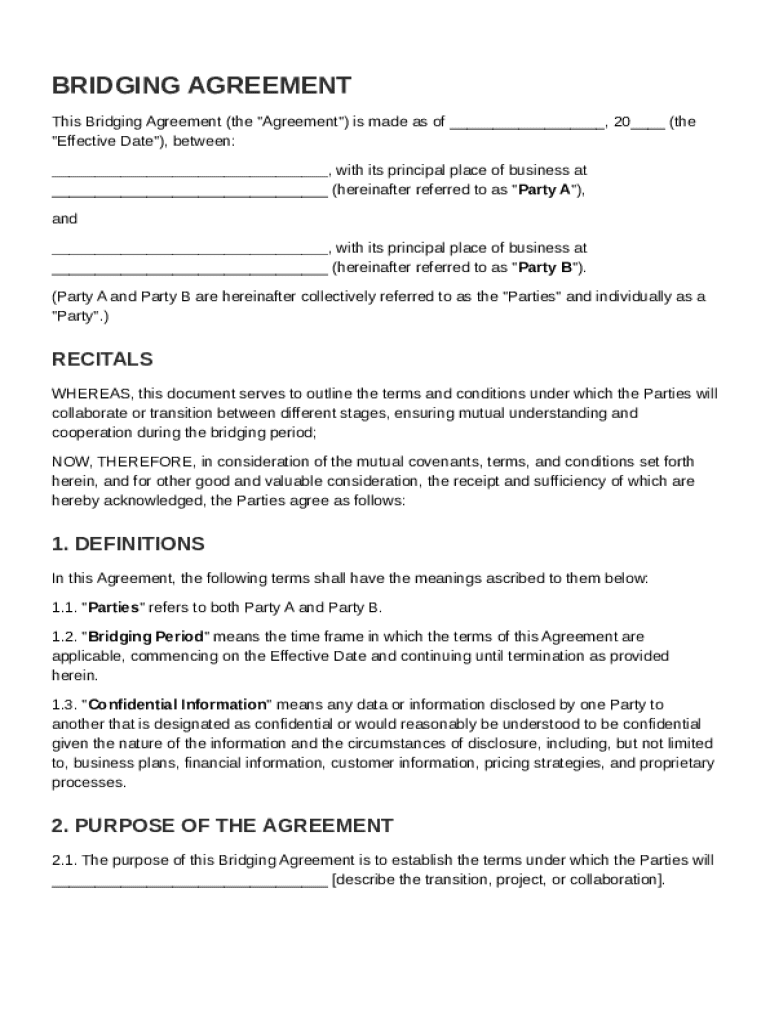







Definition & Meaning
A Bridging Agreement Template is a formal document that delineates the terms and conditions for a temporary collaboration between two parties, often referred to as Party A and Party B, during a specified Bridging Period. This agreement is designed to provide clarity and structure in the transition phase between different stages of a business relationship or project. It typically encompasses various essential components such as definitions of key terms, the purpose of the collaboration, the scope of work to be undertaken, the roles and responsibilities of each party, and the financial arrangements. By facilitating mutual understanding, the template serves as a foundational tool for maintaining cooperative efforts while ensuring that all parties remain aligned towards common goals.
Key Elements of the Bridging Agreement Template
The Bridging Agreement Template includes several critical elements that collectively contribute to the smooth execution and management of the agreement. Some of these key elements include:
- Purpose and Scope: Clearly outlines the objectives of the bridging agreement and the boundaries within which the parties will operate during the specified period.
- Roles and Responsibilities: Details the duties and obligations each party has agreed to perform, ensuring accountability and adherence to the agreed terms.
- Financial Arrangements: Specifies how costs and revenues will be shared or divided, including payment schedules and any financial incentives.
- Duration and Termination: Defines the length of the bridging period and the conditions under which the agreement can be terminated by either party.
- Confidentiality Obligations: Establishes protocols for protecting sensitive information exchanged during the collaboration.
- Governing Law: States the legal jurisdiction that will govern the interpretation and enforcement of the agreement.
- Miscellaneous Provisions: Includes any additional clauses that address specific needs or contingencies unique to the collaboration.
Steps to Complete the Bridging Agreement Template
Completing a Bridging Agreement Template requires careful attention to detail and a thorough understanding of the terms relevant to the collaboration. The following steps outline a typical process:
- Identify Parties and Purpose: Begin by clearly stating the names of Party A and Party B, along with the primary objective of the agreement.
- Define Terms and Scope: Specify all key terms and outline the scope of work, ensuring all parties agree on the expected outcomes and deliverables.
- Allocate Roles and Responsibilities: Assign specific tasks and responsibilities to each party, documenting who is accountable for what.
- Detail Financial Arrangements: Describe the financial terms, including payment amounts, due dates, and any provisions for cost-sharing.
- Set Duration and Review Termination Conditions: Indicate the start and end dates of the bridging period and outline acceptable reasons for premature termination.
- Include Confidentiality and Legal Clauses: Add clauses to safeguard confidential information and stipulate the governing law.
Completing these steps systematically will ensure a comprehensive and legally sound agreement that protects the interests of all parties involved.
How to Use the Bridging Agreement Template
Using the Bridging Agreement Template effectively requires understanding its components and applying them appropriately to your specific situation. Follow these instructions to utilize the template:
- Customized Input: Tailor the sections of the template to fit the unique context and needs of your collaboration. Ensure that all relevant information is captured accurately.
- Collaboration and Negotiation: Use the document as a basis for discussions and negotiations with the other party. Ensure that all parties review and agree to the terms before finalizing.
- Signatures and Formalization: Once all sections are completed and agreed upon, both parties should sign the document to formalize the agreement.
By adhering to these guidelines, you can effectively leverage the Bridging Agreement Template to facilitate clear and efficient collaborations.
Important Terms Related to Bridging Agreement Template
A clear comprehension of specific terminology used within the Bridging Agreement Template is vital for its correct application. Key terms often encountered include:
- Bridging Period: The interim timeframe during which the agreement is enforceable.
- Party A/B: The designated roles for the entities involved in the agreement.
- Confidential Information: Any data or knowledge shared under the agreement that must remain private.
Understanding these and other relevant terms helps ensure precise communication and interpretation of the agreement's provisions.
Legal Use of the Bridging Agreement Template
The legal validity of a Bridging Agreement Template stems from its proper execution in accordance with applicable laws. Considerations for its legal use include:
- Compliance with Governing Law: Ensure the template aligns with the legal jurisdiction identified in the agreement.
- Legally Binding Signatures: Obtain signatures from all parties involved to enforce the contractual obligations legally.
- Modifications and Amendments: Any changes to the agreement should be documented and agreed upon by both parties in writing.
These practices help safeguard against legal disputes and ensure that the agreement is recognized as a valid contract.
Examples of Using the Bridging Agreement Template
Practical application of the Bridging Agreement Template can be illustrated through various scenarios, such as:
- Project Partnerships: Used in cases where two firms collaborate temporarily on a specific project, with clear deliverables and timelines.
- Business Transitions: Applicable during the acquisition or merging phases, where ongoing operations need predefined terms to facilitate a smooth transition.
These examples highlight the diverse applicability of the template across different sectors and scenarios.
State-Specific Rules for the Bridging Agreement Template
While the Bridging Agreement Template provides a standard framework, certain state-specific rules may affect its application. Consider the following:
- Jurisdictional Variations: Differences in state contract laws may require adjustments to terms such as termination clauses or confidentiality obligations.
- Registration Requirements: Some states might necessitate formal registration of the agreement to provide legal standing.
Staying informed about these variations is crucial for ensuring compliance and enforceability across different regions.
Business Types that Benefit Most from Bridging Agreement Template
The Bridging Agreement Template is particularly beneficial for certain types of businesses and collaborations, including:
- Startups Collaborating with Corporations: New businesses teaming up with larger corporations for strategic initiatives.
- Joint Ventures: Businesses entering into a temporary partnership for mutual benefit on specific projects.
These business scenarios leverage the structured approach of the template to facilitate effective and efficient arrangements.




