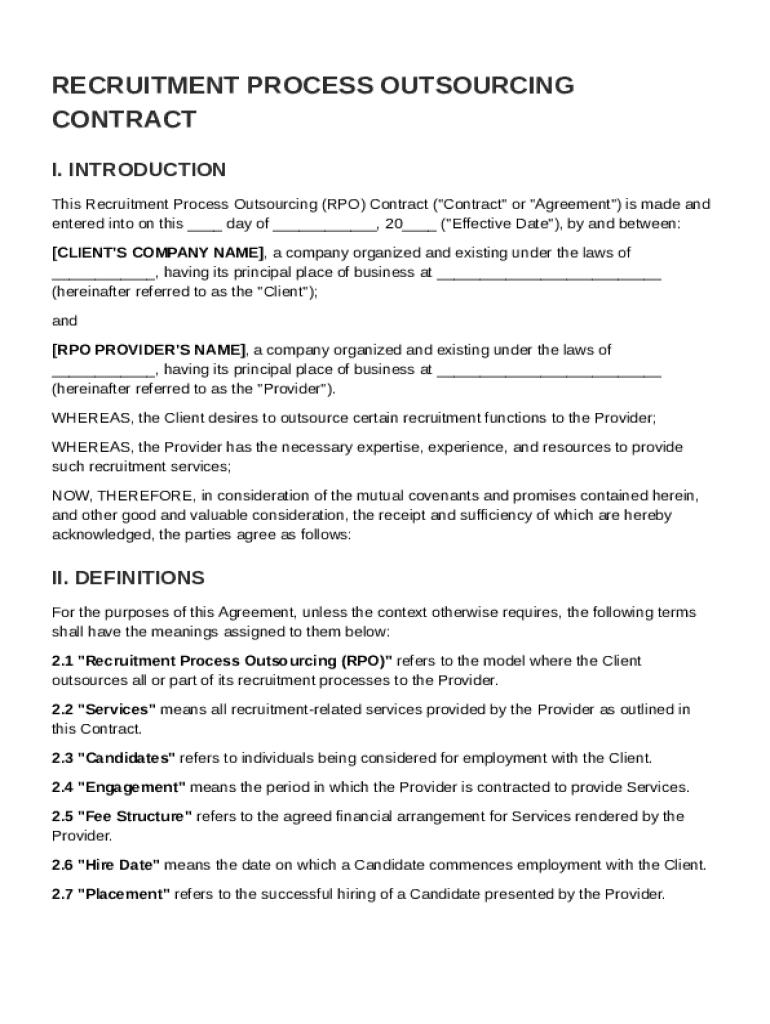







Definition and Purpose
A Recruitment Process Outsourcing (RPO) Contract Template is a structured document that outlines the agreements between a client and an RPO provider. It serves as a foundation for outsourcing recruitment functions to enhance efficiency in hiring processes. Key components include the scope of services, performance standards, fees, and responsibilities of both parties.
Scope of Services
- Talent Acquisition: Details services related to sourcing, recruiting, and onboarding new employees to meet the client's business needs.
- Job Market Analysis: Provides insights on current labor market trends and how they relate to hiring strategies.
- Employer Branding: Strategies for enhancing the company’s appeal to potential candidates.
- Technology Utilization: Explains how technologies such as applicant tracking systems will be used to streamline recruitment.
Performance Standards
- Quality of Hire: Metrics used to evaluate the quality of new hires, such as job performance and retention rates.
- Time-to-Fill: Targets for how quickly positions are expected to be filled from job posting to employee start date.
- Candidate Experience: Standards for maintaining a positive experience for all candidates throughout the recruitment process.
How to Use the Recruitment Process Outsourcing Contract Template
To use the RPO Contract Template effectively, follow these steps:
- Review and Customize: Begin by reviewing the template to understand all sections, then customize it to fit specific business needs and legal requirements.
- Define Terms: Clearly outline roles, responsibilities, and expectations to ensure mutual understanding between the client and the RPO provider.
- Set Performance Benchmarks: Agree upon measurable goals and KPIs for recruitment outcomes.
- Include Legal Provisions: Incorporate clauses on confidentiality, compliance with employment laws, and dispute resolution procedures.
Customization Tips
- Tailor Scope of Services: Adjust the service details to address specific recruitment needs.
- Specify Reporting Requirements: Clearly define what data and metrics the RPO provider will report to the client.
- Adjust Payment Terms: Ensure payment structures align with agreed deliverables and timelines.
Key Elements of the Recruitment Process Outsourcing Contract Template
Basic Agreement Information
- Parties Involved: List the names and contact information for the client and the RPO provider.
- Term of Agreement: Duration for which the contract will be in effect, including start and end dates.
- Termination Clause: Conditions under which either party can terminate the agreement.
Confidentiality and Data Protection
- Data Security Measures: Outline strategies to protect sensitive candidate and client information.
- Non-Disclosure Terms: Agreements that limit the sharing of confidential information with third parties.
Compliance and Legal Requirements
- Employment Law Adherence: Ensure the RPO provider complies with all relevant labor laws and regulations.
- Audit Rights: Specify the client’s right to audit the RPO provider’s processes to ensure compliance.
Steps to Complete the Recruitment Process Outsourcing Contract Template
- Gather Information: Collect all necessary details about the scope of services, fee structures, and performance metrics.
- Draft the Agreement: Fill in the template with specific information tailored to the agreement between the parties.
- Legal Review: Have the draft reviewed by legal counsel to ensure compliance with applicable laws.
- Negotiate Terms: Discuss any modifications or clarifications needed with the RPO provider.
- Finalize and Sign: Make necessary revisions, then have all parties sign the contract to make it legally binding.
Important Terms Related to Recruitment Process Outsourcing Contract Template
- RPO Provider: The third-party firm that manages the recruitment process on behalf of the client.
- Scope of Work (SOW): A detailed description of the work to be performed under the contract.
- Key Performance Indicators (KPIs): Metrics used to evaluate the success of the recruitment process.
Who Typically Uses the Recruitment Process Outsourcing Contract Template


Typical Users
- Large Enterprises: Companies with high-volume recruitment needs.
- Growing Businesses: Firms experiencing rapid growth and needing scalable recruitment solutions.
- HR Managers: Professionals responsible for managing and outsourcing staffing functions.
Industries Most Benefited
- Technology: Rapidly growing sectors needing specialized talent.
- Healthcare: Organizations requiring compliance with strict regulatory hiring standards.
- Manufacturing: Industries undergoing expansion or facing high turnover rates.
Legal Use of the Recruitment Process Outsourcing Contract Template
Legal Considerations
- Contract Formation: Ensures mutual consent and legal capacity of both parties.
- Governing Law: Determines the body of law that will apply to the contract.
- Arbitration Clause: A provision for resolving disputes outside of court.
Compliance Aspects
- Labor Regulations: Aligns contract terms with federal and state employment laws.
- Confidentiality Obligations: Addresses the handling of sensitive business and employee data.
State-Specific Rules for Recruitment Process Outsourcing Contract Template
Variations by State
- California: Includes specific nondiscrimination clauses and wage transparency laws.
- New York: Adheres to labor laws regarding onboarding and employee rights.
- Texas: Addresses the right-to-work laws and relevant compensation guidelines.
Essential Adjustments
- Regional Compliance: Modify terms to reflect local employment legislation.
- State-Specific Fees and Taxes: Adjust fee structures to account for state-specific regulations.
By using the Recruitment Process Outsourcing Contract Template, businesses can effectively and efficiently manage their recruitment strategy, ensuring a consistent and legally compliant approach to talent acquisition.